
Cross-boundary waste pollution chokes Hennops River in Centurion
An intergovernmental task team is co-ordinating rehabilitation across three Gauteng metros following court scrutiny over the Kaalspruit catchment.
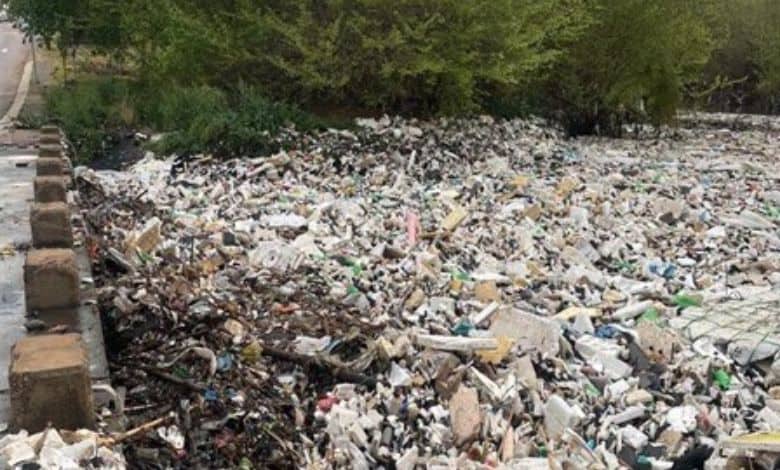
First spring rains have washed months of accumulated rubbish from illegal dumping sites across municipal boundaries into the Hennops River in Centurion.
But the problem extends far beyond Centurion, reports Pretoria Rekord.
The City of Tshwane says much of the waste reaching the Hennops originates upstream, particularly in the Kaalspruit catchment across parts of Johannesburg and Ekurhuleni, highlighting how pollution in one municipality can quickly become a problem for another.
Residents around the Hennops have become accustomed to a familiar cycle: Rubbish builds up, clean-up operations remove it, and the waste returns with the next heavy rains.
Intergovernmental task team formed
A court order involving Tshwane, Johannesburg and Ekurhuleni has put the wider pollution problem under scrutiny, with an intergovernmental task team established to co-ordinate rehabilitation of the Kaalspruit catchment.
Tshwane Metro spokesperson Lindela Mashigo said the city was aware of the condition of the Hennops and continued removing waste reaching its area.
Debris traps installed about 300m downstream from the confluence of the Olifants Spruit and Sesmylspruit, where the Hennops River begins, are designed to reduce the amount of waste entering the waterway and limit its impact further downstream.
Mashigo said the traps can capture about 70% of incoming debris, although lightweight material such as polystyrene remains difficult to contain.
“The city continues to remove waste captured by the infrastructure, bagging it and transporting it to a licensed landfill site.”
Seasonal accumulation worsens flow
Despite these measures, waste continues to flow downstream, particularly during the rainy season when material accumulated at illegal dumping sites in the Kaalspruit catchment is washed into the river.
Mashigo said the waste currently visible in the Hennops was typical after the first spring rains, following months of accumulation during the dry winter period.
The pollution is not confined to a single municipality. A court order requires Tshwane, Johannesburg and Ekurhuleni to address pollution in the Kaalspruit catchment.
On June 8, a judgment established an intergovernmental task team, led by the Department of Forestry, Fisheries and the Environment, to develop and fund rehabilitation measures.
“The establishment of the intergovernmental task team is an important step towards co-ordinated planning, implementation and funding of rehabilitation measures across the affected municipalities,” he said.
“Monitoring points near the Ekurhuleni border on the Olifants Spruit and Sesmylspruit have recorded heavily polluted water,” Mashigo said, linking the pollution to wastewater discharges, pressure on sewer infrastructure and sanitation problems.
The metro will continue maintaining debris traps, removing waste, desilting Centurion Lake and managing the river system while longer-term rehabilitation plans are developed.
Upstream causes identified in Johannesburg
City of Johannesburg spokesperson Nthatisi Modingoane said the city was also aware of pollution challenges across the Kaalspruit catchment.
He attributed the pollution to illegal dumping, builders’ rubble, buried sewer infrastructure, misuse of sewer systems and illegal sand mining.
“The city monitors water quality every month, and results indicate the elevated microbial load as well as nutrients like phosphate and nitrates.”
Johannesburg has responded with illegal-dumping clearances, sewer maintenance and interventions in informal settlements, while the intergovernmental task team has begun independent sampling to better characterise the pollution.
Breaking news at your fingertips… Follow Caxton Network News on Facebook and join our WhatsApp channel.
Nuus wat saakmaak. Volg Caxton Netwerk-nuus op Facebook en sluit aan by ons WhatsApp-kanaal.
Read original story on www.citizen.co.za