
We have been banging on about this for years, but bees are still under threat to habitat loss, pesticides, parasites and disease. What’s more we need bees. As Alfred Einstein said,” if the bee disappeared off the surface of the globe, then man would only have four years of life left. No more bees, no more pollination, no more plants, no more man.’
What’s helpful is that the garden industry is clearly identifying bee-friendly plants by name, or on the labels. What could be more satisfying than planting a bee friendly garden that also benefits other pollinators?
Did you know that blue, purple, violet, white, and yellow flowers are the most attractive to bees and butterflies. Bee eyes contain three types of photoreceptors tuned to green, blue, and ultraviolet wavelengths and because of this they see those colours more vividly.
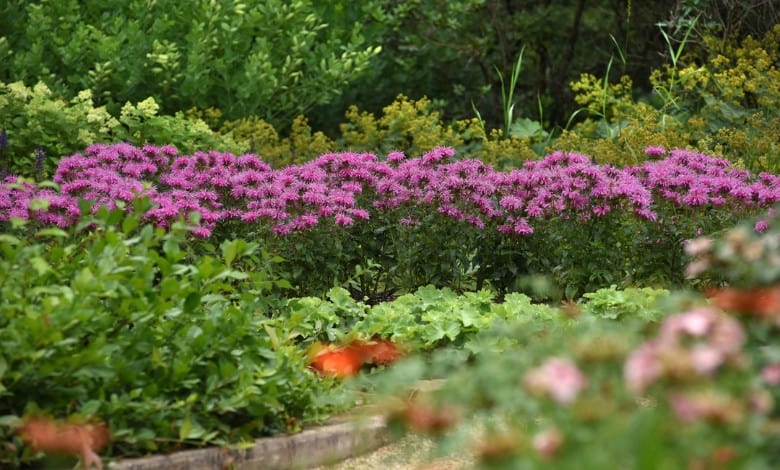
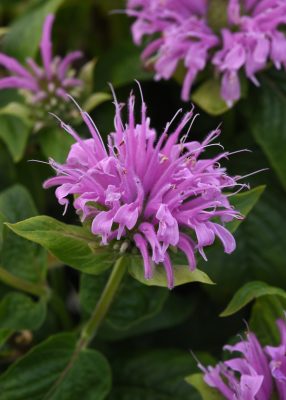
Monarda BeeMine is a compact perennial that produces dense clusters of pin-cushion like flowers from spring to late summer. It is flowers best with at least six hours of sun a day and regular watering. Plants are mildew resistant and also frost tolerant. Dead head the blooms to encourage more flowers throughout summer and fertilise once a month during their growing season. Cut back in autumn.
Choose flowers with a long flowering season, or quick repeat flowering cycles so that the bees keep coming back to the garden. That way, there will always be something in flower. Garden flowers that meet this requirement include perennial salvia, verbena varieties like ‘Firehouse’ that flower consistently, and Scabiosa Butterfly Blue.
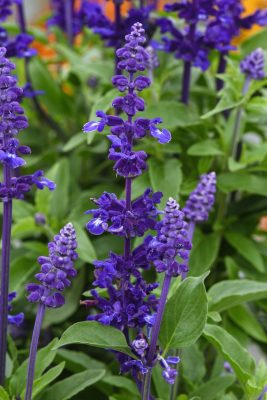
Salvia Mystical Blue or White is a new perennial salvia that is compact, well branched, and produces more flowering stems than its predecessors. It thrives in sunny beds, in soil that drains well and is heat and drought tolerant once established. It has a long blooming season from spring to early winter. Remove spent blooms to encourage new flowers and to keep plants neat.
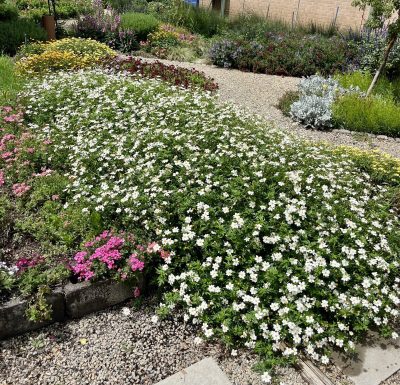
Group the same flowers together, which makes it easier for the bees to harvest the pollen or nectar, and they use less energy. If space allows, try to plant at least one square meter of the same type of flower together.
Bidens’ Bee Meadow’ is a fantastic groundcover with an impressive spread and covered with yellow-centred white blooms that drive the bees and butterflies crazy. The vigorous plants, each with a 55cm spread, quickly fills a garden space, or container. They are heat and drought tolerant, with a long flowering season, from spring into autumn. Plant in fertile soil that drains well.
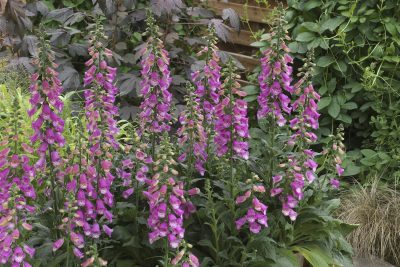
Grow plants with a variety of different flower shapes. Single flowers are easier for collecting pollen than double flowers. Tubular flowers, like penstemon, snapdragons and foxgloves, are easy to land on and ’fit’ the bee’s body. They find it easy to forage from composite flowers like Melissa (lemon balm), thyme, borage, and larkspur.
Digitalis ‘Hannabee’ is a compact foxglove that produces many strong flower spikes with bell shaped blooms in soft shades of pink and white, often delicately speckled. This easy to grow foxglove thrives in full sun or partial shade and only needs moderate watering. Remove dead flower spikes to encourage new flowers. Besides bees the flowers attract butterflies and other pollinators. It can be grown in containers as well as in the garden.
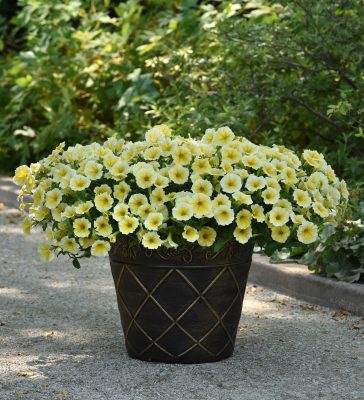
Petunia ‘Bees Knees’ is the most intense yellow petunia that holds its bright yellow colour better than other yellow petunias. The trumpet-shaped blooms they are attractive to butterflies and nectar-sipping birds as well as than bees. This versatile petunia flowers from spring onwards and needs very little attention. It grows in full sun or semi-shade, has medium water requirements and looks equally good in containers.
Content by www.ballstraathof.co.za
All images by Alice Coetzee.
For more on gardening, visit Get It Magazine.