Greenteriors that connect with nature
Find out how to increase your sense of well-being by bringing the outdoors into your indoor spaces.Find out how to increase your sense of wellbeing by bringing the outdoors into your indoor spaces.
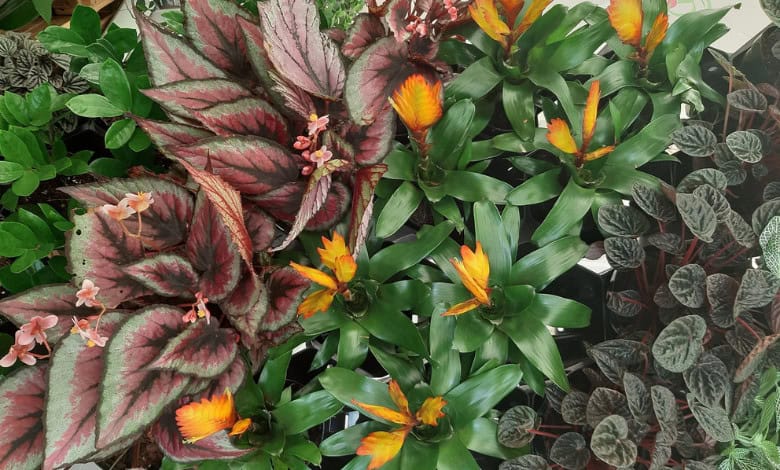
It is said that one of our fundamental needs is to connect with nature. Whether it’s a hike into the bushveld or the mountains, even a walk around the neighbourhood, that connection with nature has the ability to restore us.
That innate need for connection is called ‘Biophilia’ and biophilic interior design seeks to bring elements of nature like natural light, the sound of water, sustainable materials like wood and stone, and plants, of course, into our interior spaces, so that we can reap the benefits of a healthier living space.
It is not just a way of decorating the home, but a lifestyle choice for health and well-being.
Elements of biophilic interior design.
- Maximise natural light through windows, doors and skylights. Get rid of heavy drapes and let the sun shine in.
- Plants are at the core of biophilic design, although designers say that it is more than scattering a few houseplants through the home. Plants with different textures and colours add depth to space, highlighting the diversity of nature, and they purify the air too. Use them to create green walls, trail down staircases, liven up workspaces.
- Minimise your carbon footprint by prioritising sustainable, eco-friendly materials for floors, cladding, furniture, accessories, countertops and eco-efficient appliances.
- Incorporate the soothing sound of water, even if it is just a softly bubbling water feature outside the bedroom window.
- Celebrate nature through nature inspired art and décor.
A 2020 Harvard study found that people in a room with plants showed better physical and mental recovery after completing stressful tasks than those without plants.
Try these plants for diversity and interest
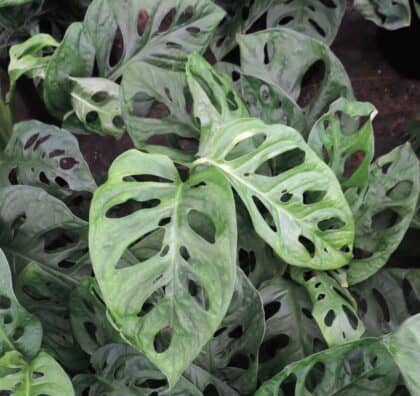
Monstera Adansonii is a mini-monstera that is a quick-growing climbing or trailing plant with leaves featuring window-like holes, creating interplay of light and shadow.
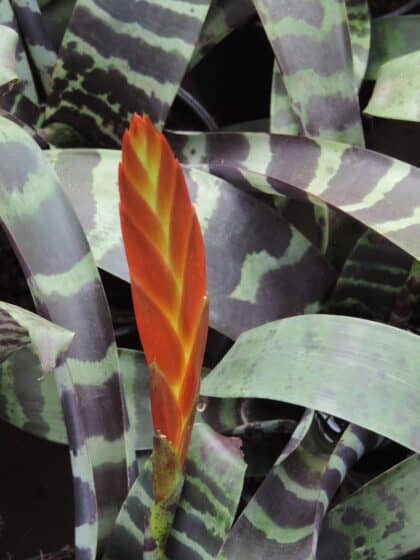
There are many fascinating and unusual aspects to Bromeliads. Besides their striking, spiky leaves, the flowers are a bromeliad’s stand-out feature, whether it’s the ‘Scarlet Star’ of the Guzmania, the ‘Flaming Sword’ inflorescence of the Vriesea or the bright pink flowers of the silver leaved Aechmea.
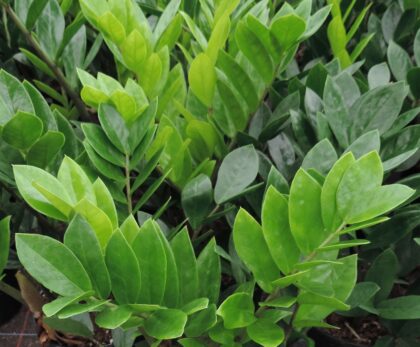
ZZ plant (Zamioculcas) with its’ spikey cycad-like leaves is one of the easiest plants to grow. It tolerates neglect and poor light but does best with medium to bright light.
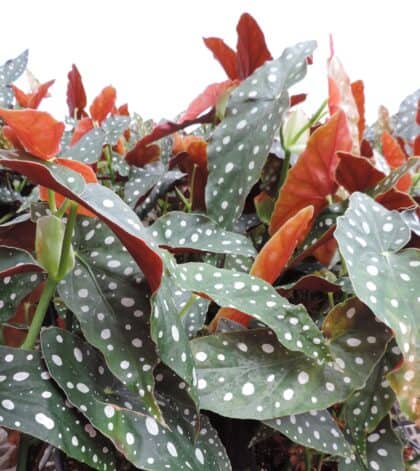
‘Polka Dot’ Begonia is one of the most photogenic houseplants with white polka dots on olive green leaves and a rusty-red under leaf. Display ‘Polka Dot’ in any area that receives bright indirect sunlight.
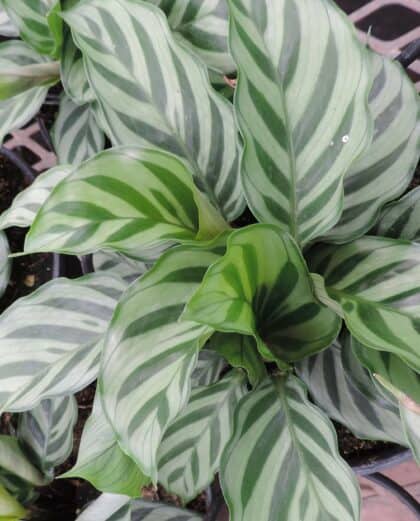
Calathea varieties have multi-coloured variegated, striped or patterned leaves. They are the peacocks of foliage plants, super showy and splashy. Use them as an accent with other foliage plants or as features on their own.
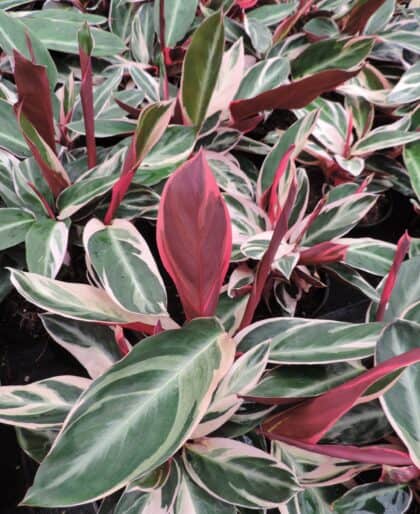
Stromanthe ‘Triostar’is another very beautiful plant with variegated green and pinkish-cream leaves. However, its real beauty is the dark pink under leaf, that glows like a stained glass window when the light shines through it. ‘Triostar’ stays compact making it easy to show off almost anywhere.
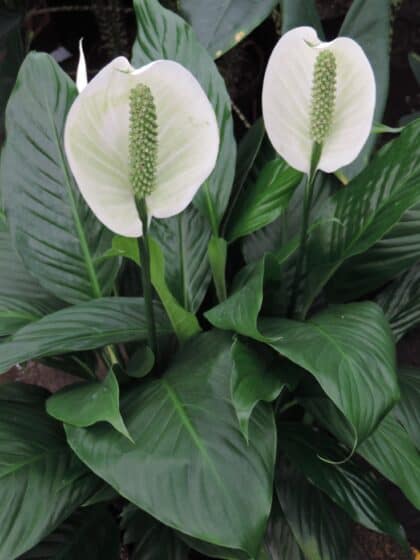
Peace lilies (Spathiphyllum) are now available as large-leaved plants. ‘Sensation’ grows up to 2m high, with lush deeply ribbed, bright green leaves. ‘Ricardo’ stands out for its beautiful white spathes ruffled leaves marked with very fine white streaks. Both like bright, indirect light.
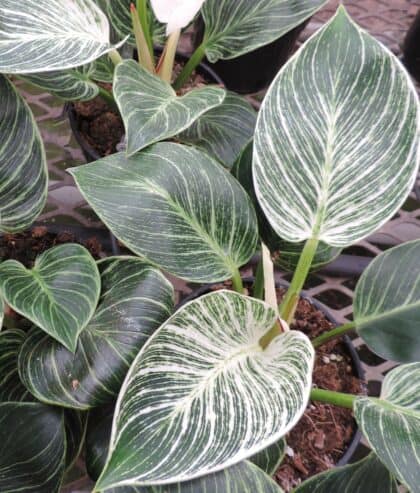
Philodendron Birkin has large, variegated dark green and white-veined leaves. The new leaves sometimes start off as white before unfurling. It is best displayed where there is bright, indirect light.
Happy plants for a happy life
Selecting the right plants for the right place is as important as selecting the right interior style. Finding exactly the right spot can involve a bit of trial and error but once the plant is happy it should stay in that position.
Getting the light right is the most important factor in houseplant care. Most flowering indoor plants and those with coloured or variegated leaves like bright indirect light, even filtered sunlight. The safest option for most plants, however, is moderate to bright indirect light. Those that tolerate low light include peace lily, sansevieria, ZZ plant, peperomia, anthurium, and Pothos, especially if placed in front of a window.
Don’t over-water or under-water. Over-watering is usually the biggest killer of indoor plants. Poke your finger into the potting mix and if it still feels moist, wait another day before watering.
Don’t let plants stand in water. If they are in saucers (to protect surfaces) empty the saucer about 20 minutes after watering.
Keep the leaves free of dust by spritzing them once a month. It will also improve the humidity, which most indoor plants enjoy.
Don’t forget to feed your plants because nutrients leech out from the watering. Use a liquid fertiliser at half strength every two weeks or even every week in summer. For more inspiration visit LVG Plants.
Article and images supplied by Alice Coetzee.
For more on gardening, visit Get It Magazine.