At the mother’s knee: Important lessons start at home
A child’s earliest lessons often occur in the simplest of moments: sitting at the kitchen table sharing stories, asking curious questions while exploring the backyard, or listening to a bedtime story.
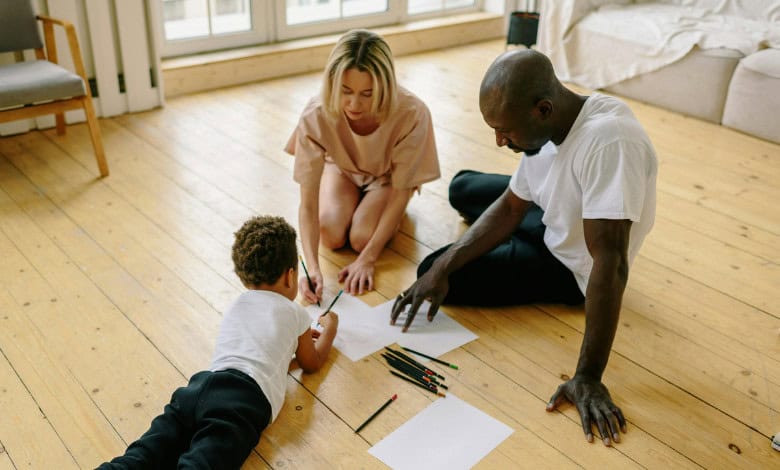
The old saying “at the mother’s knee” holds profound wisdom about where a child’s most important lessons begin at home, under the nurturing guidance of loving caregivers.
In these formative years, children should receive the emotional, social and cognitive foundations they need to thrive, before entering the structured environment of a classroom. As educators, we honour and build upon the invaluable lessons you teach your children every day.
A child’s earliest lessons often occur in the simplest of moments: sitting at the kitchen table sharing stories, asking curious questions while exploring the backyard, or listening to a bedtime story. These experiences, though seemingly ordinary, are extraordinary in their impact. They instill in children the essential skills of listening, speaking, observing and interacting- all critical tools for lifelong learning. According to Hart and Risley (1995), children’s early language exposure at home is directly linked to their vocabulary development and reading proficiency in later years. Every conversation, every word spoken at “the mother’s knee” is an investment in a child’s future.
As parents, you are your child’s first teachers and your influence is unparalleled. John Bowlby’s attachment theory highlights the importance of a secure emotional bond in early childhood. When children feel loved and supported, they develop the confidence to explore their world, ask questions and seek new experiences (Bowlby, 1988). The warmth and encouragement you provide not only make your child feel safe but also ignites their curiosity and love for learning.
Consider the act of reading a story to your child. This simple activity does so much more than entertain. It teaches vocabulary, grammar, comprehension and social appropriateness. It introduces them to new ideas and worlds beyond their immediate environment. Studies show that children who are read to frequently develop stronger literacy skills and perform better academically than those who are not (Bus et al., 1995). By sitting with your child, book in hand, you are not just reading- you are shaping a learner and their future.
It is not only about academic skills though. The values, attitudes and habits you model at home play an equally critical role. Bronfenbrenner’s ecological systems theory emphasises the significance of the home environment in a child’s development. The patience, empathy and resilience you demonstrate as a parent, become the blueprint for your child’s behaviour in school and society (Bronfenbrenner, 1979). When children witness kindness and problem-solving in their homes, they carry those lessons into their relationships with peers, teachers and the world at large.
At school, we often marvel at how children’s home environments are reflected in their learning attitudes and behavior. A child who has been encouraged to ask questions at home will likely approach school tasks with curiosity and enthusiasm. Similarly, a child who feels supported will approach challenges with resilience and determination. These traits, fostered at home, become invaluable in the classroom.
As teachers, we view our role as partners in your child’s journey. While we introduce new concepts and skills in the classroom, we rely on the foundation you have laid at home. It is this partnership between home and school that truly enables children to thrive. To support this relationship, here are a few ways you can continue to enrich your child’s learning:
- Foster a love for reading: Make reading a daily ritual, whether it’s a bedtime story or a quiet afternoon activity. Choose books that capture your child’s interests and encourage them to talk about what they’ve read.
- Encourage open-ended questions: When your child asks, “Why?” or “How?” take the time to explore the answer together. This encourages critical thinking and problem-solving.
- Model lifelong learning: Let your child see you reading, solving problems, or trying new things. Show them that learning is not just for school, that in fact it’s a lifelong adventure.
- Celebrate effort over results: Praise your child for trying their best, even when the outcome isn’t perfect. This teaches them the value of persistence and resilience.
- Stay engaged with their school life: Attend parent-teacher meetings, review homework together, and show interest in their daily experiences at school. Your involvement shows them that their education matters.
The lessons children learn “at the mother’s knee” are not confined to early childhood. These lessons resonate throughout their lives, shaping who they become and how they navigate the world. As educators, we at Bellavista School thank you for the foundational role you play in your child’s life. Together, we can create an environment that nurtures their potential and celebrates their uniqueness.
Remember, every story you read, every question you answer and every moment you spend with your child is a step toward helping them grow into confident, capable and compassionate individuals. After all, as the saying goes, “Education begins at home” and it all starts ‘at the mother’s knee’. For more information, visit Bellavista school’s website.
Article supplied by Christine Humphries, Head of Foundation Phase at Bellavista School