
What’s to like about indoor tropical plants? They are perfectly suited to growing in our warm homes, most are easy to care for, tolerate relatively low light and their lush foliage adds an exotic touch to any home.
The only extra care they need is additional humidity. That can be provided by a light misting spray every now and then or placing the pots on a saucer containing pebbles and water. Grouping plants together also creates a moister micro-environment.
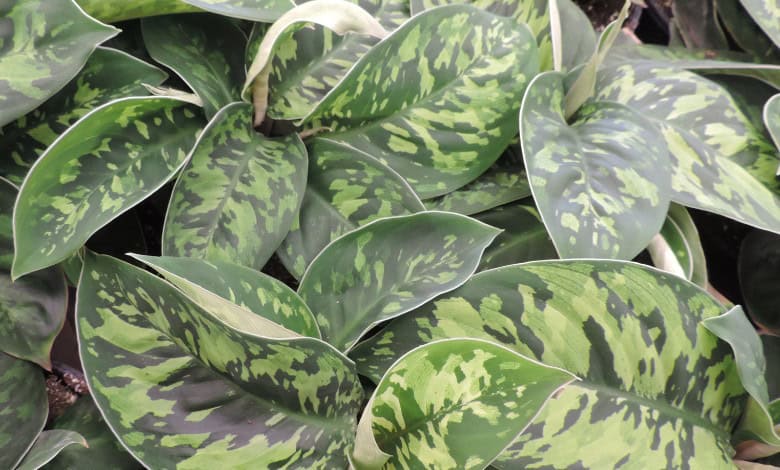
If the collecting bug has bitten then you can be sure that year after year there will be new and exciting variations of some of the tried and trusted tropical plants. Waiting in the wings is a variegated delicious monster. It’s going to be a winner!
Rattlesnake plant (Calathea insignis)
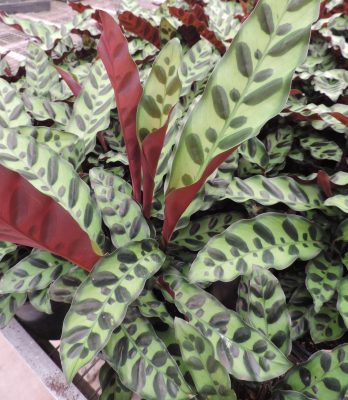
Calathea ‘Insignis’ is a Brazilian tropical plant that earned its common name from the patterned leaves that resemble the rattlesnake. The glowing reddish underleaf of the new leaves adds even more colour to this exotic plant. Being one of the ‘prayer plants’ the leaves fold up at night. It is compact but can develop into a substantial plant 80cm high and wide.
It needs bright filtered light, consistently moist soil and high humidity. Don’t let the plant-pot stand in water. Feed with a liquid fertiliser in spring and summer.
Alocasia ‘Frydek’
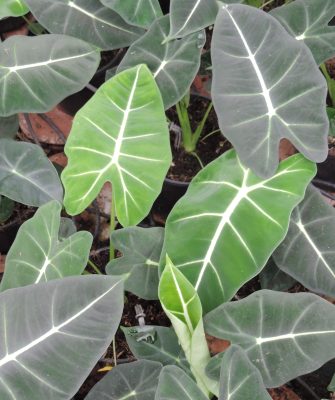
The velvety leaves of Alocasia ‘Frydek’ invite you to stroke them. They are quite unlike those of the other glossy alocasia varieties. The bright, white veins add to the dramatic effect, as do the bright emerald-green of the new leaves. This exotic plant hails from the Philippines so it likes a warm, humid room and a position that receives bright, indirect light. Keep the soil consistently moist but not waterlogged. It can fill out to a height of 90cm as a feature plant or anchor a collection of plants.
Homalomena ‘Camouflage’
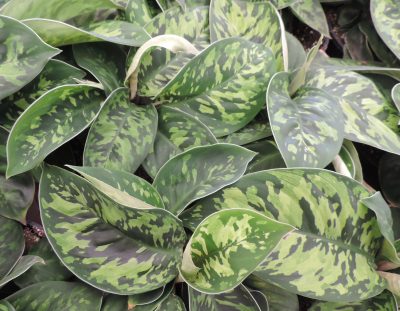
Homalomena ‘Camouflage’ is a foliage plant with a difference. It looks a little like a dieffenbachia with its splotched dark and light green leaves, although patterning on the Homalomena leaves clearly resembles green army fatigues. The patterning will be brightest when the plant receives medium to bright indoor light. It should not receive direct sunlight.
Don’t let the plant dry out completely or over water. Feed with a liquid fertiliser once a month during summer and stop in winter.
Umbrella Fig
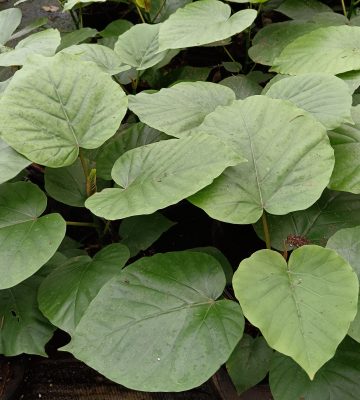
Umbrella fig (Ficus umbellata)
This is a most unlikely looking ficus, compared the commonly used weeping fig, Ficus Benjamina. Like the Fiddle-leaf fig, it has large leaves, but they are heart-shaped, thinner and glossier than the Fiddle-leaf. It is also a tall grower with thin stems. Like other ficus varieties, it can be cut down to size. It needs a bright warm position and regular watering. It is a rather elegant, willowy plant.
Crocodile fern
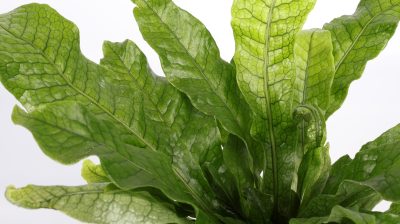
From a distance, Microsorum crocodyllus, also known as the Crocodile Fern, looks rather like a bird’s nest fern, but close up the leaves have the texture of a crocodile skin. The mature plant can grow up to 90cm, with large, glossy green leaves that are striking in any setting. Place in bright indirect light near a window and keep the soil lightly moist. Let the topsoil dry slightly between watering.
Begonia ‘Polka Dot’
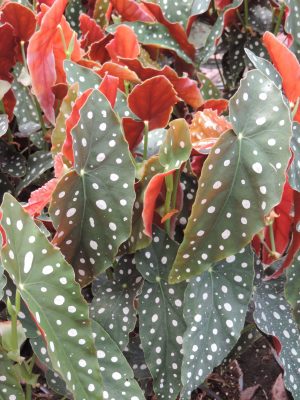
Strictly speaking this is not a new indoor plant but it continues to capture attention with its dotty leaves and gorgeous bronze underleaf. Keep this vigorous cane begonia compact and bushy by regularly pinching or cutting back. Cut back just above a leaf node when stems are 15 – 16cm high.
Plants like plenty of bright indirect light. With too little light the leaves become dull, and the colours fade. If exposed to sun the leaves may scorch and develop brown dry tips.
Content by www.lvgplant.co.za
All images by Alice Coetzee.
For more on gardening, visit Get It Magazine.