
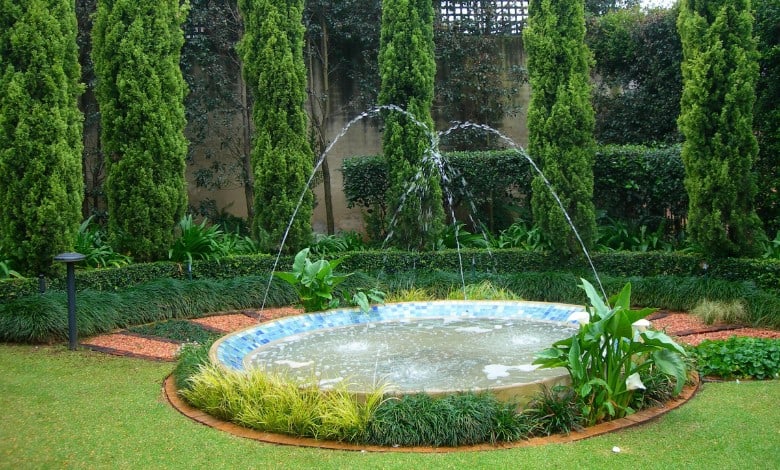
The sound of water adds a whole new dimension to a garden. The soft trickle of water over stones is soothing and restful. The happy bubble of a fountain creates a sense of well-being while the exuberance of a waterfall adds an element of the wild and untamed.
Like any art form, a superb water feature incorporates all the elements of composition; colour, shape, contrast and texture. The stronger “décor” influence reflected in garden design has extended to water features with the approach speaking more directly to a sophisticated urban lifestyle.
Here are some pointers to keep in mind if you are considering a water feature:
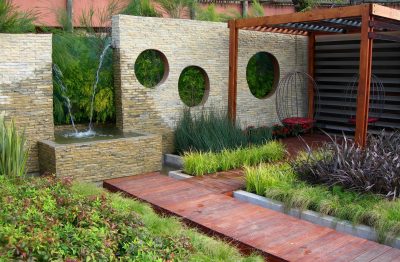
A water feature should be placed where you get the most value for it, which means where you can see, hear and enjoy it. It is no use tucked around a corner. The best places for water features are near entrances, patios, general living areas and the pool area.
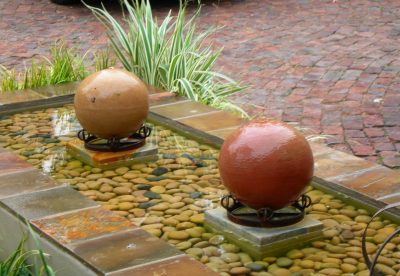
Be aware of the different sounds of the water and link that to your needs. Do you want the water feature to make a statement or be more calming? Cascading water is noisy, so it is not ideal in an entertainment area. Splashing water will also be disturbing if it is situated too close to bedrooms. Water flowing gently over something into a bowl gives a softer natural sound that is more suitable for a patio or small townhouse garden.
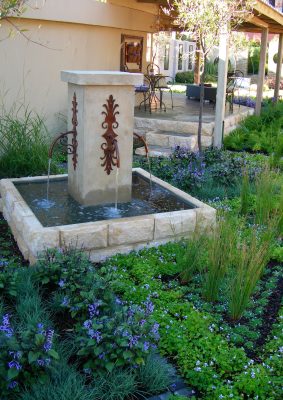
If you like the visual aspect of water, it should be in view, and one should be able to see it from a number of angles. If sound is more important, then it may be more effective if the feature is out of sight.
It is not advisable to place a water feature in the centre of a small garden because this will have the effect of dividing the garden into a series of small shapes and make the garden appear even smaller.
If you have small children, be aware of the safety aspect. Ideally a pool should be built up to a child’s shoulder level.
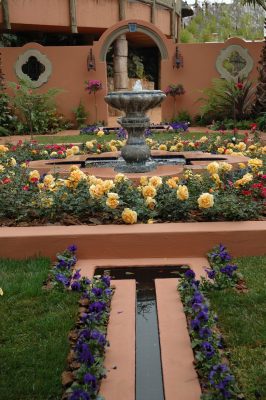
If you are establishing a fountain, gain the best effect by situating it in such a way that the water catches the sunlight. Fountains create ‘white noise” and can be used to screen out the sound or traffic or voices from adjoining properties.
Be careful of placing water features under trees like Jacarandas or Acacias as the flowers and leaves that drop will clog the pump.
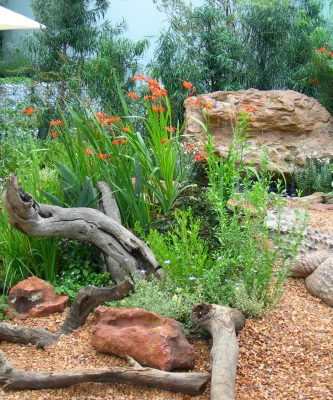
Don’t spend too big a proportion of your budget on building the pond so that you run out of money when it comes to buying the pump, the pots and the plants. These are the elements that give your water feature its character.
Water features are all about illusion. Rather explore cheaper options like pond liners, plastic bowls concealed with pebbles or even fibreglass moulds that can be artfully camouflaged with plants, pebbles and other materials to disguise the shape of your pond.
The hidden “heart’
The most important component of any feature with circulating water is its “hidden heart’ – the submersible pump.
For a hassle-free water feature invest in a good quality pump rather than opting for cheaper versions that have a limited life span.
No matter how good a pump is, it cannot operate effectively without regular maintenance. Keep the water clean by removing leaves, animal hair, duck feathers, grit and any other materials that could clog the pump filters.
Locate features away from trees that lose their leaves or flowers. Overstocking a pool with too many fish can also cause problems, especially when children throw in handfuls of food that eventually become mush.
There are a number of things you can do to keep a pump free of grit.
- Don’t place a pump directly on the bottom of the pond but rather place it on a brick so that it doesn’t suck up the sediment that settles on the bottom.
- If a water feature is supposed to be at ground level it helps to actually raise the rim of the feature (basin or pond) about 2 cm above ground level. When it rains, the mud will not be washed in.
- If you have the space, establish a natural wetland so that the water flows over pebbles and bricks which act as natural filters.
- Stock your pond with as many water plants as possible.
- When using a smaller pump, consider buying a filter that can be attached to the front of the pump.
All images by Alice Coetzee.
For more on gardening, visit Get It Magazine.