
10 000 South African refugees and counting: The American who became their voice
A retired US Army intelligence officer has become an unexpected advocate for South Africans starting over in America.
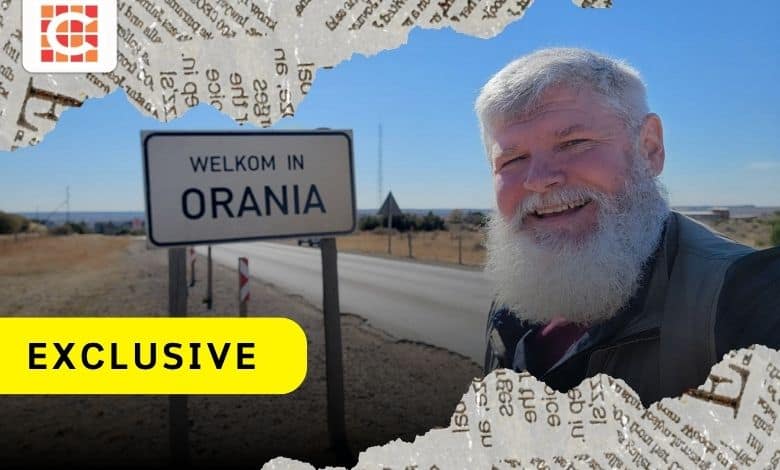
For many South Africans, Colonel Chris Wyatt has become something of a real-life Captain America.
The retired US Army intelligence officer, former foreign area officer for sub-Saharan Africa and former director of African Studies at the US Army War College, has, somewhat unexpectedly, become a prominent voice for South Africans making the move to America.
And with more than 10 000 South Africans now having entered the United States’ refugee programme during the 2026 financial year, Wyatt finds himself at the centre of a story that has become increasingly controversial in South Africa.
But as Wyatt states: “This programme is barely noticed by most Americans. It is not an ‘extraordinary priority.’ Accepting 168 000 unvetted Afghans in a matter of weeks was extraordinary.”
Why exactly South Africans have taken such a liking to this American remains difficult to determine.
Perhaps it is his general concern for South Africa, his American accent, his belief that South Africans’ skills match reasonably well with the US job market – although he is less convinced about South African English – or his conservative thinking, which many South Africans seem strongly drawn to.
But Wyatt is not simply an American commentator with an opinion on South Africa.
He has travelled across the US, met thousands of South Africans, helped families stranded by problems with the refugee programme, raised money for food and accommodation and, by his own description, unintentionally become an advocate for those arriving in America.
Earlier this week, the United States’ latest report on refugee arrivals by state and nationality for the 2026 financial year showed just how significant the South African component has become.
The US accepted 10 258 refugees between October 1, 2025, and July 31, 2026.
Of these, 10 255 came from South Africa and three from Afghanistan. Since December 2025, only South African refugees have arrived.
And they are not all Afrikaners.
Among those making the move are Indians, coloured South Africans, English-speaking South Africans and, according to people working with new arrivals in the US, professionals ranging from doctors and architects to IT specialists, bankers and journalists.
For Wyatt, this is an important distinction.
His involvement with the programme initially had a much narrower purpose.
“I initially – intentionally – simply reported and analysed the programme, explaining what it is and is not,” he says.
But that changed as he encountered South Africans experiencing problems in America.
Listen here:
“Given the opaque nature of the US government and apparent neglect of some refugees in the States, I personally intervened and resolved many problems in the States where no one was assisting South Africans.”
He says he has now visited more than 1 300 South Africans living across 12 US states, largely at his own expense.
When he left for South Africa on July 20, 2026, he says he had been in contact with about 4 500 of the roughly 8 000 South African refugees then living in the US.
He has also interacted with Angie Salazar, the director of the US Office of Refugee Resettlement, and says this engagement contributed to a complaint mechanism for refugees who were not receiving adequate support.
“In essence, unintentionally, I have in some ways become an advocate for those who arrive in the USA.”
From South Africa to America
Wyatt’s interest in South Africa did not begin with the current refugee programme.
He says he has followed happenings in the country since his youth. In 1980, he read James Michener’s The Covenant and developed a deep interest in Southern Africa, eventually shaping his military career around becoming a regional specialist for Africa.
His career took him to Tunisia, Liberia, Botswana, Malawi, Niger, Mauritania, Uganda and the African Union in Ethiopia.
He has visited South Africa many times over the past 30 years and, since retiring from active military service, has returned roughly twice a year. His latest visit is his first return after more than a year away. Every visit, he says, has a theme and an anchor event. This one is ‘The colonel is back in town’, and the anchor event is Rugby’s Greatest Rivalry because unlike many Americans, Wyatt is a rugby fanatic.
While in South Africa, he has held 34 meet-and-greets with his audience, attracting more than 1 500 people across all nine provinces.
But it is his involvement with South Africans in America that has increasingly defined his relationship with the country.
From observer to advocate
When the US government shut down in October last year because of congressional funding delays, Wyatt says he organised temporary accommodation for several South African families (about 30 people) and helped organise food parcels for families left in precarious circumstances after ticket cancellations.
He subsequently raised more than R100 000 for food for South African refugees awaiting flights.
According to Wyatt, he and Food Socks have provided food to more than 200 South Africans and continue to do so.
Concerns about a refugee assistance agency in Rochester, New York, led him to travel there, where he says he uncovered fraud and abuse, allegedly committed by an NGO that was contracted as a service provider.
These allegations are, however, yet to be independently verified.
But the experience prompted Wyatt to take an even more active role.
He says his time on the ground has exposed him to considerable misinformation and distortion surrounding the refugee programme, as well as many desperate South Africans.
Who is actually leaving?
The image of the South African refugee in America is often dominated by the Afrikaner narrative.
But Wyatt says the reality is considerably more diverse.
“I have met some of the very few farmers in the programme, [as well as] IT specialists, logisticians, bankers, journalists, police, military and many other professionals.”
He says the South Africans he has encountered come from a range of backgrounds and have varying skills and income levels.
Among them are older South Africans too. “We have an 89-year-old who has come over,” he says.
Among the older refugees are Barend and Eileen Janse van Rensburg, whose YouTube videos are as popular as bazaar pudding.
Uncle Barend, as fellow South Africans and Americans call him, speaks with such a thick Afrikaans accent that viewers joke he has a potato in his mouth.
“Don’t worry, Uncle,” reads one of the comments. “You’ll soon get the hang of American English.”
Barend was 60 when he packed up his entire life in Kroonstad in the Free State and boarded a plane with his wife, Eileen (58) and their son, Tinus (29), determined to ‘never come back’.
The American reality
The Janse van Rensburg family’s experience illustrates some of what Wyatt says he has seen among South African arrivals.
The American job market surprised the family, particularly the salaries offered for entry-level positions.
Tinus found work almost immediately, while Barend eventually secured a position as a field service mechanic.
But the move has not been without sacrifices.
They gave away much of what they owned, sacrificed about 40% of the value of their belongings and are still in the process of selling their home in Kroonstad.
They also arrived without family or friends in America.
For Wyatt, these are the realities that often get lost in the political debate around the programme.
He rejects the idea that refugees are being selected because of their skills. “There are no skills sought. We give people refuge, not labour.”
At the same time, he says South Africans generally adapt well to the US job market.
“I know several who make over $100 000 a year within months of arriving.”
Others have bought homes shortly after arriving, he says.
But America is not a free ride. “Everyone willing to work will find work,” Wyatt says.
His personal observation is that about 85% are able to support themselves within three months or less, although some struggle.
Why South Africans?
The number of South African refugees in the US inevitably raises the question: Why South Africans?
Wyatt rejects the idea that the US is ‘cherry-picking’ South Africans because they are likely to become economically productive Americans. The programme, he says, is humanitarian and open to different racial groups.
“Indians, coloureds, whites and even some blacks have participated.”
He does, however, believe the Trump administration may have an additional political objective. “Sending the ANC message,” he says.
Listen here:
Unlike the Trump administration, Wyatt does not believe in the ‘white genocide’ myth. Rather, he describes what he sees as ‘racial persecution’, where minority groups in South Africa, including Indians and coloureds, are being deprived of certain job and education opportunities.
A new life – and a new identity
The longer-term question is what happens once the excitement of arrival wears off.
What happens when someone leaves South Africa at 40, 50 or even 60 and has to rebuild a career, social network and identity?
Wyatt says some settle quickly and prosper, while others struggle.
“Some are, some are not,” he says when asked whether people are psychologically prepared for starting again.
“I spend a great deal of time explaining what it all means. Some listen, some do not.”
And then there is the question of identity. Will South Africans become Americans, or will they establish communities that preserve their languages, culture and traditions?
Wyatt believes it is too early to tell. Outside Texas, he says, South Africans are not yet present in sufficient numbers to establish large cultural institutions.
For now, most are still finding their feet. And according to Wyatt, most appear to be happy with the decision. “It remains early days for the arrivals,” he says.
“So far I have heard very few ‘miss’ South Africa. Quite the contrary, most are loving being in the USA.”
* Caxton Network News is bringing you a series of articles titled America: The land of dreams and in Afrikaans: Amerika: Die land van drome. Make sure you don’t miss the next chapter.
Breaking news at your fingertips… Follow Caxton Network News on Facebook and join our WhatsApp channel.
Nuus wat saakmaak. Volg Caxton Netwerk-nuus op Facebook en sluit aan by ons WhatsApp-kanaal.
Read original story on www.citizen.co.za

