
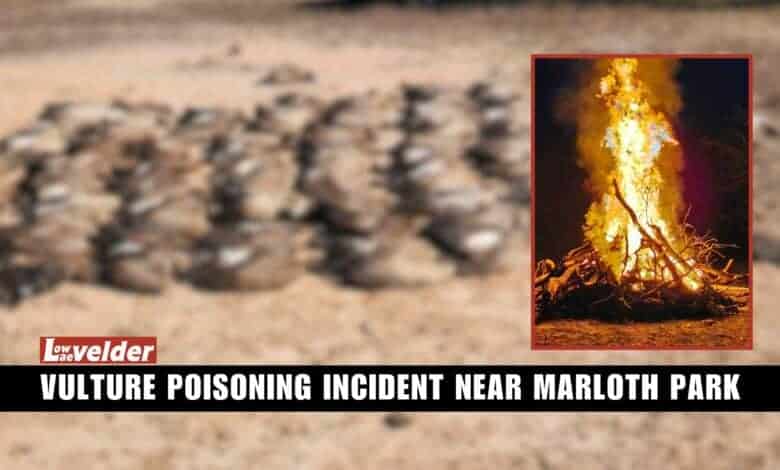
102 vultures poisoned near Marloth Park in Mpumalanga
Another mass poisoning of vultures has sparked alarm among conservationists, who warn that the scale and frequency of these killings point to a co-ordinated and escalating threat.
Graphic content warning: Photos may upset sensitive readers.
Over 100 vultures died from poisoning in Lionspruit Reserve, next to Marloth Park in Mpumalanga, on Saturday, just two weeks after 123 vultures were poisoned in the Kruger National Park.
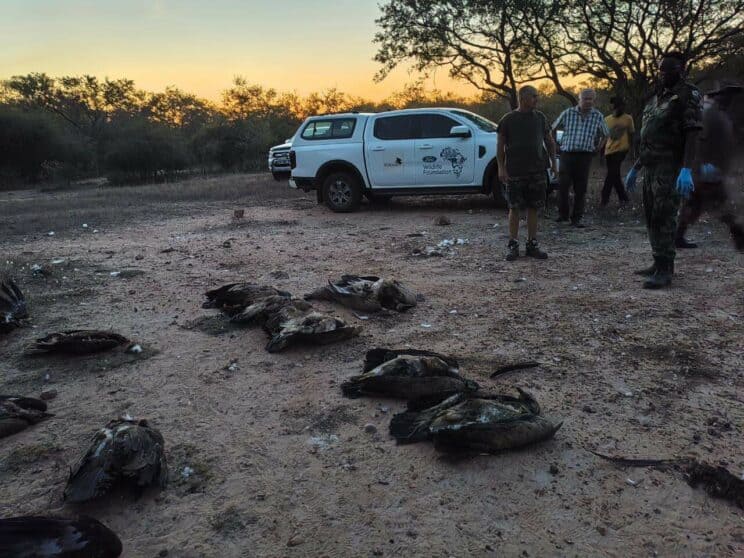
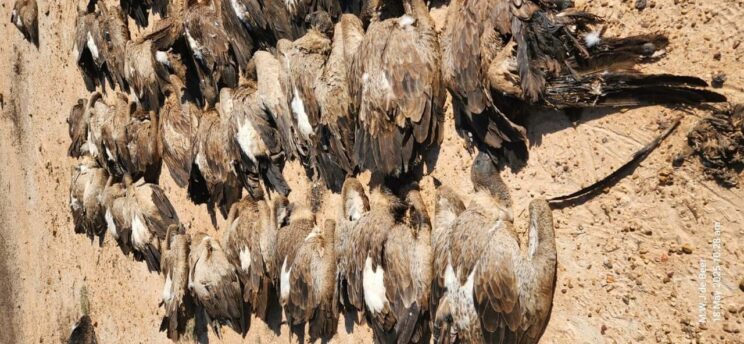
Lowvelder reports that Vulpro and the Wild and Free Rehabilitation Centre in Mpumalanga says 92 white-backed vultures, of which 90% were breeding adults; nine hooded vultures; and one male adult white-headed vulture, were found dead in Lionspruit.
The dead vultures were found around a warthog carcass. It has not been established when they were poisoned. When found, no body parts had been removed.
With the assistance of South African National Parks, two more poisoned animal carcasses were found before more vultures could reach them.
“The scale of this poisoning is devastating and appears to be part of a much bigger, targeted operation,” says Vulpro’s CEO Kerri Wolters.
“With recent incidents taking place across various Lowveld regions, we suspect they are aimed at distracting us from a bigger and even more devastating event in the near future. We are calling on government and the national Vulture Poisoning Working Group to address this crisis before it’s too late,” he adds.
He says losing such a large number of vultures, especially adult breeding birds during breeding season, is an ecological crisis.
“We are genuinely terrified of what is going to occur next.”
Wolter says the latest incident, in which no body parts were taken, does not seem to be related to muthi.
In response to this incident and the growing frequency of poisoning cases, Vulpro is appealing to all Lowveld rehab centres to stop releasing vultures in the area until these threats have been fully investigated and mitigated.
These mass poisonings highlight an urgent need for a co-ordinated conservation action.
Just days ago, Vulpro formalised a long-standing partnership with the Wild and Free Wildlife Rehabilitation Centre in Hectorspruit. The two organisations have established a Vulture Emergency Response Unit in Mpumalanga. This collaboration enables a rapid on-site field response to poisonings and injuries, and provides expert veterinary care at Wild and Free’s on-site clinic, as well as long-term rehabilitation and monitored releases through Vulpro’s national programme.
With support from conservation groups, We Wild Africa and Over and Above Africa, this initiative links veterinary expertise, field operations and conservation strategy across provincial boundaries, unified in a mission to stop vulture extinction.
“This is not just about one event. It’s about a systemic threat to our natural balance,” says Wolter.
“We are fighting for every egg, every nest and every vulture’s future. Through science, integrity and collaboration, we will hold the line.”
Investigations are ongoing.
Breaking news at your fingertips… Follow Caxton Network News on Facebook and join our WhatsApp channel.
Nuus wat saakmaak. Volg Caxton Netwerk-nuus op Facebook en sluit aan by ons WhatsApp-kanaal.
Read original story on www.citizen.co.za

