
Crime stats: More than 1 500 murders committed in homes
Murder, rape and aggravated robbery have declined nationally, but police say crime levels remain unacceptably high and policing will be intensified in hotspot areas.
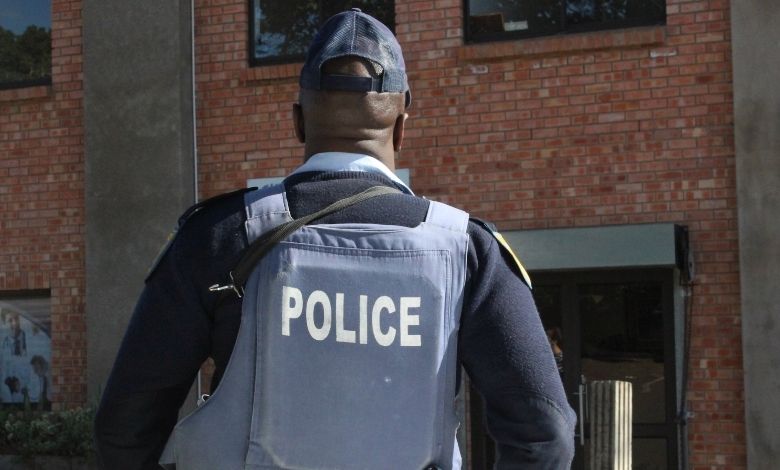
Murder has declined by 9.5%, but the latest crime statistics reveal a disturbing level of violence inside the home, with more than 1 500 murders recorded at residential properties.
The figures, presented by Police Minister Firoz Cachalia today (May 22) during the release of the crime statistics for the fourth quarter of 2025/2026, highlight that for many South Africans, home remains a dangerous place rather than a place of safety.
The crime statistics, which covered the period January 1 to March 31, were compiled by the SAPS Crime Registrar in line with international standards for official statistics. They draw on crimes reported at each of the 1 175 police stations across the country and have been independently assessed and accredited as official statistics.
Deep-rooted violence
Cachalia says the figures presented were not just numbers, but a stark mirror held up to society.
“Behind every statistic is a traumatised victim, a distraught family, a community living in fear. The figures tell a complex story. One of progress that is real and measurable, but also that we continue to be challenged by deep-rooted violence and organised criminality that threaten our people and our democracy,” he says.
Cachalia adds that while serious crimes were down nationally, they were still at an unacceptably high level.
The statistics revealed that contact crimes have declined by 4.6%.
“This means 7 405 fewer cases of violent crimes were reported compared with the same quarter last year.”
In the same quarter last year, 5 727 people were murdered. The statistics recorded that the number of killings has declined to 5 181.
Impacted provinces
Gauteng, the Western Cape, Eastern Cape and KZN recorded over 80% of all murders in South Africa.
“During this period, there were 8.2 murders per 100 000 people nationally. The Eastern Cape presents the highest risk, with 14.3 murders per 100 000 people, followed by the Western Cape with 12.8 murders per 100 000 people and then KZN at 8.8. The remaining five provinces all have lower murder rates, with Limpopo holding the lowest rate of 2.9,” explains Cachalia.
Home murder and other serious crimes
The statistics also reveal that 1 523 murders were recorded at residences. Of these, 898 were triggered by arguments and misunderstandings, while a further 251 were motivated by retaliation, revenge or punishment. Another 299 murders resulted from vigilantism.
The statistics showed there were also double-digit decreases in the serious armed robberies that make up the trio crimes (carjacking, house robbery and business robbery).
In addition, kidnappings have decreased by 2%, while property-related crimes such as burglary, theft of and from motor vehicles and stock theft dropped by 8.5%.
Other serious crimes, including general theft and shoplifting, declined by 4.2%.
Cachalia explains that 47.2% of rapes took place at the home of the victim or the perpetrator, while other incidents were committed not in dark alleys by strangers, but in homes by people known to the victim.
Alcohol-fuelled violence
“Alcohol remains a powerful accelerant of this violence. In this quarter, 7 267 incidents of assault with intent to cause grievous bodily harm, rape, attempted murder and murder were linked to alcohol use,” he says.
Cachalia adds that he has asked the Civilian Secretariat for Police to take a closer look at the regulations governing liquor licences and trading hours.
Organised crime
Turning his attention to organised crime, he says Gauteng, the Western Cape, the Eastern Cape and KZN continue to contribute the largest share of serious and organised crimes.
“Gauteng remains the epicentre of several forms of violent organised crime and accounts for 57.1% of all carjackings in the country, 54.8% of all kidnappings and 48.4% of all cash-in-transit robberies,” he adds.
Cachalia says the ministry’s data sample of 469 extortion cases paints a worrying picture.
“Protection rackets, including the so-called ‘construction mafia’, are spreading, especially in the Western Cape, which accounts for 57 out of 131 sampled protection racket cases. These networks do not only steal money. They sabotage service delivery, collapse small businesses and rob our people of jobs and opportunities. They bleed the state and drive away investment,” he adds.
Way forward
“The national decreases in serious violent crimes such as murder, rape and aggravated robbery are not insignificant. But the levels are still too high, and we need to redouble our efforts, particularly in those precincts that continue to show increases.”
He says special attention will be given to bolstering the top 50 high-crime stations while identifying and sharing good practices from police stations that demonstrate promising results.
“We will also focus on reinvigorating community policing, as the police need to work with people at a local level to be effective. I will be exploring the viability of implementing and funding a national and provincial community patroller programme,” he adds.
Advisory panel
Cachalia also intends to establish a police advisory panel, with former SARS commissioner Edward Kieswetter as chairperson and Dr Zukiswa Mqolombo, deputy chair of the Public Service Commission, serving as deputy chairperson.
He adds that the Priority Committee on Organised Crime, led by Lieutenant-General Nhlanhla Mkhwanazi, will co-ordinate joint efforts across government departments and various sectors, while additional police and South African National Defence Force members have been deployed in key areas.
Breaking news at your fingertips… Follow Caxton Network News on Facebook and join our WhatsApp channel.
Nuus wat saakmaak. Volg Caxton Netwerk-nuus op Facebook en sluit aan by ons WhatsApp-kanaal.
Read original story on www.citizen.co.za

