
Criminal syndicates using steel ramps to drive stolen cars out of SA
Syndicates using the border of South Africa and Mozambique to smuggle in stolen cars, are getting creative.
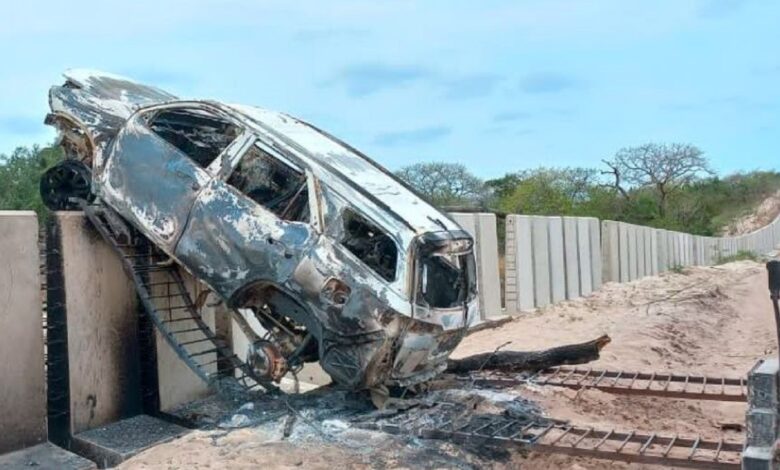
Despite the construction of a solid concrete fence on the border of South Africa and Mozambique, criminal syndicates are finding new ways of getting their stolen goods out of South Africa.
They have now resorted to building makeshift steel bridges that they use to drive stolen vehicles over the fence.
In a recent presentation to the parliament’s portfolio committee on Public Works and Infrastructure, the provincial government and the department said phases two and three of the Kosi Bay border project were anticipated to commence on September 30.
The R270.9m project, according to the presentation, is meant to curb cross-border crime between KZN and Mozambique in the Umkhanyakude District Municipality.
The project was first mooted in 2017 after two visits to the area by former president Jacob Zuma, and after numerous concerns were raised about the safety in the border line.
According to the presentation, concerns over heightened criminal activity in uMkhanyakude in northern KZN, notably the illegal movement of people between South Africa and Mozambique were raised, leading to the KZN government directing that a strategy be developed to improve the integrity of the border.
A borderline management committee was later established.
Border integrity improvement plan
KZN transport engineers conducted high-level technical analysis of possible infrastructure interventions to limit crossings and a border integrity improvement plan was adopted. The plan included reducing the ability of criminals to move stolen goods freely across the border through trenches, railway sleepers, and jersey barriers. In July 2018 the provincial transport department requested funding from Public Works and Infrastructure as border control and associated infrastructure is a national competence and not provincial function.
Due to the extreme urgency to deal with crime hotspots on the northern KZN-Mozambique border, the project was separated into phase one (54km KZN-Mozambique section) and the remainder of the border as phase 2 (balance of 540km of border around eSwatini).
The automobile manufacturing sector said it will also play its role in helping the government curb cross-border crime.
An automotive industry challenge
Toyota South Africa spokesperson Lelo Ndzimela said vehicle theft is an overarching challenge within the automotive industry.
“We at Toyota have and continue to implement security enhancements to our new vehicle security systems. We also offer to retrofit these measures to our existing customers at no cost. We are continuously working on new methods to counteract the ever-evolving and new modes of theft.”
The Border Management Authority (BMA) is reportedly procuring specialised law enforcement equipment in its fight against the illegal movement of people and goods through South Africa’s borders.
Since its establishment in April 2023 to enforce immigration and access control, land border infrastructure development and maintenance, and border risk management, among others, the authority has recorded some successes in its endeavor to uphold the country’s borders.
BMA yesterday told The Witness that despite the numerous efforts to tighten security, criminals are resilient in trying to make it across the border with stolen cars or goods.
BMA deputy commissioner in charge of operations (retired) Major General David Chilembe said the northern KZN part of the border has been a ‘headache’ for many years.
‘Easy to cross’
He said the topography of the area made it easy for criminals to cross with stolen vehicles.
“The area is level, so for many years what these criminals would do is remove the front and the back bumpers of the stolen vehicles and drive them through the border fence into Mozambique. Now that the government is tightening the screws and with this barrier in place, these criminals hijack vehicles just before the border and dash through before the vehicle can be reported as stolen.
“We are working with various stakeholders, including banks, which help us identify the ownership of the vehicle before it can cross. We have made a difference by working with law enforcement agencies,” said Chilembe.
The provincial government did not respond to queries at the time of publication.
Read original story on witness.co.za

