
Financial recovery a long shot for liquor stores after a month of closure
Most of the Pretoria-based liquor stores that have been able to remain in business after three alcohol sale bans and restricted trading hours believed that a financial recovery was a long shot.
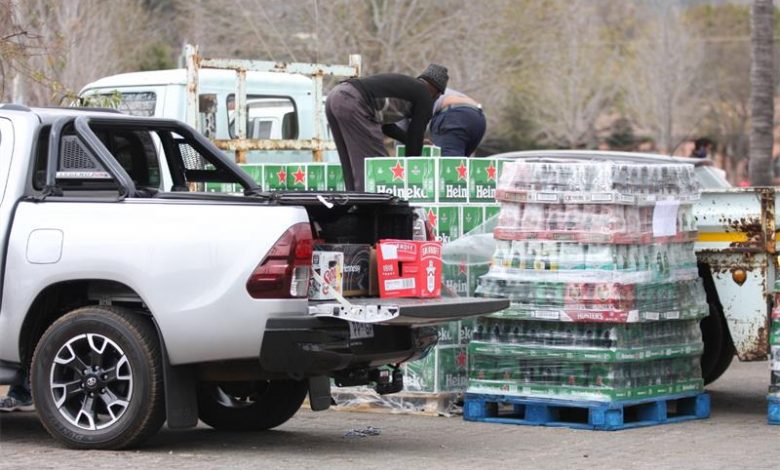
On Tuesday, liquor stores and restaurants started preparing to sell alcohol again after President Cyril Ramaphosa announced that the sale of alcohol was allowed to resume between Monday and Thursday for off-site consumption from 10:00-18:00.
Restaurants would also be permitted to sell alcohol for on-site consumption from 10:00-22:00.
While the weekend booze sales lock and restricted closure time remain, Silverton liquor stores owner Marius Pretorius believed this would drag financial recovery of medium-small businesses.
“I owe thousands in rent and that has affected the property owners, the municipality has given some a final letter demanding payment.”
Pretorius said for him to recover financially and pay all his outstanding accounts it would take him about a year and eight months.
“It is almost impossible to recover soon financially, without being able to trade on the weekends, we are going through stressful times.”
Pretorius was, however, relieved at the news of the reopening as he believed he could afford to pay the salaries of his employees.
“Our recovery would be mainly dependent on how people respond if they would buy or not.”
Louis Liquor Store owner Jean Victor said the financial recovery was almost impossible for the sector after having suffered three bans.
“We are grateful as a business just to be able to sell yet again. As optimistic as I am as a person, the harsh reality is that the cumulative effect of the ban and reduced trading hours, has had a massive impact on the cash flow.
Victor said the store had a rental relief in the first lockdown months, however, they did not receive any in the last months.
“We were not able to trade during the biggest windows of sales. When I count we have lost about six months of trading between the bans and reduced hours. I am on my knees right now as a business, we cannot survive yet another ban.”
Victor said they had to ensure all 18 employees were paid throughout the lockdown period, although cash flow was hit hard.
“It’s all fair and well that the business takes a strain from the ban but what’s not fair is for kids not to get food. When the business funds ran low I had to take some from my accounts to ensure they get paid, because most of the employees have children.”
He said for his business to recover from the financial knock due to the lockdown, it would take nearly four years.
“Right now we are just looking at stabilising the business to be able to pay off arrears and continue paying employees because the truth is everyone has been affected, for some of the restaurants we supply are not coping. The recovery will take time.”
Victor said support from the customers was “amazing” as people had been lining up at the store from 08:30.
Arlin Williamson of Rafters Pub in the east of Pretoria said January and February, were difficult months for the businesses but with the ban, things were “worse”.
“We are very happy that the ban has been lifted but the ban took too long. We thought it would be in place for two weeks. The impact was bad on our finances and some businesses closed down but we are trying to be positive that things will get better.”
She said she anticipated an economic recovery to take place in over a year.
“It will be a tough year. We will have to work hard but we will not see any recovery this year – maybe next year.”
The Beer Association of South Africa Patricia Pillay welcomed the lifting of the ban but believed it might have been a bit “too late” for small businesses.
The situation faced by small business owners and craft brewers remains dire – the last two alcohol bans had a devastating impact on the beer industry, with an estimated 7 400 jobs lost, R14.2-billion in lost sales revenue and more than R7.8-billion loss in taxes and excise duties.”
Notice: Coronavirus reporting at Caxton Local Media aims to combat fake news
Dear reader,
As your local news provider, we have the duty of keeping you factually informed on Covid-19 developments. As you may have noticed, mis- and disinformation (also known as “fake news”) is circulating online. Caxton Local Media is determined to filter through the masses of information doing the rounds and to separate truth from untruth in order to keep you adequately informed. Local newsrooms follow a strict pre-publication fact-checking protocol. A national task team has been established to assist in bringing you credible news reports on Covid-19.
Readers with any comments or queries may contact National Group Editor Irma Green (irma@caxton.co.za) or Legal Adviser Helene Eloff (helene@caxton.co.za).
Read original story on rekordeast.co.za

