
FNB Soccer City to turn into field hospital should Covid-19 numbers spike
The final proposal caters for a minimum of 1 500 beds, engineered for the best safety possible while accommodating the high volume of patients, medical specialists, support staff and vendors of up to over 4 500 people daily if the facility runs at full capacity.
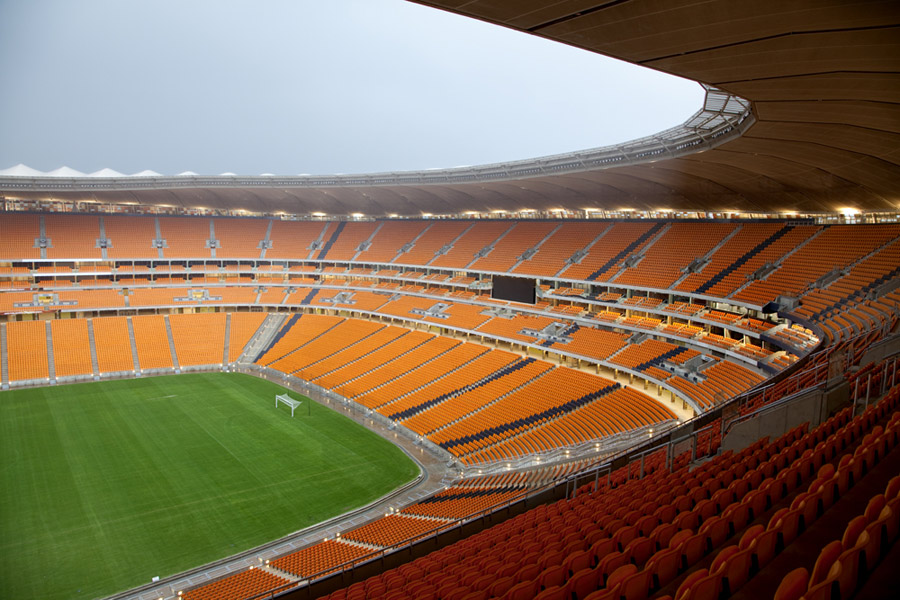
The FNB Soccer City stadium in Johannesburg could be used as a field hospital for Coronavirus patients should the number of confirmed infected persons increase rapidly.
The stadium will join the Nasrec Expo Centre, situated a kilometre from the stadium, as a location earmarked to accommodate Covid-19 patients should the health authorities not be able to manage the number of patients in existing health facilities.
Two days after the lockdown was announced by President Cyril Ramaphosa last month, a team of professionals comprising architects, hospital-design specialists, interior and urban designers responded to a 72-hour turnaround brief to turn the stadium into a field hospital.
As the design team couldn’t work together due to social distancing regulations, they worked through Zoom and in collaboration with Geyser Hahn, and Blue IQ Infrastructure consultants, the architecture firm came together to deliver a proposal which they said they hoped would not materialise.
The final proposal submitted comprises a patient-flow process from admission to treatment and escalation to ICU wards if needed, right through to mortuaries and provisions for the safety, protection and rest areas for medical staff.
The final field hospital proposal accommodates a minimum of 1 500 beds, engineered for the best safety possible while accommodating the high volume of patients, medical specialists, support staff and vendors of up to over 4 500 people daily if the facility runs at full capacity.
Provision of facilities for patients was divided into three categories of risk with the appropriate shielding and cubicles used for those at the highest need of care and intubation with beds and less intensive medical facilities provided for patients who needed to be monitored to assess their level of response to the Covid-19 infection.
Low risk patients with a high likelihood of returning home would be accommodated in tents in the parking area, and patients with a medium risk would be escalated to a higher level of care located in tents at the concourse level of the stadium. High risk or seriously ill patients in ICU would be accommodated in tents inside the stadium on the field or in ICU units in VIP suites.
Jean Grobler, a director at the architect firm Boogertman and Partners, said the stadium was designed for large volumes of segregated audiences to move swiftly within defined areas and lends itself to creating space for patients, medical staff and suppliers to move through a treatment system, while keeping the distancing needed to minimise the risk of infection.
Each tier of the stadium was thus assigned a role in the flow of treatment from testing and patient assessment to high care in ICU units, she said.
Thanks to the skills within the group and the partnerships forged over years of project delivery, the design and logistics proposal for Soccer City and an alternate site, Loftus Versfeld in Pretoria were ready for presentation by 31 March. Grobler said that the combination of the Soccer City original design teams’ knowledge of the stadium through Bob van Bebber, the Geyser Hahn health design specialist, Henry du Plessis’ understanding of the challenges and the input from Boogertman and Partners’ range of design skills partnered with engineers, quantity surveyors and safety specialists, was an incredible collaboration.
“While I hope we never have to build our design which we believe is an excellent solution from initial low-risk cases through to full ICU facilities, the spirit of collective problem solving and goodwill was incredible,” she concluded.
* Notice: Coronavirus reporting at Caxton Local Media aims to combat fake news
Dear reader,
As your local news provider, we have the duty of keeping you factually informed on Covid-19 developments. As you may have noticed, mis- and disinformation (also known as “fake news”) is circulating online. Caxton Local Media is determined to filter through the masses of information doing the rounds and to separate truth from untruth in order to keep you adequately informed. Local newsrooms follow a strict pre-publication fact-checking protocol. A national task team has been established to assist in bringing you credible news reports on Covid-19.
Readers with any comments or queries may contact National Group Editor Irma Green (irma@caxton.co.za) or Legal Adviser Helene Eloff (helene@caxton.co.za).
Read original story on reviewonline.co.za

