
Government making ‘significant strides’ to end load-shedding
According to the minister of electricity, South Africa will soon end load-shedding to ensure that the economy operates at its full capacity.
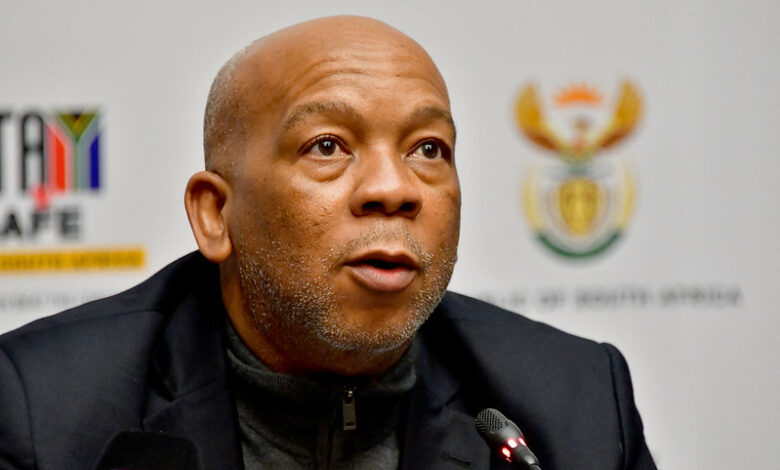
The minister of electricity, Dr Kgosientsho Ramokgopa, has reaffirmed the government’s commitment to finding solutions to end load-shedding, saying there is light at the end of a dark tunnel with a lower-than-expected winter energy demand, a successful focus on the causes of break-downs at power station units and plans to meet transmission demands.
Briefing the media on progress in the implementation of the Energy Action Plan in Pretoria, Ramokgopa reassured South Africans that, working with a team of competent engineers at Eskom and the leadership of the board, significant strides are being made.
“I want to give you confidence that we are going to resolve this, it’s an engineering problem. I eat, breathe, and sleep [finding] solutions to load-shedding, and I am confident that with the team that is helping us, we will be able to resolve [it],” he said yesterday.
“We will get out of load-shedding, build a buffer, and ensure that the South African economy is able to realise its potential,” Ramokgopa said.
The government had projected that in winter the country would hit highs of 34 000 Megawatts, but it has not reached anything close to this. The minister attributed this to a change in South Africans’ and industries’ attitudes towards reducing their electricity demand.
Giving an update on the previous five-day average ending on June 30, Ramokgopa said the current available capacity was beginning to plateau at about 29 913 Megawatts, compared to the 28 664 Megawatts of capacity that the country was sitting on as of June 26.
“We are making significant improvements of about 1 300 megawatts, and what is encouraging for me is that we are beginning to maintain that,” Ramokgopa said.
He said South Africa was beginning to keep up with the demand, and this had resulted in no load-shedding for significant periods of the day.
However, the minister emphasised that there was a need to ensure that generation far exceeds demand.
“In that way, we would be able to pull a number of units through planned maintenance, and we would be able to build a buffer so that, as the South African economy continues to grow and recover, we would have sufficient generation capacity.”
The minister said it was worth noting that in the midst of winter they were able to ramp up planned maintenance, which he said is ‘an illustration of a system that is recovering’.
Focus on partial load losses
Partial load losses were an area receiving attention, Ramokgopa said, adding that the government was tapping into expertise outside of Eskom to go and work with general managers at various stations.
“We are able to diagnose and determine the root causes of the failures from one unit to the other – what are the common failures that are responsible for the failure of that unit and/or responsible for the partial load losses? Then we know the biggest culprits on the units going out are boiler tubes, the quality of the coal, and our failure to keep to the emission parameters.
“We are very meticulous and deliberate. There’s a degree of granularity in how we are beginning to understand the performance of these units and the kinds of skills and interventions that are required to help us address this situation,” Ramokgopa said.
Transmission remains a vulnerable area
Meanwhile, the issue of transmission needs to be addressed.
The minister said this remained a vulnerable area and required urgent attention as it undermines the ability to bring on board new generation capacity from renewable energies that give the best returns.
“If you have to do a wind atlas, the best areas for you to have wind are the coastal areas of the Western Cape and Eastern Cape. It is exhausted in the Northern Cape, it is about to be exhausted in the Western Cape, and it is not sufficient in the Eastern Cape to accommodate the amount of energy that we want to introduce,” he said.
He said Eskom is working on a transmission development plan, but the issue is around finance which required an innovative plan. – SAnews.gov.za
Read original story on www.citizen.co.za