
Historic Anglo-Boer War blockhouse could return to Middelburg
A heritage structure is being considered for relocation as local history enthusiasts search for a suitable site to preserve a rare piece of South Africa’s military history.
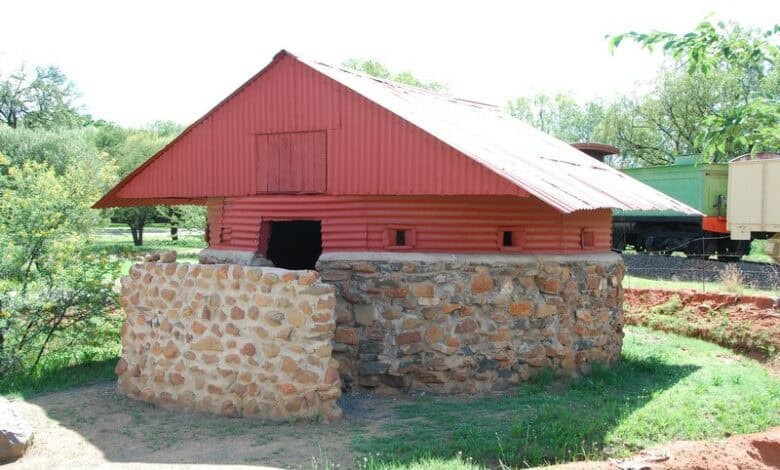
The Middelburg Heritage Association is investigating several potential sites across the town to house and preserve a rare Major Rice Pattern blockhouse, reports Middelburg Observer.
Simon Green, an expert on blockhouses, confirmed to the Middelburg Heritage Association that he knows of a Rice Pattern blockhouse that could be relocated to the town. Rudi van Wyk, chairperson of the heritage association, says there is also a blockhouse in Ermelo in which homeless people are currently sleeping in.
Search for a suitable site
The main challenge facing the association is finding an appropriate location for the structure.
Unfortunately, the blockhouse and cannon post, after which Kanonkop is named, have deteriorated over the years to just a pile of stones. The foundations are still visible.
However, relocating the blockhouse to its original site would leave it vulnerable to vandalism, with the corrugated iron sheets and other materials likely to be stolen soon after installation.
As the Rice Pattern blockhouse was manufactured near Middelburg Station, the site would have been an ideal location for its relocation. However, the future of the station remains uncertain.
Another option is the area near the old church at HTS Middelburg.
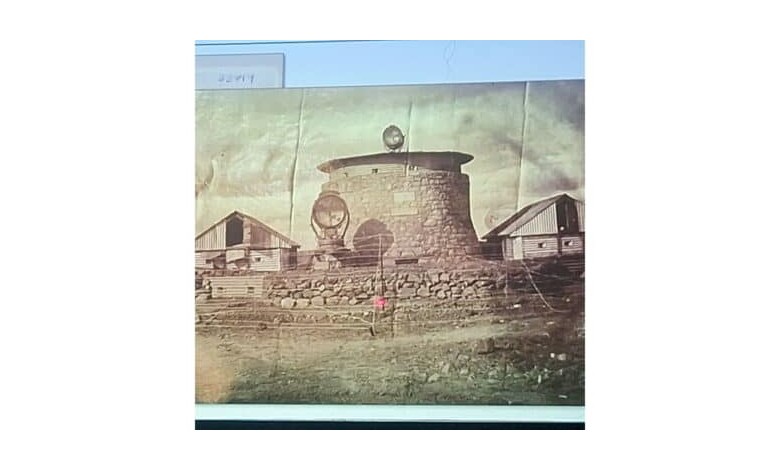
The Rice block house near Kanonkop. Photo: Supplied
Preserving local history
The heritage association is investigating all possibilities before taking the next step to move the structure.
According to Theo Ligthelm, there are still a few blockhouses left that need to be moved to conservation points.
“There is an opportunity to move such a Rice Pattern blockhouse, which was built here, back to Middelburg and preserve it together with a zinc roller as an example of innovation. Middelburg Heritage is currently trying to get the project off the ground and is looking for a suitable location for exhibition.”
Designed for rapid deployment
Recognising that thousands of blockhouses would be needed, Lord Kitchener turned to prefabricated structures that could be manufactured and assembled quickly. Several prototypes were developed, but the design by Major S. R. Rice was eventually adopted.
Kitchener’s strategy during the Anglo-Boer War was to divide the country into smaller areas using fortified lines, preventing Boer forces from moving freely between them. British troops could then be transported by train into areas where Boer forces were active and deployed against them.
By the end of the war, more than 8 000 blockhouses of various designs had been built, with about 50 000 men deployed to guard them. The blockhouse lines stretched for as much as 6 000km.
Most of the 441 masonry blockhouses were built between December 1900 and early 1901 at strategic locations, including railway bridges, railway stations and towns. The first metal blockhouse was built in Nelspruit in January 1901.
By February, Major Rice had developed his circular corrugated-iron blockhouse. Its circular design provided all-round visibility while eliminating corners that would have required wooden support posts.
The steel door was sheltered by an additional piece of corrugated iron. The Rice Pattern blockhouse could be assembled in about six hours by six men, making it well suited to Kitchener’s rapid construction programme.
Each blockhouse was surrounded by a stone wall, while trenches and stone sangars were constructed around it. These defensive features provided the garrison with protected routes in and out of the blockhouse and positions from which to engage attackers.
Breaking news at your fingertips… Follow Caxton Network News on Facebook and join our WhatsApp channel.
Nuus wat saakmaak. Volg Caxton Netwerk-nuus op Facebook en sluit aan by ons WhatsApp-kanaal.
Read original story on www.citizen.co.za

