
Journalists reflect on 2020
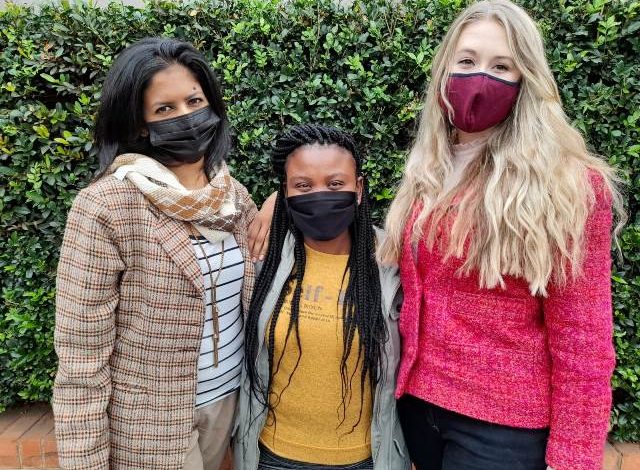
As South Africa went into level 5 lockdown in March 2020, the journalists at Capital Newspapers went into hyperdrive; stories began emerging of community relief efforts and Covid-related deaths. This was done while working from home and relying heavily on technology for communication. During the Christmas break, the journalists had a chance for introspection and wrote down what the last year has taught them.
Learn, Adapt, Survive
Shorné Bennie
As a journalist, I learn something new every day. I love breaking news stories and being on the scene as the details unfold. This allows me to provide readers with vivid images and factual information. When Covid-19 began overseas, we did not think that much of it.
Then, gradually there were whispers. In February, we began looking for Pietermaritzburgers abroad affected by Covid-19. We started telling more stories of locals who were abroad in lockdowns. Hearing them speak of being quarantined was something we could not identify with at the time.
One afternoon in March, there was a buzz about South Africa’s first Covid-19 patient. Our editorial team began searching for where the person might be and we had confirmation that patient zero was from Hilton.
Suddenly, we found ourselves being equipped with hand sanitiser and masks, now part of our essential gear when leaving for stories. We rushed to Hilton for our first media briefing about Covid-19, with the Minister of Health Dr. Zweli Mkhize, the MEC for Health Nomagugu Simelane-Zulu and the MEC for Education and a panel of other speakers.After that, events began being cancelled. There was this rush; it felt like we were in a movie, placing shutters on our doors before a hurricane. I still foolishly thought things would return to normal in a few months. There were no deaths, yet.
Since the start of the lockdown, we wrote stories for online. We found a rhythm of maximising technology for all aspects of journalism. Our phones were our second office. Our pets began to wonder why we were at home. If we knew, we shared the knowledge.
We were thankful for our family members who cared for our meals and were mindful while we made our phone calls. News was vital; stories of the community supporting each other, finding their second careers, re-inventing themselves, their cooking skills and using what they had to survive. I realised we have the power to learn, adapt and survive.
Our permits became another journalist essential. It felt bizarre driving around at midday, being the only car at an intersection. Then I covered my first tragic story of a family of five testing positive. The parents died within a week of each other, leaving behind three children. I covered a number of stories where people lost their partners and entire families to Covid-19. Many told us of the last time they saw their family members – over video calls.
In a newsroom, your support is your team. We went from shouting out contact numbers and instructions or advice across the newsroom, to diary meetings held over Zoom. We gradually returned to the office and there was sight of some normality. Then, as more restrictions were lifted, we started seeing infections rise. There it was again; numbers into names, frontline workers became fallen heroes, we documented drive-by funerals. People cried in their masks, their loved ones, victims of the silent, invisible Covid-19.
Our social media is constantly filled with images and notes of those who did not survive. Let us continue to use what we have been equipped with, to learn, adapt and survive Covid-19.

Finding Hope Amid the hopelessness
Jade le Roux
As journalists, we’re used to being on the go, never truly being able to “switch off”, and this pandemic was just another testament to the fact that news never sleeps or takes a holiday. Not even shutting down the country can bring the production and distribution of news to a halt.
As if social media and the internet were made specifically with 2020 in mind, our whole work mode and environment shifted. We lived online. Even our newspapers went online – the same content, just at click-of-a-button instead of hand-through-the-post-box.
It reminded me that one of the basic human needs is communication. We were aware we were reporting on history in the making. From the onset, the pandemic made me reflect on the journalist’s role during a crisis; to report accurately and fairly and to minimise harm from the onset became more important than ever as suddenly so much was at stake.
With the panic buying and overstocking on food and toilet paper that started at the first faintest rumour of a lockdown, our job as reporters was to echo the government’s call for calm: to stop panicking; there is enough for everyone, but only if we think of the other person while we’re trying to look after ourselves.
This pandemic highlighted for me the ethical and social responsibilities journalists have in the way they report on news, deliver facts and package what is in the public interest. The balance between reporting on the dire facts and minimising the spread of the second pandemic – panic – became extremely necessary.
But throughout 2020, colourful messages of hope that were painted on many gates and driveways became another important theme of 2020: encouragement to all, and especially essential workers who passed the empty roads and locked-up houses while they risked their lives on the frontline.
There were stories of people not staying seated when the rampage of financial ruin resulted in hunger. There were stories of people giving the little they could behind masked faces. Donation trolleys at the front of supermarkets were filled to the brim, weekly, with food parcels. People sewed masks for those who couldn’t afford their own. Communities members volunteered their time to shop and run errands for their immunocompromised or unwell neighbours. Businesses banded together to support one another, not letting the economic crunch eat away their sense of community. These are the stories that made it easier to keep going, to keep writing, when my brain hurt every time I typed “Covid-19”.
Reporting in general, especially in Covid-19, is like walking a tightrope. As reporters, our job is to write the facts, and present them in the most balanced and unbiased way possible. Covid-19 is a morbid truth we cannot escape. There is a rising death toll, overcrowded hospitals, overworked healthcare workers, financial ruin, loneliness and fear all round.
But there is also hope – highlighted through stories of perseverance, resilience and encouragement. It is also our job to find these, to dig them out of the rubble and tell them. We cannot make these stories up, so the fact that amid the fear, uncertainty, hopelessness, and death, these stories exist, gives me hope and a restored faith in humanity – because behind every story is a person that forms a part of my community.
Tough times for us but the pandemic has united journalists around the world
Ntombizethu Ngcobo
The Covid-19 global pandemic has brought unprecedented disruption to every area of our lives in 2020 and particularly so for frontline journalists covering the rapid spread of the disease.
As journalists we are on the ground face-to-face with people and communities. People tell us their stories because we are there when it matters. They see us working in the community and they develop trust in so that they can share their stories.
The pandemic changed everything. Suddenly covering a news story meant arriving covered in PPE. People were afraid. We as journalists were afraid but it mattered to us to be there despite the enormous challenges. And there were many challenges. During hard lockdown everything came to a standstill, including transportation.
I must say, working from home during a global pandemic isn’t the same as working from home. As journalists, we try to help people make sense of a crisis while experiencing the crisis ourselves. I have learned how to use technology more effectively, as we use the work-from-home techniques and tactics. Since we can’t do much man-on-the-street reporting, it requires a lot of creative thinking and how to find story ideas.
However, I miss the in-person connection with my sources and also my colleagues but there are still ways that this global pandemic unites us, in the sense that we are all going through the same worries and struggles about the future. These are tough times for journalists too.
Read original story on capitalnewspapers.co.za

