
Landmark court victory to help save endangered African penguins
The fisheries department has two weeks to ensure the closure of no-fishing zones around six key penguin breeding areas.

Efforts by BirdLife South Africa and the Southern African Foundation for the Conservation of Coastal Birds (SANCCOB) have resulted in a historic victory for South Africa’s critically endangered African penguin.
Recently reclassified as Critically Endangered by the International Union for Conservation of Nature (IUCN), the African Penguin population has plummeted by a shocking 76.9% in less than two decades, with breeding pairs decreasing from approximately 27,151 in 2007 to just 8,750 by December 2023.
The species, threatened by competition for fish from the commercial sardine and anchovy fishing industry, has been granted protection through a court order issued by Deputy Judge President Ledwaba in the Pretoria High Court on Tuesday.
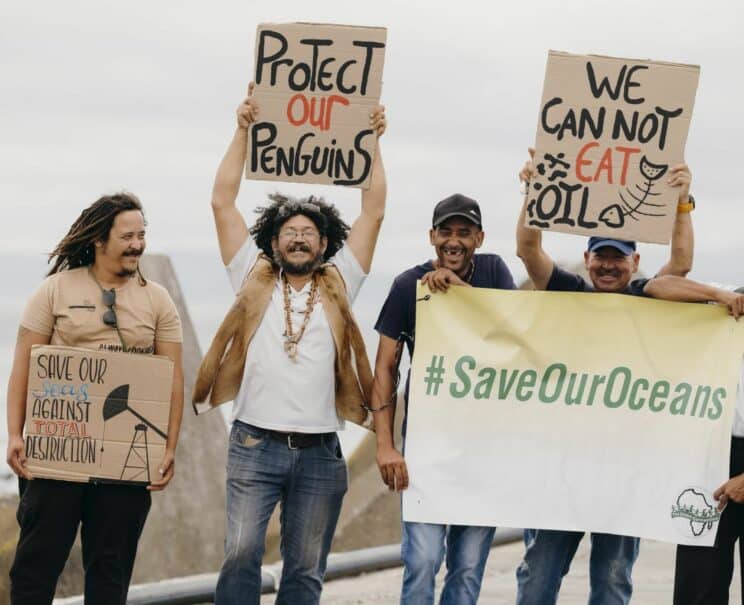
Weeks of negotiations leads to agreement
The order follows a hard-won settlement agreement between the two conservation non-governmental organisations and commercial sardine and anchovy purse-seine fishers, endorsed by the state.
The agreement, reached after weeks of negotiations, establishes no-take zones for the commercial sardine and anchovy fishery around six key African penguin breeding colonies.
These closures secure biologically meaningful foraging areas for African penguins in the west coast, southern Cape, and Algoa Bay regions, aiming to prevent the species’ extinction.
The no-take zones include an extended 20 km radius closure around Robben Island, a closure at Stony Point, a 20 km closure surrounding Bird Island, and St Croix Island, in addition to the existing closure around Dassen Island and the ‘split zone’ closure at Dyer Island.
Under the order, the Department of Forestry, Fisheries and the Environment (DFFE) has two weeks to implement the closures by amending permit conditions for commercial sardine and anchovy fishers, including redeye.
These conditions will be renewed annually until 2035, when scientists predict the African penguin could be extinct in the wild. The order has been welcomed by prominent conservation organisations.
NGO’s praised for their efforts
Craig Smith, senior marine specialist with WWF South Africa, congratulated all parties for reaching an agreement and expressed hope for immediate implementation ahead of the penguin breeding season.
Kate Handley, executive director of the Biodiversity Law Centre said that the resolution of the long-standing disagreement between conservation and industry would protect the ocean ecosystem for the benefit of future generations.
“It is absolutely essential that the South African government takes proactive, precautionary steps to protect our country’s mega-biodiversity, protect threatened species and prevent extinction,” said Handley.
Dr Alistair McInnes, BirdLife South Africa’s seabird conservation programme manager, said the court order was an important milestone in the fight to protect Africa’s only penguin species.
ALSO READ | Pietermaritzburg filmmaker’s ‘Penguin Town’ bags three Emmys
McInnes added that “the livelihoods of many who derive benefits from marine ecosystems that are equitable and judiciously managed” would be protected by this order.
The collaborative efforts on “science-led solutions to conservation management along SA’s coastline” will be “led by the status of African penguins and other seabirds, as indicators of the health of our oceans,” said McInnes.
“This alarming decline of the African Penguin is a clear warning of the crisis unfolding in our oceans,” says The Green Connection’s Community Outreach Coordinator, Neville van Rooy.
The Green Connection, who have been fighting for the rights of small-scale fishers, says it supports SANCCOB and BirdLife South Africa in their legal challenge, recognising that the fight to protect the African Penguin is also a fight for the rights of small-scale fishers and coastal communities.
“A thriving ocean not only sustains marine life, but it also sustains the people who depend on it for their livelihoods, culture, spirituality, and way of life. This decline of the African Penguin is another red flag, because it is an indicator of the poor health of our oceans.
“Thus, for The Green Connection, this fight is to acknowledge the significance of the ocean and put in place strong measures to ensure the whole ocean system is protected to sustain all of us into the future, particularly the small-scale fishers along the 3 000km of our coast,” says The Green Connection’s Strategic Lead, Liziwe McDaid.
Read original story on witness.co.za

