
Public urged to keep distance from Cape fur seals this holiday season
Authorities have warned beachgoers to avoid contact with Cape fur seals this summer following reports of aggressive behaviour linked to rabies.
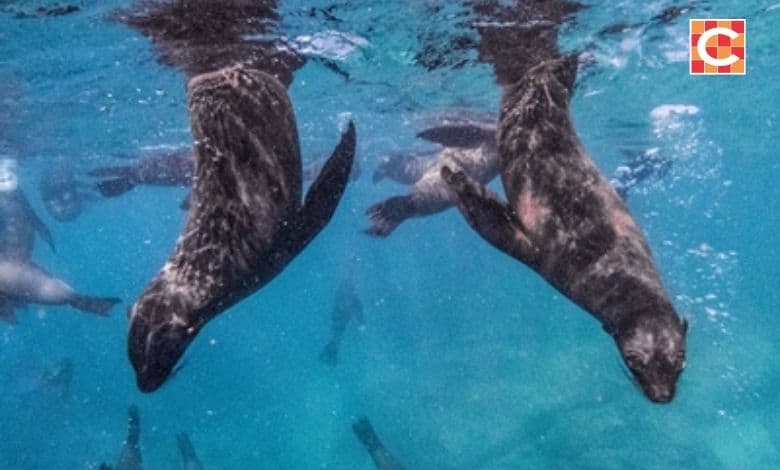
The public is urged to exercise caution and follow safety guidelines during the upcoming summer holiday season when encountering Cape fur seals.
Suid-Kaap Forum reports that while these marine mammals form an integral part of our coastal ecosystem, it is crucial to recognise that human-wildlife interactions can have severe consequences.
Recently, reports of aggression related to positive rabies cases have been noted in Cape fur seal populations. Seals may also carry other diseases that can be transmitted to humans, and they have sharp teeth that can cause physical damage.
It should be noted that activities that disturb seals in general are illegal without a permit, according to the National Environmental Management: Biodiversity Act’s Threatened or Protected Species regulations.
These activities include petting, as this disturbs the animal’s natural behaviour and exposes humans to potential dangers such as bites, scratches, infections and disease. Even in instances when a seal pup is found on a beach, people should avoid interacting with the animal.
The public should contact authorities who are trained and equipped to rescue and care for such animals.
While it is common for seals to haul out on beaches to rest, it is important to recognise any signs of distress or abnormal behaviour when encountering a seal. Seals may display defensive behaviour if they feel threatened or are injured.
They may display aggressive or disoriented behaviour if infected with rabies. Rabies can be transmitted through bites, scratches or direct contact with saliva and is fatal for both humans and unvaccinated animals.
The public is urged to stay away from seals and not to touch or engage with them. Swimmers and surfers must be extra vigilant while in the sea. If a seal is spotted, exit the water immediately, and if you suspect it may have rabies, report it to the lifeguards or municipal authorities.
“As we approach the busy summer season, I remind everyone that Cape fur seals are wild animals. Even well-intentioned interactions can have serious consequences for both people and the animals,” says Dr Ashley Naidoo, CEO of CapeNature.
“We urge the public to act responsibly, avoid contact and immediately report any abnormal or aggressive seal behaviour to the authorities.”
In the case of a seal bite, scratch or lick:
- The beach will be closed immediately, marked by the activation of a shark siren and the raising of a shark flag, if available. Shark spotters or lifeguards will promptly notify CapeNature and the state veterinarian, who will provide guidance on the necessary action.
- Municipal Disaster Management and appropriate Marine Stranding Networks will also be informed. Lifeguards or first responders will monitor and track the seal’s movements.
- The beach will only reopen after the seal has been safely removed or has vacated the area.
- Anyone bitten, scratched or licked by a suspected rabid seal should seek urgent medical care at the nearest hospital.
- At the scene, the wound must be thoroughly washed with soap and water for 10 to 15 minutes. The person must then be taken to the nearest hospital to receive post-exposure prophylactic treatment against rabies. The patient needs to inform the hospital personnel that the bite, scratch or lick is from a seal that may be rabid.
- A video of the seal’s behaviour should be captured if possible and sent to CapeNature at 083 236 2924, including a location pin. This will be placed on the appropriate stranding network for advice and planned reaction.
- If your pet has been bitten or scratched by a seal, consult the local state veterinarian. Provide details of the incident, including wound type, treatment received and vaccination history.
- Follow the same wound-cleaning protocol for pets as for humans. Ensure your pets are vaccinated against rabies, as this is the only means to protect them against this deadly disease. It is a legal requirement for all dogs and cats in South Africa to be vaccinated against rabies.
Contact details for Provincial Veterinary Services are available here.
Breaking news at your fingertips… Follow Caxton Network News on Facebook and join our WhatsApp channel.
Nuus wat saakmaak. Volg Caxton Netwerk-nuus op Facebook en sluit aan by ons WhatsApp-kanaal.
Read original story on www.suidkaapforum.com

