
R1,2-billion owed to Tshwane cripples service delivery
Just this week the Pretoria deeds office in the CBD had it’s Merino building’s electricity supply cut, due to arrears of R3.6-million.
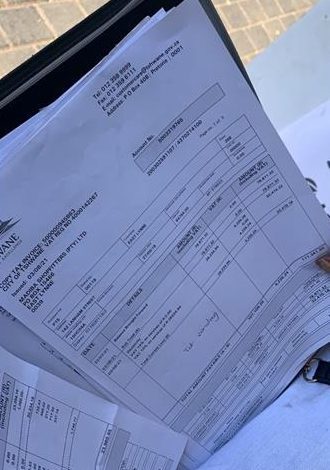
Government departments and embassies are among entities contributing to Tshwane metro’s failure to service residents fully.
The metro’s burgeoning debtor’s book caused by non-payment has been identified as one of the causes for poor basic service delivery.
Tshwane’s municipal services debts currently stands at R1,2-billion.
Just this week the Pretoria deeds office had its Merino building’s electricity supply cut.
If there was any doubt about the failure of cadre deployment, the Pretoria Deeds Office (the busiest Deeds Office in the country) is closed until further notice because it hasn’t paid its electricity account and they have been turned off.
— Joburg lawyer (@joburglawyer) November 15, 2021
No activities could be performed for two days as talks were held, leading to operations continuing and running on Wednesday morning.
Tshwane metro spokesperson Lindela Mashigo said the electricity supply to the Pretoria deeds office was disconnected due to the account being in arrears.
“The total balance due to the account as of Thursday is R3.6m with the last payment received in September 2021.”
Mashigo said the department would be engaged to look into a payment arrangement for reconnection.
Spokesperson Selby Bokaba said the debt by government departments, embassies and entities was creating strain for the metro to fulfill its obligation of delivering essential and basic services to its residents and customers.
ALSO READ: Former drug addict wants to help troubled youth
He said government departments owed Tshwane about R1,2-billion, while embassies had debts of over R12-million.
“The metro is currently disconnecting meters that are in arrears with the municipality on property rates, water and electricity services.”
He said Tshwane would continue to intensify the enforcement of credit control to recoup the millions of rands owed, to stabilise its finances and to enable it to render much-needed services.
“The city will also vigorously pursue residential and business customers whose accounts are in arrears.”
The step up by Tshwane, follows the metro promising to ensure regular meter readings after it was instructed to do so by public protector Busisiwe Mkhwebane recently.
Tshwane acting city manager Mmaseabata Mutlaneng had 60 days to implement remedial action on the metro’s billing system after the order was made in October.
Mkhwebane had received a string of complaints that the metro was billing consumers irregularly for water and electricity based on estimated consumption instead of regular meter readings.
“We found that it was partly true that the metro billed consumers irregularly for water and electricity based on estimated consumption due to its failure to take meter readings regularly,” said Mkhwebane.
According to her, investigations revealed that the metro employed its own meter readers and engaged private service providers to read meters when there was a budget.
She said due to budgetary constraints, the metro had not approved private meter readings.
“Standard electricity by-laws of 2013 permit the metro to bill consumers based on estimated consumption. The national rationalised specification requires that meters be read at least once every three months. But evidence gathered and also confirmed by the metro indicated that, in some cases, it estimated meter readings beyond a period of three months.”
Mayoral chief of staff, Jordan Griffths, at the time said it was important to note that the public protector’s report was derived from “only” 70 complaints that her office received.
“The city has close to 400 000 users of e-Tshwane and issued bills to approximately 900 000 accounts. Many of the complaints that had been referred to her were also resolved by the time her report was released.”
Read original story on rekord.co.za

