
SA cheetahs to India: Still no freedom for captured cats
The fastest land mammal, cheetahs need to hunt and run to stay in top form, yet the SA government has left 12 of these animals trapped for months as it finalises an MoU with India.
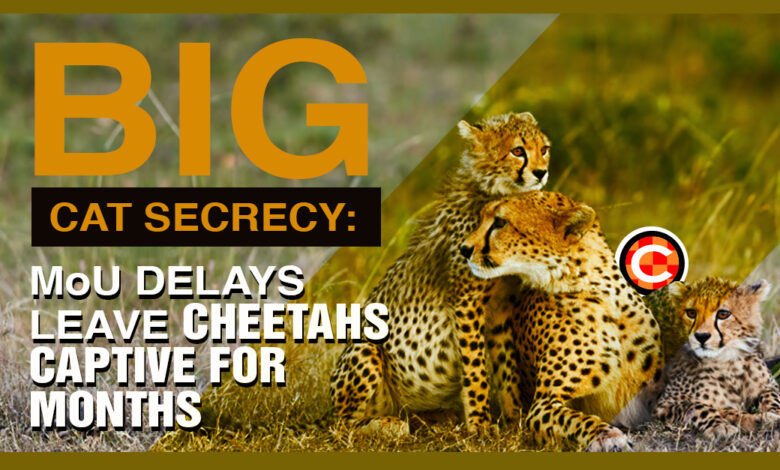
Huge question marks remain over the cheetah relocation project between South Africa and India. No one is willing to comment on the status of the multi-million rand project, whether on or off the record.
Project Cheetah has been hailed by the Indian government as ‘the world’s first inter-continental large wild carnivore translocation project’, but conservationists are calling it ‘tunnel vision’ by authorities who ‘have no experience or understanding of cheetahs in the wild’.
Eight cheetahs from Namibia, which also form part of Project Cheetah, were released into a boma in Kuno National Park in India in September last year. They have since been moved to a bigger enclosure and have started hunting on their own. The aim is to release them into the park in February.
The 12 animals from South Africa, however, have now been in bomas in Limpopo and KwaZulu-Natal since July last year. There are fears about their condition, with weight gain and fitness loss of particular concern.
Caxton Local Media reported in October that the Memorandum of Understanding (MoU) between the two countries was yet to be signed. When contacted recently for information about progress in this regard, the Department of Forestry, Fisheries and the Environment (DFFE) said it could not comment on the agreement or any related processes.
The Hindustan Times, an Indian English-language daily newspaper in Delhi, has, however, quoted a South African official as saying ‘President Cyril Ramaphosa has given his in-principle approval and a final MoU will be finalised within a week’.
Vincent van der Merwe, manager of The Metapopulation Initiative, which looks at wild cheetah reintroductions and relocations to increase their resident range and improve their genetic and demographic status, referred all queries to the DFFE. When asked specifically about a report that some of the South African cheetahs will need to be swopped out due to loss of condition after being in the bomas so long, he declined to comment.
Last year, Van der Merwe told Caxton: “Government procedures must be followed, these bureaucratic procedures involve meticulous negotiations that take time.”
Conservationists unhappy
Dr Gus Mills, a highly regarded predator researcher and formerly with Scientific Services SANParks, has lent his voice to those who have labelled Project Cheetah ‘an ill-advised conservation attempt’.
In a paper published with others on ResearchGate, a networking site for scientists and researchers, they propose that if “India is keen to bring back cheetahs, we recommend that the cheetah action plan be radically revised using a fully science-based approach.
“That is, by rigorously assessing the questions asked and the methods used in contemporary research on free-ranging cheetah populations and their genetics, and accordingly taking steps to secure India’s threatened savannahs, grasslands and their associated fauna, including suitable wild prey for cheetahs, before bringing cheetahs to India.
“Adopting such a science-based approach will not only increase the likelihood of reintroduction success of wild cheetahs, but also will do so without disrupting other ongoing conservation efforts. This will, more efficiently, fulfil India’s desire to restore its big cat heritage.
“We believe that there is an urgent need for international bodies, such as the International Union for Conservation of Nature and the wider community of cheetah and carnivore biologists, to re-evaluate the purpose and practice of such intercontinental, large carnivore translocation efforts.”
Read original story on highwaymail.co.za

