
SA scientist part of team that unearths remains of dog-sized dinosaur
A scientist from Stellenbosch University helped uncover specimens of a newly found species of dinosaur that lived 99 million years ago. He will now embark on another journey to learn more about climate trends millions of years ago.
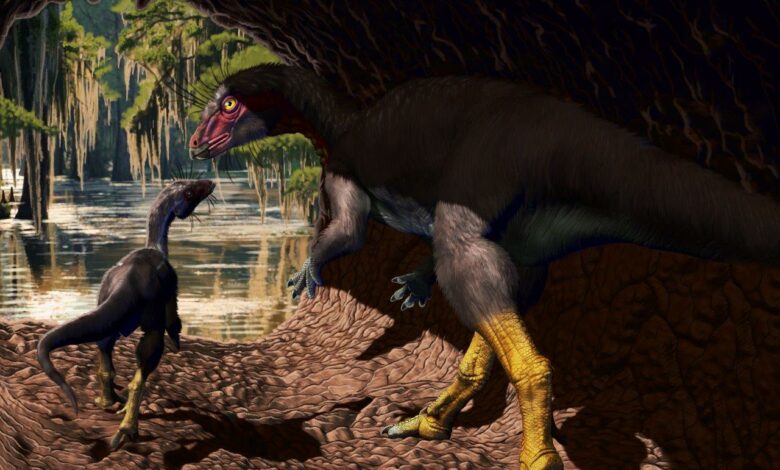
Dr Ryan Tucker, a sedimentologist from Stellenbosch University (SU), recently played a role in the discovery of Fona herzogae, an ancestor of the Thescelosaurus.
The dinosaur is described as a small-bodied, plant-eating dinosaur about the size of a large dog, covered in a downy coat of colourful feathers and is believed to have lived in underground burrows.
According to a media release issued by North Carolina State University (NCSU), Fona lived 99 million years ago in present-day Utah, while Thescelosaurus lived just before the mass extinction event about 66 million years ago.
During Fona’s time on earth, the area was a large floodplain ecosystem sandwiched between the shores of a massive inland ocean to the east and active volcanoes and mountains to the west. Overall, it was a warm, wet, muddy environment with numerous rivers running through it.
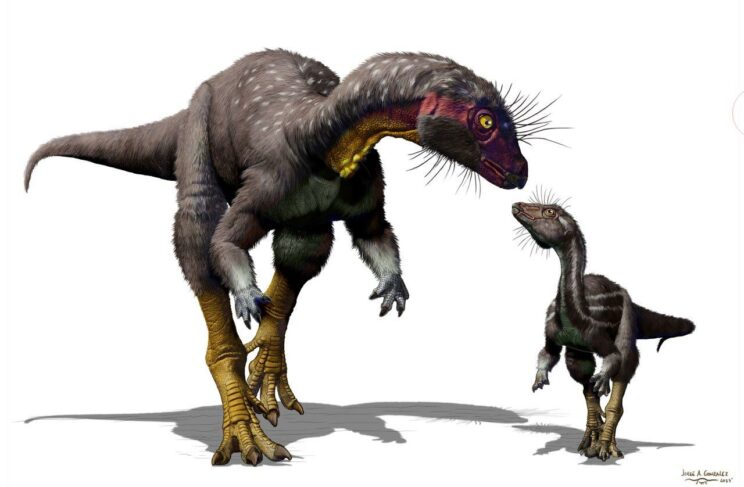
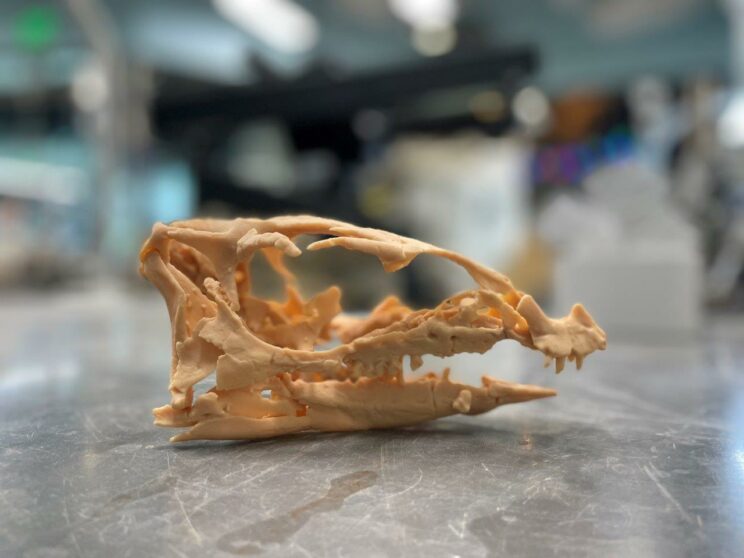
Tucker was part of the team of scientists from NCSU and the North Carolina Science Museum (NCSM) who unearthed several specimens from the same species in the Mussentuchit Member of the Cedar Mountain Formation in 2013.
For the past decade, Tucker’s ongoing collaboration with Dr Lindsay Zanno from NCSM and NCSU has focused on describing and dating the immediate environmental and climatic conditions of the area where Fona and other newly discovered fossils have been found.
He recently discovered several well-preserved volcanic ash fall beds associated with this and other key fossil finds (such as Moros intrepidus and Iani smithi), facilitating more accurate dating as the deposited ash is laid down relatively instantaneously in geological time. This newly formulated temporal framework was recently published in the Journal Geology.
Tucker says there is still a great deal of work to be done in the mid-Cretaceous Western Interior Basin to better understand climate change during this period of Earth’s history. The above efforts are currently supported by the National Science Foundation in the United States of America.
Tucker and postgraduate student Kira Venter will again be joining Zanno and an internationally diverse multidisciplinary team for a two-month field expedition to the East Gobi Basin in Mongolia. Funded by National Geographic, the expedition forms part of a large-scale study to understand paleoclimate trends in eastern Asia 125 to 83 million years ago.
“If successful, we will be able to better understand climate change on a hemispheric scale (with comparison to North America), along with generating data that could facilitate meaningful climate forecasts for our own near future if current trends remain unchanged,” he explains.
Read original story on www.citizen.co.za

