
Solar system owners urged to register before March deadline
Eskom has encouraged business owners and residents with solar systems to register their installations to ensure safety and legal compliance.
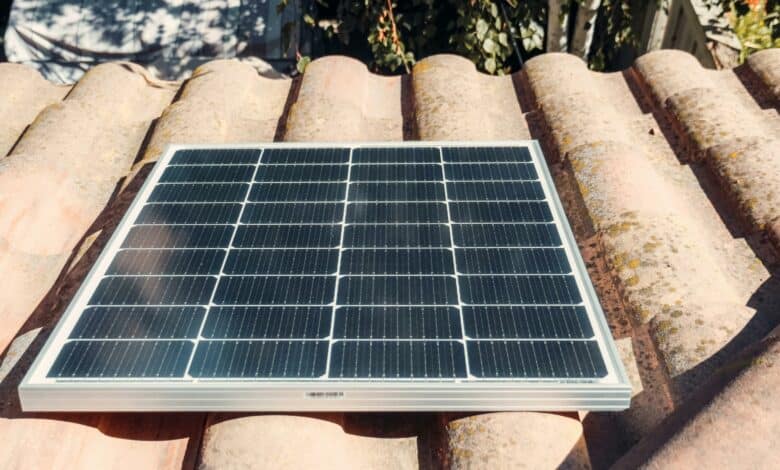
Residents who have solar systems up to 50Kva have until March 31 to register their residential and business solar PV or other small scale embedded generation (SSEG) systems to meet the legal requirement to register with the electricity service provider.
However, the decision has drawn criticism from ratepayers and residents’ associations, who question why households were charged connection and smart meter fees for residential solar systems, reports the Southlands Sun.
According to a statement from Eskom, the vast majority of residential systems are under 50kVA.
All registration and connection fees of up to R10 000, including a free smart meter, are waived until March 31.
“If Eskom is indeed waiving registration fees with a potential saving of up to around R10 000 per household, then the first question the public should ask is: Why were ordinary South Africans being charged these fees in the first place?” said chairperson of Bluff Ratepayers and Residents Association in KZN Allison Schoeman.
Schoeman said for many households, rooftop solar is not a luxury, rather a necessity born out of Eskom’s failure to provide reliable electricity.
“People have been forced to invest their own money into alternative power purely to keep their homes functioning and to protect their livelihoods,” she added.
“In principle, regulation is necessary for safety, grid integrity and responsible electricity management. However, what cannot be justified is the creation of cost barriers that effectively punish citizens for trying to solve a crisis they did not create,” said Schoeman.
“It is particularly concerning where consumers are charged ‘registration’ and ‘connection’ fees in circumstances where they are not increasing demand on the grid, and in fact are reducing reliance on Eskom through self-generation,” said she.
“I would, however, want to investigate further and understand the operational details, including who supplies the smart meters, how procurement is managed, and whether any third-party service providers benefit financially from these requirements. Transparency around this is essential,” said Schoeman.
She said Eskom’s decision to waive these fees shows that the charges were unfair and consumers had little power to change them.
“The reality is most residents cannot afford litigation, and so they simply absorb the costs and accept what they are told, even when it feels unfair or irrational. South Africans have been subjected to years of hardship and sacrifice. It is frankly despicable that while households fight to keep the lights on, the public continues to watch billions drained through corruption, mismanagement and political greed,” added Schoeman.
If the public could at least see that the money collected was being used to:
- Fix substations
- Maintain infrastructure
- Expand capacity
- Stabilise supply, and charges might be easier to accept
“And we must speak openly about the economic impact. The unemployment crisis is not separate from Eskom’s failures. Load shedding, uncertainty and collapsing infrastructure have destroyed investor confidence, crippled small businesses, and reduced job creation. These are not abstract consequences, they are real and measurable harms caused by governance failure,” Schoeman added.
In the statement, Eskom said the aim of waiving charges is to continue making it easier and cheaper for residential and business customers with solar PV or other SSEG systems to meet the legal requirement to register them with the electricity service provider.
Eskom emphasised that under Schedule 2 of the Electricity Regulation Act, all systems under 100 kilovolt-amperes (kVA) should be registered with the network service provider (Eskom or municipalities) and comply with grid code requirements.
According to Eskom, registration of an SSEG system is commonplace worldwide and helps ensure a home or business is safe, technicians are protected when working on the network and the community electricity supply remains reliable.
Key customer benefits at a glance
- No registration or connection fees until March 31 for systems up to 50kVA.
- Simpler compliance: Only a valid Certification of Compliance (CoC), an inverter test certificate (NRS097), and a basic SSEG installation test report are needed.
- Since October 1, 2025, SSEG systems may be signed off by a Department of Employment and Labour registered person, making the process faster and more affordable.
Who needs to register?
- SSEG systems above 100 kVA, that are typically large businesses, are legally required to be registered directly with NERSA
- SSEG systems below 100 kVA, covering households and small businesses, must be registered with Eskom or the local electricity provider with Eskom providing R10 000 support for customers with systems under 50kVA
- Fully off grid systems do not need to register if they operate independently from Eskom’s supply
Documents that customers need to submit
- CoC for electrical wiring
- NRS097-2-1 inverter type test certificate
- SSEG commissioning test report (12-month grace period allowed after registration)
How to register online?
Use Eskom’s online customer application tool to register.
Breaking news at your fingertips… Follow Caxton Network News on Facebook and join our WhatsApp channel.
Nuus wat saakmaak. Volg Caxton Netwerk-nuus op Facebook en sluit aan by ons WhatsApp-kanaal.
Read original story on www.citizen.co.za

