
South Africa to remain on adjusted alert level 4
In a national address tonight (July 11), President Ramaphosa announced the decision to extend adjusted alert level 4 for another two weeks. He also gave an update on the national vaccine programme and addressed the protests unfolding in parts of the country. Read the full breakdown here.
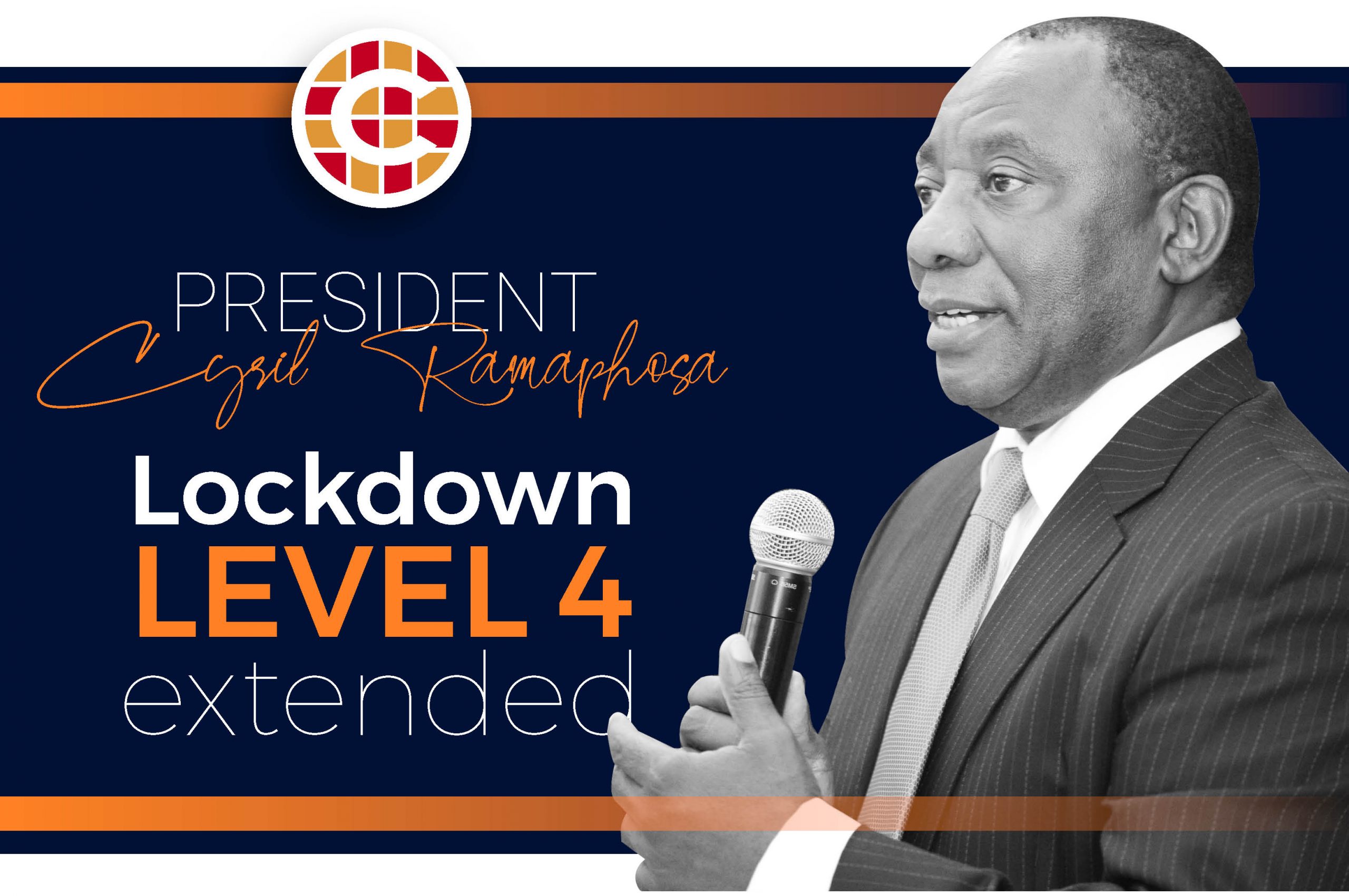
President Cyril Ramaphosa addressed the nation tonight (July 11) on developments in the country’s response to the Covid-19 pandemic.
He stated that breaking the chain of transmission by limiting social contact remains a priority.
Despite the country being on adjusted alert level 4 for the past two weeks, infections remain high. The fast-spreading Delta variant has resulted in the third wave of infections being more severe than the first and second waves, with the country consistently recording an average of nearly 20 000 daily new cases in the past two weeks.
While Gauteng accounts for more than half of new infections, infections are rapidly increasing in the Western Cape, Limpopo, North West, KwaZulu-Natal and Mpumalanga.
President Ramaphosa said the health system countrywide remains under pressure. Daily hospital admissions are likely to reach the levels observed during the peaks of the first two waves by next week.
From now until July 25, the following measures will remain in place:
- All social, political, religious and other gatherings remain prohibited.
- The curfew remains in place from 21:00 until 4:00, and only those with permission to do so may leave their homes during this time.
- The sale of alcohol remains prohibited.
- Schools will remain closed until July 26.
- It remains mandatory to wear a mask that covers your nose and mouth whenever you are in public.
Government is, however, making the following adjustments to alert level 4 regulations:
- Restaurants and eateries will be able to operate while observing strict health protocols. Such establishments may not accommodate more than 50 people at a time or, for smaller venues, more than 50% of their capacity.
- Certain other venues, such as gyms and fitness centres, may also open and activities such as agricultural livestock and game auctions will be allowed, subject to the conditions outlined in the regulations.
“Ultimately, the most important measures to limit transmission are those that are within our individual control. Because the Delta variant is more transmissible, we need to be far more diligent in following the basic precautions with which we are all familiar,” President Ramaphosa said.
Vaccination programme
The nation’s vaccination programme is expanding at a rapid pace. To date, over 4.2 million people in South Africa have received a vaccine dose, with one million of these having been done over the past seven weekdays.
From this coming Thursday (July 15), those over 35 years of age will be able to register on the Electronic Vaccination Data System.
On August 1, government hopes to start vaccinating people aged 35 and over.
Programmes are underway to vaccinate essential workers, starting with basic education, police and defence force personnel.
The Department of Health is working with the private sector to implement workplace vaccination programmes to expand the country’s capacity beyond public sites.
All those who qualify for vaccines are encouraged to pre-register to speed up the process at vaccination sites.
The president announced that Aspen will be delivering over 17 million Johnson & Johnson vaccine doses to South Africa and other African countries over the next three months, commencing in late July. This number is set to double monthly from October.
Ramaphosa further welcomed the announcement by President Joe Biden that the United States will be donating 15-20 million doses of the Pfizer vaccine to African countries through the Covax facility.
UIF
Following the move to alert level 4, the Unemployment Insurance Fund (UIF) embarked on negotiations with social partners to address the difficulties of employees who lost income as a result of the restrictions.
On the basis of these discussions, the UIF has decided that the Covid-19 TERS scheme should be extended to sectors that are affected by adjusted level 4 restrictions.
The details of the extension will be published once finalisation and will include information on who is eligible.
Cabinet has decided that all business licences and permits that expired between March 2020 and June 2021 will remain valid until December 31, 2022. New business licences or permits that are issued from July 1 will also be valid until December 31, 2022, and no licence fee will be payable.
Violent protests
President Ramaphosa addressed the sporadic yet increasingly violent protests seen in parts of the country in the past few days.
Key infrastructure like national roads have been affected, slowing down the transportation of goods and services that keep the economy running.
“These acts are endangering lives and damaging our efforts to rebuild the economy,” Ramaphosa said.
The Constitution guarantees everyone’s right to freely express themselves and to engage in peaceful protests.
“While there are those who may be hurt and angry at this moment, there can never be any justification for such violent, destructive and disruptive actions,” Ramaphosa said.
“This must be condemned by all South Africans at all costs as we are a nation committed to non-racialism and non-tribalism that is underpinned by the diversity and unity of all the people of South Africa, whatever their language, culture, religious beliefs and race.
“Let us be clear, as a nation, that we will not tolerate acts of criminality. Those who are involved in acts of violence will be arrested and prosecuted,” Ramaphosa warned.
“We are working to rebuild our economy together so that more jobs can be created, so that more businesses can be supported, and so we can put food on the table, send our children to school and support our families.
“We are building up, not shutting down. We will remain focused on protecting health and saving lives,” he concluded.
*Notice: Coronavirus reporting at Caxton Local Media aims to combat fake news
Dear reader,
As your local news provider, we have the duty of keeping you factually informed on Covid-19 developments. As you may have noticed, mis- and disinformation (also known as “fake news”) is circulating online. Caxton Local Media is determined to filter through the masses of information doing the rounds and to separate truth from untruth in order to keep you adequately informed. Local newsrooms follow a strict pre-publication fact-checking protocol. A national task team has been established to assist in bringing you credible news reports on Covid-19. Readers with any comments or queries may contact National Group Editor Irma Green (irma@caxton.co.za) or Legal Adviser Helene Eloff (helene@caxton.co.za).
Read original story on roodepoortrecord.co.za

