
The history of veterinary medicine in SA
Animal medicine has evolved from its ancient days of medicinal herbs and incantations to today’s 3D printing, MRIs, advancements in prosthetics and laser surgery.
Veterinary medicine has its roots in the domestication of wild animals.
In ancient times, sheep-herders in the Middle East developed ways to doctor the animals in their care. The treatment of animals became more common around 4 000BC.
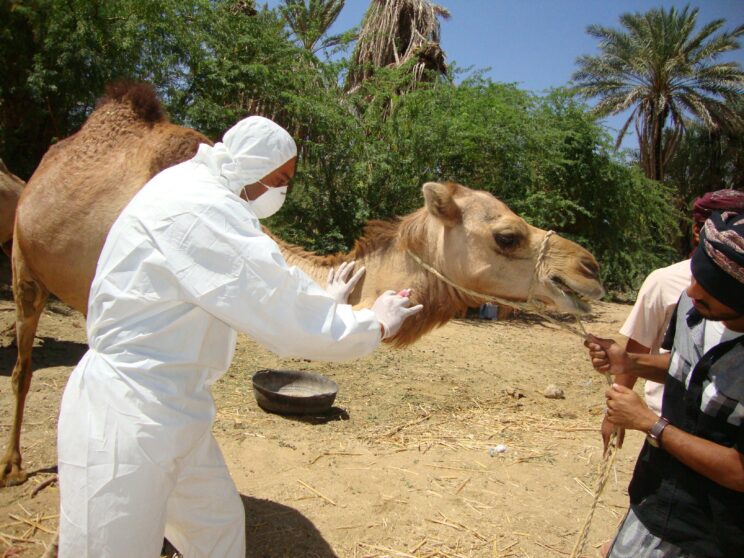
It is thought that the first surgical interventions took place in the Middle East. The Greeks and Romans further advanced veterinary medicine, but it fell out of favour in the Dark Ages.
In the Age of Enlightenment (1700s), veterinary medicine regained prominence and in 1761, Claude Bourgelat established the first school of veterinary medicine in Europe.
It is thought that domesticated animals first made their appearance in Africa in 3 000BC or earlier. As societies evolved, livestock became increasingly associated with wealth and their well-being became more important.
In 1886, Dr Jotello Festiri Soga became the first South African to qualify as a veterinary surgeon. He completed his qualification at the University of Edinburgh. In 2009, the Faculty of Veterinary Science of the University of Pretoria named its library in his honour.
“Dr Soga played an important role in combating rinderpest and lung-sickness in the country as the first qualified South African veterinarian. He also laid a foundation for veterinary education in South Africa. But he is better known in veterinary circles as a pioneer researcher in the study of toxic plants and their effect on animals – both for their poisonous and curative effects,” said the then dean of the faculty, Prof Gerry Swan at the naming ceremony.
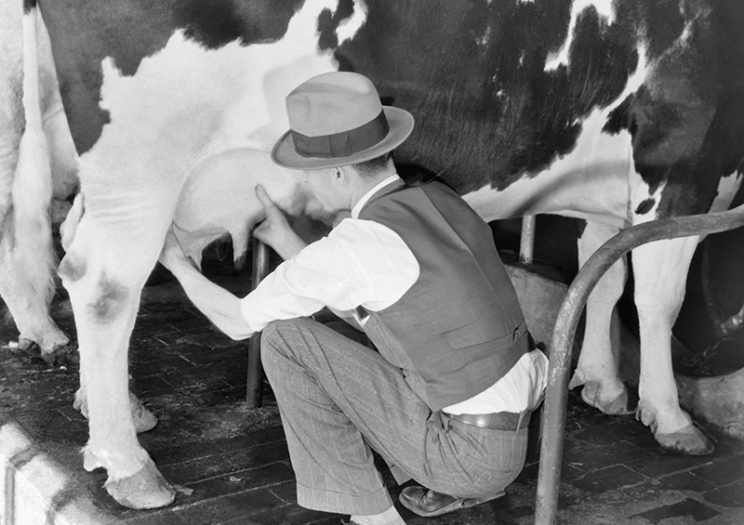
In the late 1890s, Swiss veterinarian Arnold Theiler was appointed as the South African state veterinary surgeon.
Called the ARC Onderstepoort Veterinary Institute today, the then-Onderstepoort Veterinary Research Laboratory opened in 1908, on the farm De Onderstepoort. Within 20 years, millions of doses of life-saving vaccines had been produced and several diseases had been researched.
In 1935, Jack Boswell was the first South African veterinary graduate to go directly into private practice.
Capturing SA’s veterinary past
In 2019, the Veterinary History Society of South Africa replaced the South African Veterinary Association’s Veterinary History Committee, which was established in 1995.
Milestones of the society include the creation of the South African National Veterinary Museum at Onderstepoort and the publication in 2008 of the book Onderstepoort 1908-2008 on the history of the Veterinary Research Institute and the establishment and history of the Onderstepoort Veterinary Faculty.
SA needs more vets
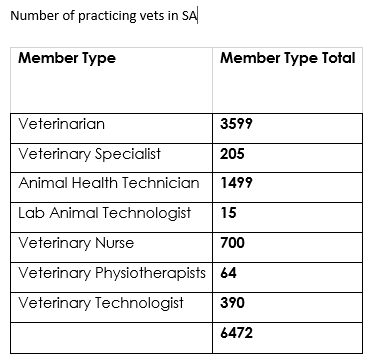
South Africa does not have enough vets – especially in outlying areas.
This is according to Dr Tlotlo Kgasi, the president of the South African Veterinary Council (SAVC).
“South Africa is still not producing enough veterinarians to meet the country’s growing population and its dynamic demographic profile. Veterinary care is still highly privatised, with limited availability of primary animal healthcare facilities in most parts of the country,” he says.
As a statutory body, SAVC is the custodian of quality veterinary standards. It is compulsory in South Africa for all practising veterinary and para-veterinary professionals to be registered with the SAVC, which works to create a safe environment for animals and people.
“Veterinarians play a critical role in society through ensuring the good health and well-being of animals. This is done through the provision of highly specialised professional services, which include diagnosis, treatment and prevention of various animal diseases.
“Veterinarians also support essential food security and safety for society by providing relevant advice on the maintenance of the health of food-producing animals,” Kgasi says.
Looking after vets’ interests
The South African Veterinary Association (SAVA) is an association for registered members of the veterinary profession.
It is committed to upholding the highest professional and scientific standards, and to utilising the professional knowledge, skill and resources of its members to foster close ties with the community and promote the health and welfare of animals.
For more information on SAVC, visit www.savc.org.za.
To get in touch with SAVA, visit www.sava.co.za
Q and A with Dr Paul van der Merwe, the president of the South African Veterinary Association
• What is the veterinary profession’s contribution to curbing rhino poaching?
Veterinarians assist in the immobilisation of rhinos for veterinary and non-veterinary procedures. Procedures vary from the treatment of gunshot wounds and dehorning to capture and release activities.
• Is wildlife care a specialised field of study?
You do not have to be a specialist to work with wildlife, but there is a post-graduation degree in wildlife diseases.
• What is the role of vets employed in national parks?
In national parks, you will often find two groupings of veterinarians – those employed by the park and those employed by the Department of Agriculture, Land Reform and Rural Development (state veterinarians). Those employed by the parks are responsible for all veterinary procedures on animals, while those in the employ of the state are mainly responsible for disease control activities. Normally, the parks have a policy of minimal interference except for man-made occurrences, such as snares.
• How far has wildlife treatment come in the past two decades?
This is a thesis on its own. Immobilisation and treatment regimens have developed tremendously in the past couple of years. South Africa is blessed with institutions such as the Faculty of Veterinary Science’s Wildlife Centre and Wildlife Pharmaceuticals, both of which are at the forefront of wildlife research.
World Veterinary Day falls on April 30 this year. The theme, set by the World Veterinary Association, is ‘Strengthening veterinary resilience’. This is an apt topic in South Africa, where a shortage of vets places strain on those in the profession. The upside is that veterinary science is a great career choice for youngsters, who will have an excellent chance of securing employment.
Read original story on ridgetimes.co.za

