Why ignoring small vehicle dents could cost motorists more
The South African Motor Body Repairers’ Association warns that dings can worsen over time, leading to costly repairs.
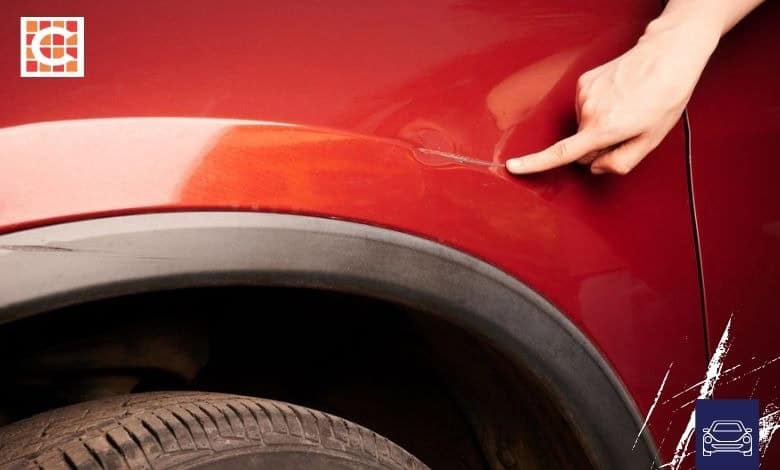
It’s a familiar moment for many South African motorists.
You return to your parked car and spot it: A dent on the door or on the fender. It’s irritating, but not urgent. You tell yourself it’s minor, purely cosmetic, something you’ll get to later when it’s more convenient.
But according to the South African Motor Body Repairers’ Association (Sambra), that delay can be more costly than most drivers realise, reports the Heidelberg Nigel Heraut.
“Motorists often assume that if a dent looks small, the damage is insignificant. But modern vehicles are highly engineered systems. Even seemingly minor impact damage can affect how forces are distributed through the structure of the vehicle,” says Sambra national director Juan Hanekom.
Hidden structural risks
He explains that what appears to be surface damage can, over time, influence far more than just appearance.
“Today’s vehicles are built using lightweight materials designed to absorb and manage impact energy in very specific ways. When that structure is disturbed, even slightly, it can place stress on surrounding areas that were never intended to carry that load.”
While the effects may not be immediately visible, Hanekom warns that everyday driving conditions – from road vibrations to temperature changes – can gradually worsen the situation.
“We often see cases where a simple dent left unattended leads to panel misalignment or weakening over time. What could have been a straightforward repair becomes more complex, more invasive, and ultimately more expensive.”
Risk of corrosion
Beyond structural concerns, even small dents can compromise a vehicle’s paint layer, often in ways that are not immediately obvious.
“People tend to look for scratches or chips, but the reality is that paint can be stretched or weakened without visible signs. Once that protective barrier is compromised, moisture has a way of finding its way in,” says Hanekom.
In South African conditions, where vehicles are regularly exposed to rain, humidity, car washes and varying temperatures, this creates the ideal environment for corrosion to develop, particularly in coastal areas.
“Rust doesn’t need much to start. And once it takes hold, it spreads beneath the surface. By the time it becomes visible, the damage is often far more extensive than the original dent.”
What begins as a minor cosmetic issue can therefore escalate into deeper panel damage, requiring more intensive repair work, additional labour, and, in some cases, part replacement.
“This can be a costly exercise which will not be welcomed, particularly now when most motorists are carefully watching their budgets.”
Safety systems at risk
An innocent dent can also impact safety. Modern vehicles rely heavily on advanced driver assistance systems, including cameras, sensors and radar-based technologies. These systems are often integrated into bumpers and body panels, areas commonly affected by minor impacts.
“A small dent in the wrong place can be enough to shift a sensor or camera out of alignment. The challenge is that the driver may not notice anything wrong immediately, because the vehicle doesn’t always generate a warning when calibration is slightly off,” explains Hanekom.
That subtle misalignment, however, can affect performance in critical situations. “We’re talking about systems that manage distance warnings, lane assistance, parking support and collision avoidance. If they are even slightly inaccurate, their response time and reliability can be compromised.”
Hanekom stresses that this is not always visible to the untrained eye. “A vehicle can appear perfectly fine externally, while key safety systems are no longer operating exactly as intended.”
Act early, avoid higher costs
Sambra is urging motorists not to delay assessments or repairs, even when damage appears minor.
“The earlier a dent is assessed, the more options a skilled technician has to repair it efficiently and cost-effectively. In many cases, early intervention means less invasive repair methods, better preservation of original materials, and a quicker turnaround time.”
Delaying, he notes, often has the opposite effect. “A small repair can evolve into something far more complex simply because it was left unattended. That has a direct impact on cost, safety, and vehicle value,” he concludes.
Breaking news at your fingertips… Follow Caxton Network News on Facebook and join our WhatsApp channel.
Nuus wat saakmaak. Volg Caxton Netwerk-nuus op Facebook en sluit aan by ons WhatsApp-kanaal.