
Tswale the elephant thrives after release into Eastern Cape reserve
After years in captivity and a court-ordered relocation, Tswale has fully integrated into his new herd at Bellevue Forest Reserve.
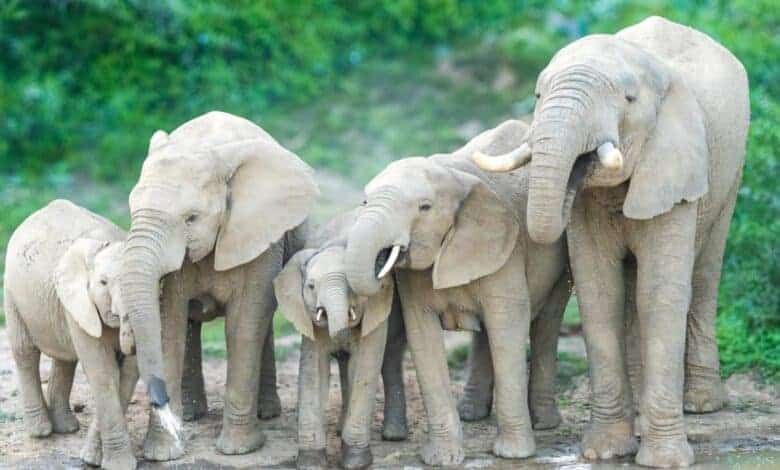
A match made in heaven.
This is how Loodt Büchner, the owner of the Bellevue Forest Reserve, situated in the Eastern Cape, described the integration of Tswale into his new environment on Tuesday, October 28.
“This was meant to be, and the whole process astounded everyone involved in the relocation and rewilding of the elephant,” said Büchner.
Tswale was relocated from the Lowveld to Bellevue on July 10 after the court ordered that the animal be removed from the Lowhills Farm, Lowvelder reports.
As part of his rewilding, Tswale was kept in isolation after arriving at his new home. This was to allow him to acclimatise and also to ensure there was no premature interaction with the reserve’s herd.
Strange behavior
Except for Amos Jivendava, who has been Tswale’s caretaker for almost three decades, there was no human interaction allowed.
“Within two hours after his arrival at Bellevue, Tswale started making rumbling noises. This was a typical indication that he had started communicating with the other elephants on the reserve,” Büchner told Lowvelder.
At one stage Jivendava contacted Büchner to report Tswale’s strange behaviour.
“He was worried, as he had not experienced this type of behaviour in the past.” He said that while Tswale did not show any aggression, he was ignoring Jivendava.
“We were surprised how quickly he picked up the scent and sound of the herd, that was kilometres away at the time.”
On his second day at Bellevue, Tswale was much more relaxed, but still making low rumbling sounds.
“He also kept looking in a particular direction, an indication that he knew where the herd was. Day three was a life-changer. Tswale drank water from his own dam, turned around and started walking into the bush, leaving Amos behind,” said Büchner.
Jivendava tried following him but could not keep up. “Amos heard him making trumpeting sounds and that was the last time they had contact.”
A while later, rangers tracked Tswale down to where he was calmly grazing with the rest of the herd.
“Quicker than expected”
“This is precisely the outcome we were hoping for. But it just happened much quicker than we expected,” Büchner said. “We are so pleased that we decided to take him in. His presence also immediately created a shift in the social structure in the herd. There are three younger bulls, but he immediately took over the dominant role, with the older cow as the matriarch.”
Büchner says one dominant action displayed by Tswale occurred when a safari vehicle approached the herd and he moved in between the herd and the vehicle, keeping them apart.
In the days after, Jivendava saw the herd a number of times from the back of a safari truck but he was totally ignored by Tswale.
Jivendava has since returned to Zimbabwe.
Lowhills Farm and Shofeeds saga
The whole saga around the relocation of Tswale started in May 2024 when the new owners of the Lowhills Farm, Shofeeds from Parys in the Free State, bought the farm on a liquidation auction.
At the time, Johann Möller was one of the directors of the bankrupt Pieriesfontein Boerdery Pty (Ltd).
After the auction, the farm was illegally occupied by Möller and his life partner, Sonell Joubert, who claimed she was Tswale’s owner.
When Shofeeds discovered that Tswale was being used for human interaction, they approached the court to have the animal removed from the property.
The elephant was first kept in quarantine at the Mpumalanga Tourism and Parks Agency’s (MTPA) Barberton reserve before he was relocated to Bellevue Forest Reserve.
“We are extremely happy that we could, after years in captivity, give Tswale the life he deserves – free and wild.”
Breaking news at your fingertips… Follow Caxton Network News on Facebook and join our WhatsApp channel.
Nuus wat saakmaak. Volg Caxton Netwerk-nuus op Facebook en sluit aan by ons WhatsApp-kanaal.
Read original story on www.citizen.co.za

