
Unthinkable horror: 2004 tsunami survivors recall waves of death and destruction
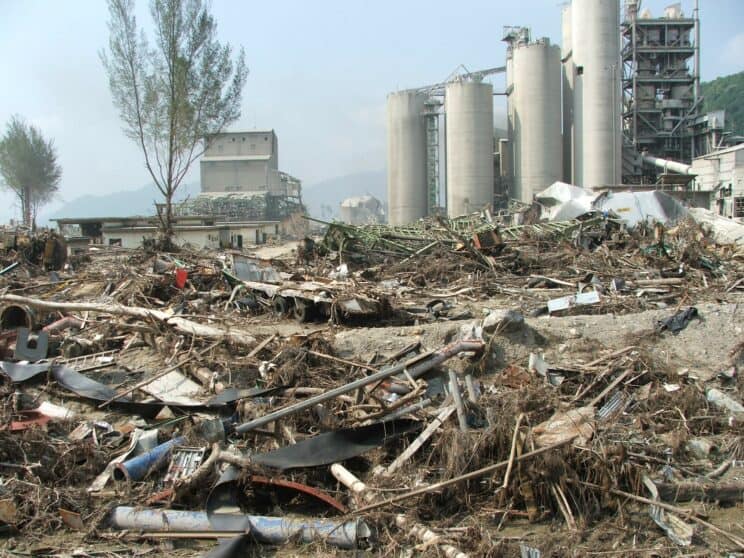
With hundreds of thousands dead, a shortage of body bags and 1.7 million people displaced, the overwhelming devastation caused by the 2004 Boxing Day tsunami remains forever imprinted on the minds of the survivors and rescuers workers.

Today marks 20 years since one of the world’s worst natural disasters struck, leaving thousands dead and causing unprecedented devastation.
A massive undersea earthquake occurred near the western coast of Sumatra, Indonesia, on December 26, 2004. This triggered a series of colossal waves that hit coastal areas throughout the Indian Ocean basin. Within hours, thousands of people were dead.
The Tsunami Evaluation Coalition says that after the disaster, death tallies revealed that an estimated 275 000 people were killed in 14 countries across two continents, with the last fatalities recorded when two people were swept out to sea in South Africa.
The lack of an official tsunami warning system in the Indian Ocean at the time and limited understanding of tsunamis worsened the losses.
Caxton Local Media takes a look at the event that reshaped weather warning systems and emergency response preparedness around the world and speaks to survivors about the day they will never forget.
How it unfolded
At 07:59, a 9.1-magnitude earthquake, which was one of the largest ever recorded, ripped through an undersea fault (crack in the Earth’s crust) in the Indian Ocean.
It drove a massive column of water to surrounding coastlines.
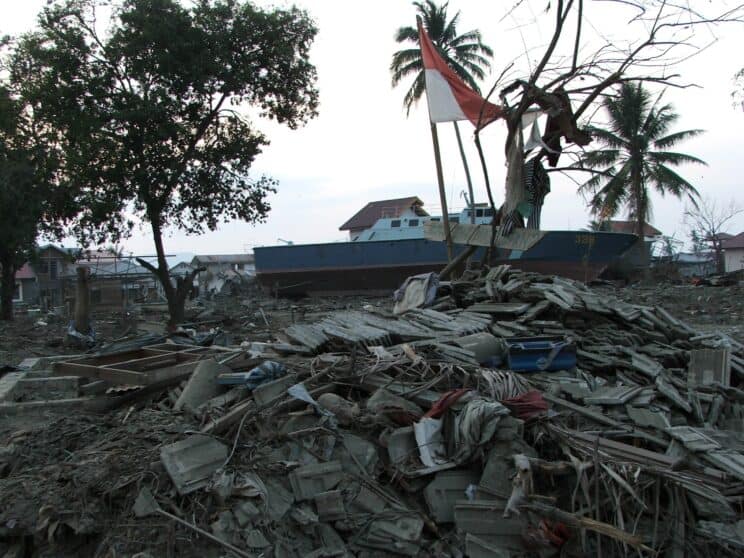
According to history.com, the first 30m-high waves arrived at the city of Banda Aceh on the northern tip of Sumatra within 20 minutes. Buildings collapsed and houses and cars were swept away. According to GeoScience Australia, Banda Aceh suffered more than 61 000 fatalities, almost 25% of its population.
Waves travelling up to 500km/h soon hit India, Myanmar, Sri Lanka and Thailand – all within around two hours of the quake. World Vision says that with no warning, coastal populations were caught by the pounding waves and communities were wiped out.
Tsunamis reached the Maldives three hours after the earthquake, and the Somali coast more than seven hours later.
Beaches in the south of Thailand such as Phuket, Khao Lak and Phi Phi were filled with tourists, including many South Africans, enjoying a festive season break when disaster struck – leaving nearly 5 400 dead, including an estimated 2 000 foreign visitors.
Watch: Timeline
Impact on South Africa
Unconfirmed reports say that between 10 and 15 South Africans died in Thailand. The Department of Foreign Affairs reported at the time that just over 2 034 South Africans were in Southeast Asia when it was hit by devastating tsunamis.
Another two South Africans died when the tsunami hit the coast of South Africa.
Survivors’ stories
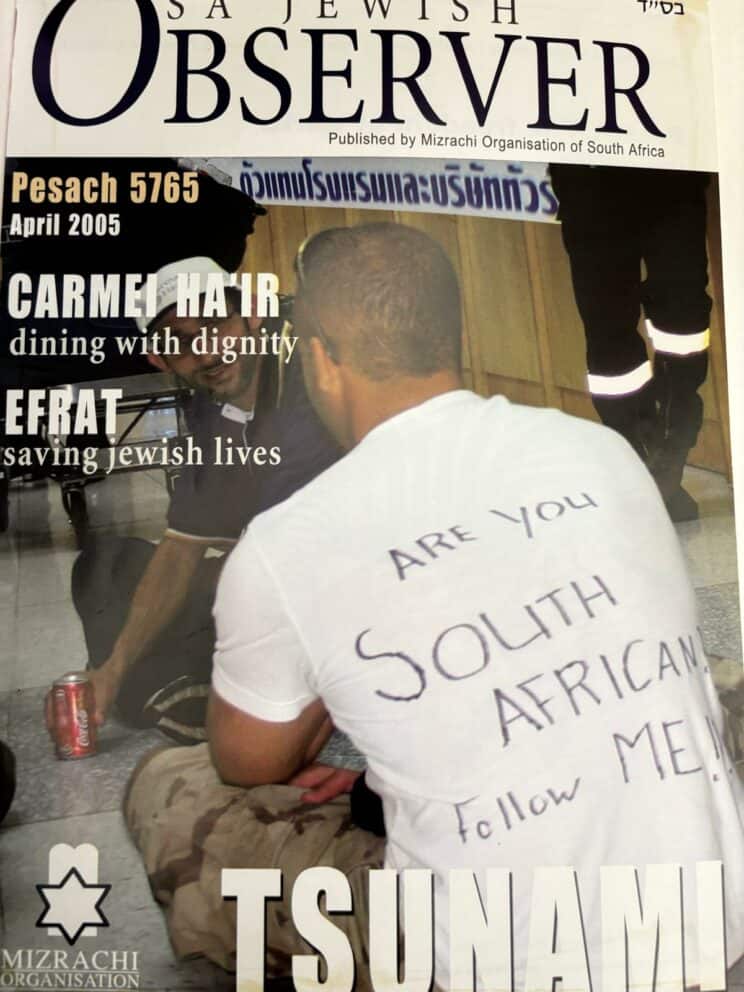
Johannesburger Daniel Treisman was on holiday in Thailand with his girlfriend, Taryn – now his wife. Afterwards, Daniel was praised for his rescue efforts. He wrote ‘Are you South African? Follow me’ on his white T-shirt and worked tirelessly to locate South Africans.
Caxton Local Media contacted Taryn to request an interview. She chose instead to write a first-person account of the tragedy, saying she had never before written about the experience that shaped her life:
“When I was 19, I travelled with my boyfriend, Daniel, to a small Island called Phi Phi. I remember arriving with a heavy backpack and complaining about its weight as we walked to our resort at the end of the island, right next to a mountain. At first, they gave us a fantastic room right on the beach with the ocean in front of us – we were thrilled. Then they saw there was a plumbing issue with the toilet and moved us further away from the ocean, into a bungalow on stilts. In the end, our bungalow was the only one left standing!
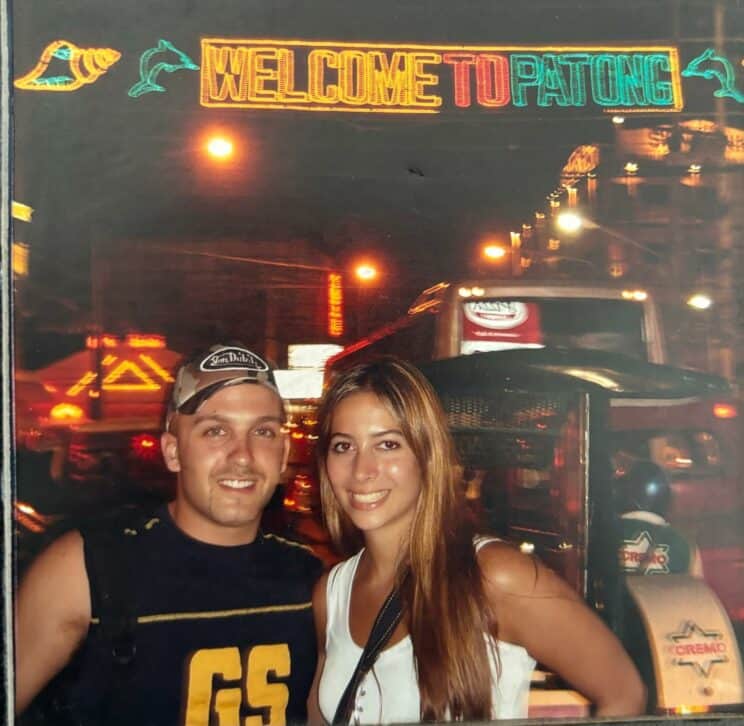
“I woke up and heard a loud cry and people shouting. At first, I thought there was a protest outside. When I looked through the window, I saw a grey wave covering the pool. I didn’t know what to think but immediately woke Daniel. My reaction was to freeze, but he went into fight mode and jumped into the current. He felt it was too strong, however, so he lifted himself back onto our balcony. He then saw a boat go by and tried [usuccessfully] to reach for it.
“Most of the water then subsided. Daniel told me to jump, but I couldn’t move, so he took my hand and we jumped into the water. Someone was shouting, ‘One more!’ Daniel thought the man was saying one more person was drowning so he ran to the man by the ocean, but he shouted back at Daniel: ‘One more wave. Run!
“So we started to run from the wave. The water was moving up our legs but luckily, we were right by the mountain and climbed up. When we got to the top, we saw the destruction. People were staring at us because they were all injured and bleeding, while Daniel and I just had a few bruises.
“Daniel found someone with a phone and we contacted home and told them we were safe. At that time, no one even knew there was a tsunami, so our family did not know what we were talking about. It was lucky we phoned when we did because only a few hours later, the phones had died and the signal was lost.
“We slept on the mountain, at Phi Phi’s viewpoint. I looked around and realised it didn’t matter if you came to the island to stay at a 10-star resort or if you were a backpacker because, at the end of the day, we are all the same and all just trying to survive.
“[I saw] a fistfight broke out, a snake and helicopters, but I didn’t budge. We watched the moon turn into the sun and then we walked down. They told us to cover our faces because of disease from decaying bodies. We cut a sarong and made masks.
“People were sleeping everywhere and the Island was flattened – nothing was there. We walked to the end of the island, looking for our hotel to see if we could get our passports. Our bungalow was the only one left standing. The day before, our friends had left their backpacks in our room as they went to a full moon party. We therefore had to carry three backpacks each.
“I remember that I complained when I first arrived and now I realise how insignificant that complaint was.
“There were two ways off the island, Krabi or Phuket; the boats going to Phuket were lined with bodies in white cloths. I didn’t want to see that, so we took the boat to Krabi. When we arrived, we went to a hotel where I had once stayed with my parents.
“At this time, a private jet had been arranged to rescue all South Africans. They asked us to tell as many people as we could to meet at the Phuket airport at a certain time. We started getting frantic calls to our hotel room and we began to write out a list of who was missing and who was found.
“Daniel had to find some of his friends and visit hospitals and morgues. He wanted to protect me and told me not to come with him; instead, he insisted that someone needed to take control of the phone calls and notify people about the airport. This is what I did. I told people where to go and helped by making signs for the airport so people could find their way there.
“Daniel went into every hospital, every morgue, opened body bags and saw things that no one should ever have to see. We didn’t sleep for two days. On the flight back, I looked around and only then did I realise the extent of what had happened. People were flying back without loved ones, bodies were coming back to be buried. It was truly traumatic.
“I had nightmares for over a year but now I do not. I still have not been back to Thailand. Right now, we live in Israel. We were here for the first sirens on October 7 [when Hamas bombed Israeli towns and military bases]. Daniel and I have lived through tsunamis, Covid and now war.
“Experiences shape you and tragedies bring out the best and worst in people. I have seen first-hand how amazing humanity can be when they get together and help, volunteer and care for each other. Every experience makes you stronger and I believe in the power of unity,” wrote Taryn.
Mandelle Bernstein, her husband and children landed in Phuket, an island in Thailand, on December 24 – little knowing that two days later, the unthinkable would happen.
Speaking to Caxton Local Media, Bernstein says she had a premonition in the hours before the disaster that something terrible was going to happen. She was so unsettled that she felt compelled to ask if there was a Jewish burial society on the island. Her anxiety prompted her to stay in their hotel room and skip breakfast on December 26.
Her unease turned to terror when her son burst into their ground-floor room with news that ‘big waves’ were coming into the hotel. She grabbed a camera, shoes and pants and rushed to the reception area.
“Everyone was going crazy – there were injured people everywhere. I remember one person’s finger was almost severed. Because our hotel was on a slight hill, we thought we would be safe and were ushered to the highest floor.”
As they made their way to the staircase, brown water continued rushing into the building.
What they saw from the fourth-floor windows was hard to grasp – water where before there was land. “I will never forget the debris in the water or how the floating trees looked like toothpicks.”
Bernstein says she knew nothing about tsunamis. At that stage, she imagined they would soon be rescued by helicopter and phoned her mom to ask that a travel agent arrange flights home. “I could not imagine the scale of the disaster or how widespread it was.”
Fearing another wave of water and with live wires everywhere, the hotel staff told everyone to make their way to higher ground.
Bernstein’s then-14-year-old son David later said that while they were making their escape, his shoe was sucked away by the rising water. A young child of around five was also thrust into David’s arms and the Bernsteins carried her to safety. “She had separated from her family and was vomiting dark liquid.”
The family made it to safety just in time – the next rush of water devastated the hotel.
“It sounded like a jumbo jet coming in to land,” Bernstein says of the noise the tsunami made. “We lost 11 people at our hotel – mainly employees.”
Hours later, the Bernsteins and other survivors were given temporary shelter. She recalls fish trapped in recovered luggage and desperate people showing other survivors photos of their missing loved ones. Equally upsetting, were photos of deceased people – bloated or maimed – that were being shown around for identification.
She recalls citizens from several countries being told flights were arranged for them, but says support from the South African government was minimal. “My daughter was in Bangkok and went to the South African embassy there to seek help for us, but it was closed.”
Eventually, a plane was organised by the Jewish Board of Deputies, Discovery, Netcare and other sponsors to transport stranded South Africans home. Scores of South Africans, including unaccompanied children and many injured people, boarded the plane, while rescuers disembarked to search for bodies or injured survivors.
The plane was in the air within hours and once again, the Bernsteins were given a child to look after. The injured little girl’s mom was missing and her father stayed behind to search for her. Bernstein recalls how the first-class part of the plane was set up as an ICU for the injured.
“We only saw the real impact of what had happened when we were back in SA and turned on the TV.”
Within a few days, Bernstein emailed her sister in America, detailing what they had experienced. “She sent it to someone, who also forwarded it. Within days, the email had been viewed by more than 700 000 people.
Footage taken at the Merlin Beach Resort where the Bernsteins were staying:
Several other South Africans narrowly escaped death. According to reports at the time, Joanne Brown lost her grip on her 18-month-old daughter. Miraculously, the child ended up in the arms of the family’s nanny, Vicky Nwayo. Nwayo was nearly pulled into the sea but managed to wade to safety.
As friends Lauren Isaacs, Jodi Kramer and Sandra Loeb walked towards the Phi Phi beach, a monstrous wave hurled them back towards their hotel. Isaacs desperately clung to a pillar, Loeb to a floating table, while Kramer was miraculously plucked to safety by a man reaching out from his balcony. All three narrowly cheated death that day.
Dr Craig Pearl, who left South Africa seven years ago and is now an associate professor in the Maxillofacial and Oral Surgery Department of the University of Texas in Houston, spends his days working at the busiest level 1 trauma hospital in the United States, treating people with severe facial injuries.
This passion to help people in their hour of need had already been ignited in 2004 and he played a pivotal role in the rescue operation in Thailand.
“I was the medical director of a volunteer medical response organisation that was under the Jewish Board of Deputies. Immediately after the tsunami, we started receiving calls from concerned families, worried about their loved ones in Thailand.
“As the numbers grew, I spoke to Dr Ryan Noach [then Netcare 911 CEO] and within 48 hours, a rescue mission was arranged. Members from Discovery Health, Netcare and the Jewish Board of Deputies travelled to Phuket on a chartered Boeing to go pick up the wounded, stranded and, unfortunately, some of the deceased South Africans who had already been identified.”
Because there was no direct flight to Phuket, the Department of Foreign Affairs arranged fly-over rights. On board were doctors, paramedics and nurses.
Pearl was assigned to go fetch a badly injured young girl from a Phuket hospital. The child had unfortunately lost her father, who died trying to save her grandfather. She was found miles away from where they were initially washed away.
“I can still picture this little girl and the remainder of her family waiting for us in the hospital. I often think about her and realise that today she is a young adult. Their story affected me and this little girl became one of those inspiring stories in South Africa at the time. I still recall there was a picture of us carrying her into the airport in Thailand on the front page of the Sunday Times,” says Pearl.
On the day he returned to South Africa, he resigned from his position as a volunteer firefighter with the Sandton Fire Department. “After nearly 12 years, I felt I had completed my service.”
Wake-up call for the world
In response to the disaster, an unparalleled, co-ordinated international emergency response was launched.
“Governments, international donors, NGOs, individuals, foundations and businesses around the world mobilised funds to save lives and help the survivors rebuild their homes and livelihoods,” says Relief Web.
It says the disaster ‘reshaped the way the humanitarian community addresses emergencies’ by highlighting the importance of disaster preparedness and international co-operation.
Prior to 2004, there was no global tsunami warning system. A year later, the Indian Ocean Tsunami Warning and Mitigation System was launched.
More Deep-ocean Assessment and Reporting of Tsunamis buoys were deployed. These can detect tsunamis as small as 1cm and report them in real-time.
According to GeoScience Australia, the earthquake was the first in a series of massive earthquakes to shake the globe. In the following seven years, three more of the 10 largest earthquakes ever recorded occurred.
To see the buoys and learn about the work, watch: https://oceantoday.noaa.gov/indianoceantsunami/
Astronomical costs
According to Moody’s, the disaster resulted in an estimated $10b (roughly R183b) in economic losses. Indonesia, Thailand, Sri Lanka and India bore the brunt of these losses, primarily due to widespread property damage.
Animals not spared
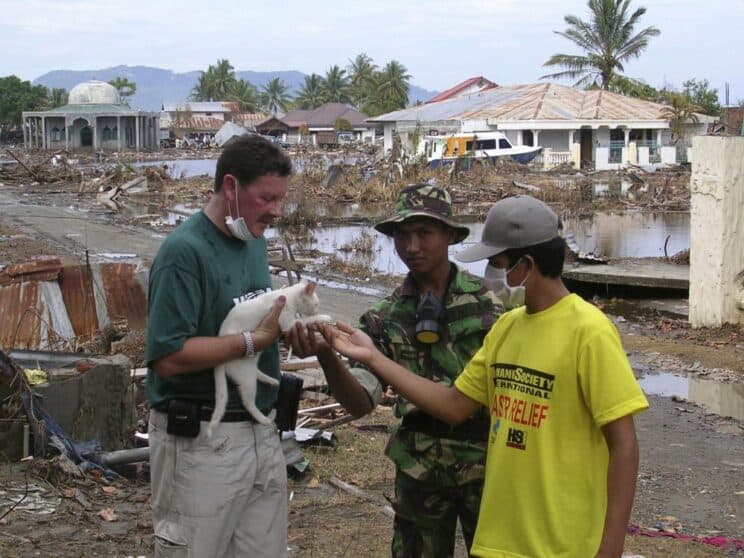
World Animal Protection says that thousands of animals were killed. While many animals felt the vibrations and ran for higher ground, thousands were left injured, starving and stranded. Animal World Protection teams went to India, Sri Lanka and Thailand to provide urgent veterinary care and carry out rescue operations. In Sri Lanka, the organisation’s operation was operational for nearly two years after the disaster. In total, 117 548 animals affected by the tsunami were helped.
Facts and figures
The Sumatra-Andaman earthquake had the longest fault rupture ever observed (over 1 000km) and the longest duration of faulting (at least 10 minutes).
It was the largest earthquake of the preceding 40 years and was followed by the second largest just three months later, on March 28, 2005.
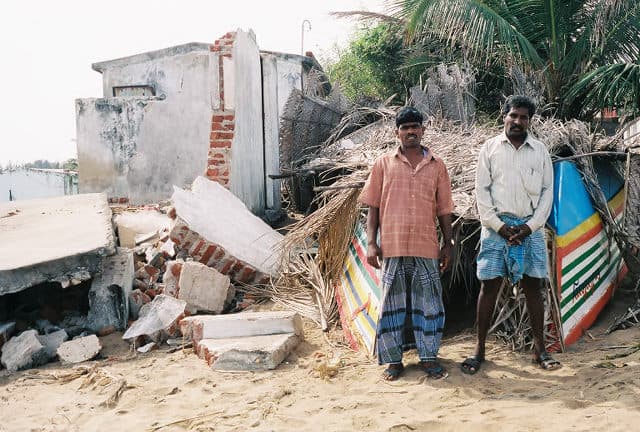
141 000 houses were destroyed, which accounts for 47.9% of the total damage (BRR & World Bank, 2005).
A 1 200km section of the earth’s crust shifted beneath the Indian Ocean and the earthquake released stored energy equivalent to over more than 23 000 Hiroshima bombs.
According to the International Recovery Programme, 73 869 hectares of agricultural lands, 2 618km of roads, and 3 415 schools were destroyed. Hundreds of thousands of people lost their livelihoods.
Read original story on www.citizen.co.za

