
Vulture poisonings: Too vulnerable to weather large-scale killings
The vultures are circling. Several vulture species are endangered and the recent poisoning of a large number of these birds for their body parts is of concern to environmentalists.
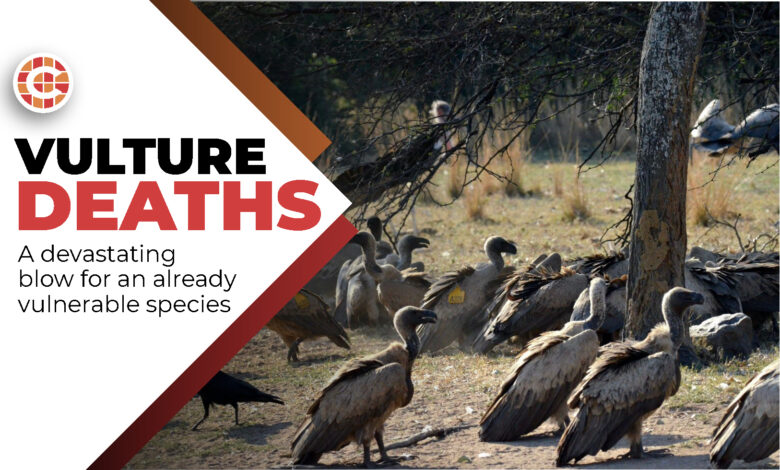
As scavengers, vultures rely almost entirely on the carcasses of animals as a source of food. This makes them the only terrestrial vertebrates to do so, locating their food by soaring into the air and scouring the landscape beneath. Doing this in great numbers substantially increases their chances.
While this is a distinct advantage to them, it can also be extremely detrimental, as is evident in the poisoning of at least 100 critically endangered white-backed vultures in the north of the Kruger National Park last month. The birds were found next to the carcasses of a buffalo and a hyena. Rangers suspect that the buffalo was poisoned to kill the vultures and that the hyena died after also eating from the poisoned carcass.
According to the Endangered Wildlife Trust, this latest incident brings the number of vultures that have died in the Greater Kruger since January 2019 to around 600.
Elsewhere in Southern Africa, more than 50 white-backed vultures were found poisoned in Botswana’s northern Chobe district the day after the Kruger incident. In 2019, 537 vultures died in the Chobe Game Reserve in Botswana after feeding on the carcasses of three elephants that had been poisoned.
Several populations of African vultures have been reduced by over 90% in the past decades. The white-backed, white-headed, hooded and Rüppell’s vultures now appear as critically endangered on the Red List of the International Union for Conservation of Nature (IUCN).
André Botha, programme manager for Vultures for Africa at the Endangered Wildlife Trust and co-chair of the IUCN Vulture Specialist Group, says the latest deaths will have a further devastating effect on vultures, which are already incredibly vulnerable.
Vultures play an essential role in maintaining a healthy ecosystem and their demise will have catastrophic consequences for the natural world. According to Vulpro, vultures fulfil a niche that cannot be rivalled by any other scavenger. Their dietary habits rid the environment of decaying carcasses, allowing the return of nutrients to the soil.
“This time of the year, incidents like this have a much wider implication,” says Botha. “Most of the carcasses that were discovered were of adult birds, which are breeding. This means there are chicks in nests, a couple of weeks old at best. If both or even just one parent dies, the chances are slim to none that the chicks will survive. It will be very difficult for a single bird to rear the chicks until they can leave the nest, especially in an area where it is difficult to get food.”
Traditional beliefs
Some of the vultures that died in Kruger and Chobe last month had their heads and organs removed, an indication the poisoning was driven by traditional and superstitious beliefs. Kerri Wolter, CEO of Vulpro, who has dedicated more than 20 years of her life to vulture conservation, says misconceptions about vultures have a major impact on their survival.
“Unfortunately, there is a belief that I regard more as witchcraft and a modern quick-rich scheme that vultures are clairvoyant and, as such, can see into the future. This means people use the brains of vultures to sniff as a means of ‘seeing into the future’ and thus successfully playing the Lotto, betting on horse racing, gambling and so on, with, the believed end goal of winning money.”
Action needed
According to Wolter, there needs to be a holistic look at the threats facing vulnerable vulture populations.
“Some of the threats facing vultures today include power line collisions and electrocutions; wind energy infrastructure; the harvesting of vultures for muti, which is direct poisoning; human-wildlife conflict, which is indirect poisoning; the lack of available and safe natural food sources; and direct human disturbance. Not all of these threats are easily mitigated, but there are some things that can be done. Eskom can prevent power line collisions and electrocutions through the use of bird-friendly structures, we can work with landowners and farmers to address the human-wildlife conflict issue and we can engage with traditional healers to try and find ways for preventing catastrophic poisoning events, such as those that took place in Kruger and Botswana.”
Botha adds that education forms a major part of addressing the threats facing vultures.
“It is a massive challenge to change traditional perceptions and we are working very hard to do just that. We have put in a lot of effort talking to governments, non-governmental organisations, agricultural communities and the general public and have also managed to train more than 6 500 people in 16 countries in the past seven to eight years. They now have the tools and knowledge to know what to do with injured and poisoned birds, to clean up poisoning sites to prevent further damage and to properly investigate crimes and bring the perpetrators to book.”
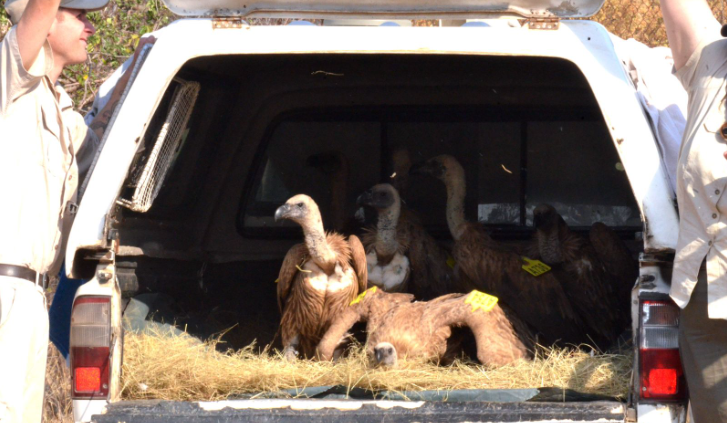
Twenty-seven white-backed vultures initially survived the incident in the Kruger National Park last month. A team from the Moholoholo Wildlife Rehabilitation Centre near Hoedspruit in Limpopo was called to assist and transport the survivors back to the facility for rehabilitation. Sadly, two birds died on the journey and two more died a day later.
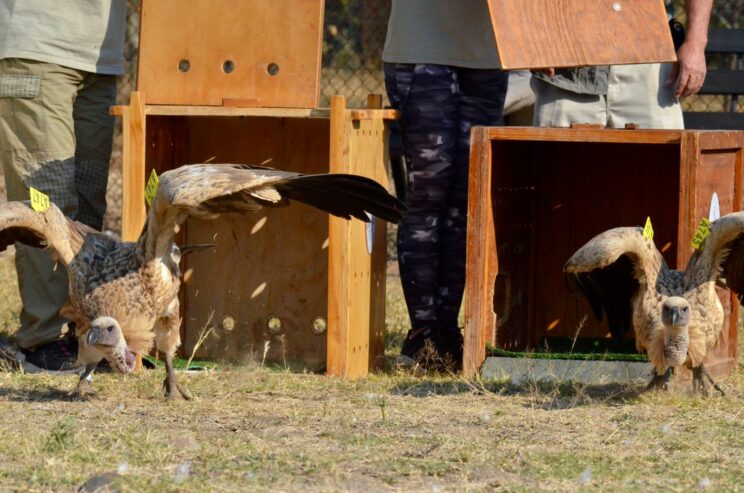
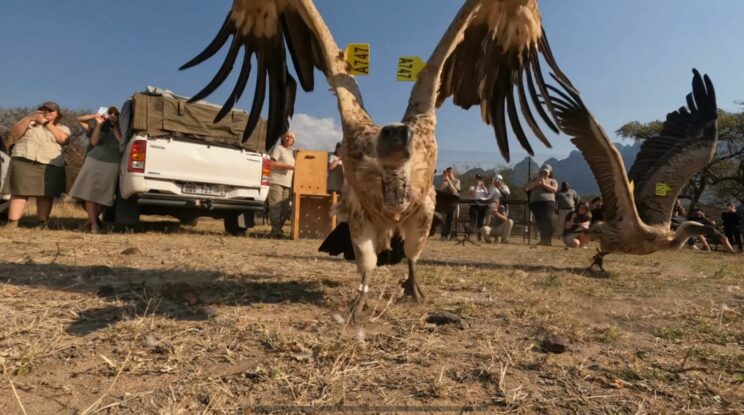
Rebecca Lambert from Moholoholo says they treated the 23 survivors and then released them in two batches.
“It is protocol that we keep poisoned vultures with us for two weeks after a poisoning incident to ensure no one relapses. However, we were concerned that a few of the vultures had brood patches. A brood patch is a featherless patch of skin on a bird’s breastbone that is important for temperature control during the incubation of eggs. We were eager to release two of the birds with brood patches that were fit and healthy, in the hope they would return to their nests.”
Read original story on letabaherald.co.za

