
Watch: 1 year in the wild – Pretoria Zoo elephant celebrates his new Limpopo life
From lonely captivity to roaming the bushveld, Duma’s transformation at Shambala Game Reserve has become a powerful symbol of hope for elephants still awaiting release.
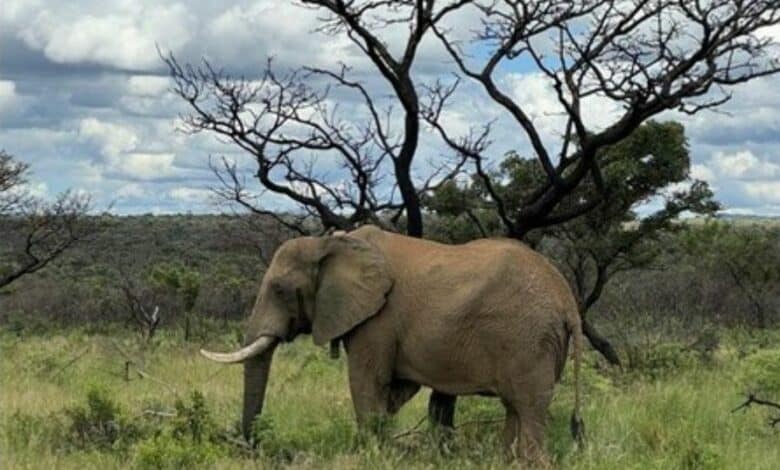
A year ago, a moment of history was written quietly in the Limpopo veld.
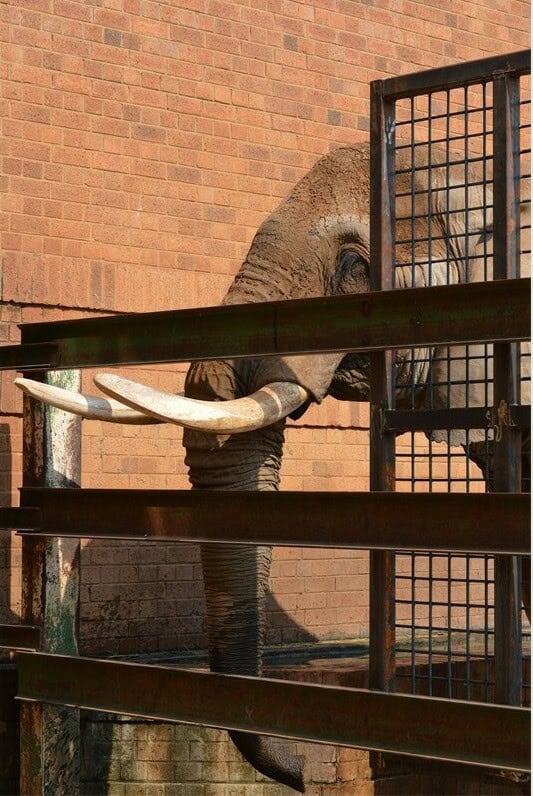
Pretoria Rekord reports that after four decades of confinement in the Pretoria Zoo, Duma (originally known as Charley), the elephant was finally given a chance to live in the way nature had always intended.
His story, a story of resilience and rediscovery, has become a symbol of hope not only for him, but for countless zoo elephants.
When the truck carrying him rolled into Shambala Game Reserve in the Waterberg mountains in Limpopo, Duma stepped into an entirely different world.
For the first time in his life, he was surrounded not by walls and steel fences, but by the open spaces of the bushveld, the smell of grass and dust, and there was the possibility of connection with his own species.
“Forty-eight hours after arriving at Shambala, Duma began communicating with the elephants at Welgevonden Game Reserve,” recalled Megan Carr, lead for the EMS Foundation’s Towards Freedom Programme.
“It was wonderful to hear his low-frequency vocalisation. Elephant rumbles are produced for a variety of communicative purposes, greeting other elephants and expressing emotions.”
That first communication was a sign of hope. For so many years, Duma had been a solitary figure, denied the chance to interact with his own kind in a meaningful way.
In that rumble lay a longing, an introduction, and perhaps even the beginning of new relationships that will one day restore him to a herd.
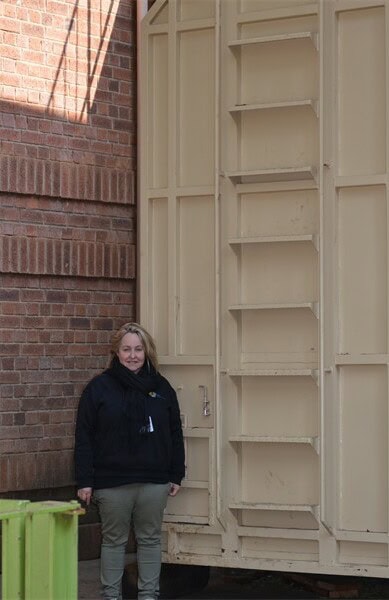
The earliest signs of change were in his behaviour, said Carr.
Within days, Duma discovered the mud wallow built for him in the two-hectare rehabilitation boma. He rolled, splashed and coated himself in mud, enjoying what had long been denied to him.
He began pushing over trees, foraging and exploring. These were ordinary elephant behaviours, yet for Duma, they were extraordinary acts of freedom.
“There is no timetable for an elephant living in more natural surroundings,” Carr explained. “Duma is no longer governed by opening times, feeding times or the cleaning of his enclosure. The sounds of parties, traffic, weed eaters and leaf blowers have all been replaced with the sounds of the African bush.”
Six weeks after his relocation, his world grew bigger. Duma was released into a 26ha area, rich with trees, a flowing river and the company of baboons, warthogs and waterbuck.
For the first time in decades, he roamed in a landscape alive with wild sounds and smells. He began strengthening his body, building the muscles needed for the day he might choose to join the resident elephant herd.
“He has had four decades in captivity. He needs time to recover,” Carr said. There is no rush, no pressure, but only patience and care as Duma learns what it means to live as an elephant again.”
Looking ahead, an even greater freedom awaits.
A 200ha area is being prepared for him, one that leads directly onto the greater Shambala Reserve.
Here, he may one day encounter elephants who have always roamed free.
A team of ecologists and elephant specialists is carefully assessing the land to ensure that when the time comes, Duma will be ready.
Throughout this first year, his progress has been closely monitored. A team of dedicated elephant experts based at Shambala visits him daily, providing supplementary food to help him regain his strength.
This additional feeding, which supports the natural forage available, will gradually be phased out as his health and fitness improve. His veterinarian has visited him numerous times, and behaviourists from around the world have followed his recovery with deep interest.
“All the experts have reported that Duma is extremely relaxed and that there is a visible difference in his appearance,” Carr said. “He looks very healthy, his skin has changed because of the daily mud baths, and he is visibly stronger.”
Duma’s story is more than one elephant’s liberation.
It is part of a larger struggle for animal justice.
The EMS Foundation and Shambala have extended the same offer of freedom to the elephants still confined at the Johannesburg Zoo: Lammie, Mopane and Ramadiba.
Legal action is ongoing, but the hope is that they, too, may one day walk the paths now familiar to Duma, surrounded by grasslands and sky instead of concrete.
Duma’s journey has not gone unnoticed. He has gathered a loyal following of supporters who celebrate each milestone.
Videos and images shared by the Shambala team allow people across the country to witness his transformation. Children, families and conservationists alike have drawn inspiration from his progress, proof that change is possible when determination and compassion unite.
Carr pointed out that over the past 12 months, representatives of the EMS Foundation have visited him seven times. Each visit is both a check-in and a celebration, and a reminder of how far he has come since that day he left Pretoria.
Gratitude runs deep for those who made his release possible: The experts who assessed him in captivity, those who organised the complex logistics of his relocation, and the caregivers who now watch over him every day.
“Duma is supported by a large team of experts,” Carr emphasised. “This high level of care and protection will continue for the remainder of his natural life.”
Breaking news at your fingertips… Follow Caxton Network News on Facebook and join our WhatsApp channel.
Nuus wat saakmaak. Volg Caxton Netwerk-nuus op Facebook en sluit aan by ons WhatsApp-kanaal.
Read original story on www.citizen.co.za

