
Why did the US reject this former FF Plus councillor’s refugee bid?
Strict eligibility checks and sudden rejections have left South African applicants questioning how decisions are made under a controversial resettlement programme.
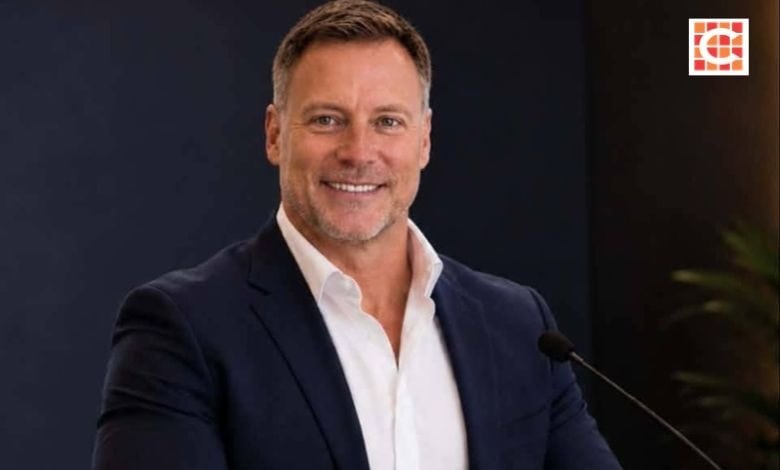
SJ du Venage (56) and his fiance, Johan Breytenbach (46), believed they were ideal candidates for the US Afrikaner refugee resettlement programme.
Both men are gay, Christian, conservative and supporters of US president Donald Trump. They also pointed to their professional qualifications, sound financial backgrounds and clean criminal records as factors that they believed strengthened their applications.
However, both received letters informing them that they were ineligible for continued processing, leaving them questioning what had counted against them.
Du Venage suspects photos on his social media accounts may have played a role in the decision. He alleges that three days before their interview, images were taken from his profiles, including one showing him holding a hunting rifle while standing at the grave of former prime minister JBM Hertzog, as well as photos of him campaigning for the FF Plus.
He also believes his conservative political views and activism around farm attacks and murders may have raised concerns among US officials.
Du Venage previously served as a youth leader in the Conservative Party, which opposed the dismantling of apartheid. He believes officials may have interpreted his political background and activism differently from how he intended them.
The reasons for the couple’s rejection have not been independently established.
“I believe the whole programme has become an anti-Trump campaign,” he said.
Du Venage identified three main concerns: What he regards as questionable decisions about who is admitted, a lack of clear communication with applicants and the impression that supporting Trump is an advantage when applying.
He said applicants were often left in the dark about the progress of their applications and had to rely on information shared through retired US Army Colonel Chris Wyatt’s YouTube channel.
He now wants to warn other South Africans considering the programme about what he describes as an opaque and confusing application process.
Applicants query eligibility
Du Venage is not the only South African questioning the programme’s screening criteria.
Other applicants have reportedly raised concerns about factors they believe may have affected their eligibility.
One South African who is closely involved in supporting refugee applicants described some of the alleged reasons for rejection as bizarre.
“People are being told that belonging to a biker group, having a butterfly tattoo or being involved in a neighbourhood watch could be a problem. It is crazy. I don’t know what symbolic meaning the Americans attach to these things,” the source, who has been living in California under the refugee programme for the past nine months, said.
Affiliations with organisations such as AfriForum and Solidarity have also come under scrutiny, while others have questioned whether involvement in community policing forums could count against them.
Veterans face questioning
Former South African military personnel have also raised concerns about questions surrounding their past service and political affiliations.
A 60-year-old former Recce (special forces member) who asked not to be identified said he had hoped to relocate to the US with his children and grandchildren but was subjected to lengthy questioning about his military history.
“I wanted to go over with my children and grandchildren. We applied separately, but they grilled me for hours about my past, my right-wing involvement and how many people I had killed during the apartheid war,” he said.
He believes his previous military service and political associations may have influenced the assessment of his application.
Du Venage said he also faced extensive questioning during his interview.
“The woman who interviewed me did not understand the context of my past or where I came from,” he said.
Solidarity seeks answers
Solidarity Movement head of international liaison Jaco Kleynhans said he had raised concerns about the interpretation of the programme’s eligibility requirements during a recent visit to the US.
Kleynhans visited the country around the midterm elections, where he monitored the elections and held discussions with political representatives and US officials.
He said he had spoken to officials from the US Department of Homeland Security about concerns that membership of organisations such as AfriForum and Solidarity, or affiliation with conservative political parties, could make applicants ineligible.
According to Kleynhans, officials indicated that there was no policy automatically disqualifying applicants because of their membership of these organisations or their conservative political affiliations.
He believes uncertainty surrounding individual decisions may stem from differences in how officials interpret the programme’s requirements.
The programme allows South Africans from minority groups to apply for refugee status based on fears of persecution or future persecution.
Kleynhans, who followed the US elections closely, believes the programme could come to an end if Trump is no longer president.
He also pointed to the financial implications, saying the US government had spent approximately $1b (about R18b) on the programme since its inception. He believes the expenditure could increasingly come under scrutiny amid the country’s financial pressures and questions among Americans about whether the programme represents an appropriate use of public funds.
Intake numbers mount
The scale of the programme has also raised questions about how many South Africans have successfully relocated and how many have been turned away.
A South African refugee currently living in Texas who asked to remain anonymous said she knew of approximately 50 South Africans who had returned home.
She believes the reality of starting over in the US is not always what prospective refugees expect.
“The picture South Africans painted of America is not as positive as they want the public to believe. The government leaves you on your own. There is no support,” she said.
Despite being professionally qualified, she has struggled to find suitable employment and has had to take on two jobs to maintain what she describes as an ordinary standard of living.
She said qualified professionals were also battling to find work in their respective fields. Medical professionals could not necessarily practise their professions, while lawyers often had to consider alternative employment.
“If I had known then what I know now, I would have remained in South Africa,” she said.
Another refugee who spoke to Caxton Network News warned prospective applicants against volunteering unnecessary personal information during the application process.
“Just answer yes or no. Do not declare that you smoked weed in your high school years,” the source said.
According to the latest available US government figures, 16 287 South Africans had been admitted under the refugee programme by September 30.
In October, the US Embassy confirmed that some South African applicants had been found ineligible for continued processing. However, it did not disclose how many had been rejected or provide details of individual cases.
AfriForum responds
AfriForum chief executive Kallie Kriel has rejected claims that ties to AfriForum and Solidarity could negatively affect Afrikaners’ chances of obtaining refugee status in the US.
Kriel said he had brought the allegations to the attention of the US Embassy, which had undertaken to provide feedback.
“Claims that the US has a negative view of AfriForum, its members, neighbourhood watches and Solidarity are false. The opposite is true.”
According to Kriel, some AfriForum members have already been successful in their applications for refugee status in the US. He therefore believes involvement in the organisation cannot be regarded as an automatic disqualification.
He added that if an individual US official had acted out of personal prejudice against AfriForum, such conduct would fall outside that official’s mandate.
Kriel also referred to a visit by the US ambassador to South Africa, Leo Brent Bozell III, to AfriForum’s community safety centre in Centurion on September 23. During the visit, Bozell expressed strong support for AfriForum’s safety plan and community safety structures.
Rebuilding at home
For Du Venage, the rejection has brought an end to plans that he and Breytenbach had been pursuing since December last year.
He said he had grown up fearing what would happen to white South Africans if they lost political control of the country. He believed his activism around farm murders had made him a potential target, particularly after receiving a threatening message following a memorial service for a murdered farmer in 2020.
Although he acknowledged that he had never personally experienced tangible persecution, he viewed Trump’s offer of refuge in the US as an opportunity to secure a safer future.
The couple must now reconsider their plans and rebuild their lives in South Africa. Du Venage also hopes to revive his life-coaching business after giving up on his American dream of becoming a funeral director.
The experience has left Du Venage bitterly disappointed. He is also concerned that being rejected under the programme could affect their future travel or visa applications to other countries if they are viewed as potential immigration risks.
“We have to start over in South Africa. I have to rebuild my business, live here and make the best of the worst situations and stay on my knees,” he said.
His message to other South Africans who have relocated to the US is simple: “Make a success of your lives.”
Caxton Network News sent an email to the US Embassy seeking a response to the allegations. However, no response had been received by the time of publication.
Breaking news at your fingertips… Follow Caxton Network News on Facebook and join our WhatsApp channel.
Nuus wat saakmaak. Volg Caxton Netwerk-nuus op Facebook en sluit aan by ons WhatsApp-kanaal.
Read original story on caxtondigital.co.za

