
World Farm Animals Day: SA should ring in the reforms
Cows, chickens, pigs, sheep, lambs, and goats are among the farm animals bred intensively in South Africa for human consumption.
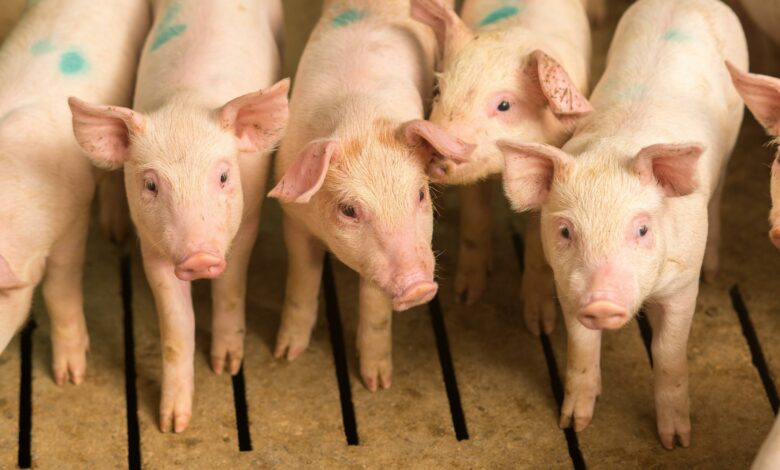
World Farm Animals Day, which falls on October 2 every year, aims to introduce regulations, change laws or mindset to fight for the welfare of all farm animals.
The Campaigns Officer at animal welfare organisation FOUR PAWS in South Africa, Bertha Moteane, says some countries are already moving away from intensive animal agriculture. These countries have passed laws which ban cruel practices used on factory farms.
Moteane believes South Africa’s policy makers should amend policy to improve farm animal welfare. It is of a real concern to her that there is a shortage of suitable laws to safeguard, regulate and good welfare practices on farms.
“One the biggest factors affecting farm animal welfare is the major gap in regulations, lack of specific standards, and failure to enforce laws.”
Statistics show at present, over one billion chickens are killed for food every year in South Africa.
“The intensive farming system does not only have negative impacts on animals. It also has devastating impacts on humans and the planet. Reducing this way of farming will have a positive impact on environmental, animal, and human welfare.”
She points out that the rapidly increasing demand for livestock products has led to an increase in production.
“The intensification of farming has led to traditional farming practices being discarded for industrialised systems. An increasing demand of livestock products thus comes with a high price tag for the environment.”
These methods have led to the inhumane treatment of farm animals, such as keeping them in confined and overcrowded spaces. Other cruelty practices include routine amputations and mutilations (including debeaking, dehorning, tail docking, castration, and others) often without any anaesthetic and analgesia, and cruel and inhumane slaughter methods. It has also created environmental problems such as the over-use of scarce land and water, and an increase in greenhouse gas emissions.
Research indicates that globally, meat production contributes between 14.5% and 51% of global greenhouse gas emissions which constitutes it a primary driver of climate change.
Moteane emphasises that South Africa is already a water scarce country. The fact that factory farms use a lot of water in their production is putting even more strain on the country’s water resources.
Factory farming also means a loss of productive land as many hectares are monopolised to grow animal feed to sustain these farms. This leads to deforestation, air and water pollution, and soil contamination.
According to Moteane, animal-friendly animal production faces several challenges.
There is a considerable price disparity between animal products from intensive factory farms and those from animal-friendly farms.
“The production of animal-friendly farms is slower than that of intensive farming. It is a well-known fact that with factory farming, production is achieved at a higher speed and at a lower cost.”
As a result of the regulation gap, there is also a substantial amount of inaccurate advertising, labelling, or marketing of products.
She believes this misleads consumers on attributes of products and production methods used. This means products produced under harmful practices get away with being advertised and labelled as sourced ethically.
There is a solution at hand. She calls on the public to join the FOUR PAWS #Live Kinder campaign by basing their decisions on the 3-R’s principles of reduce, refine, and replace.
“By reducing we mean that the public should reduce their consumption of animal-based products or remove them completely. FOUR PAWS recommends consumers should make more plant-based food choices. Refining involves scrutinising food and fashion choices and choosing products that promote better animal welfare. Replace means substituting animal-based products with alternatives.”
It is however not only food choices that matter. Moteane points out that intensive farming can also be all about products for clothes like leather.
“Kinder choices should be made about what is on your plate as well as what to wear.”
She called on the public to also protect farm animals by responding and supporting mobilisation efforts for a better deal for farm animals.
Read original story on southerncourier.co.za

