
Yellow-billed kite name change under major debate in SA
The international decision to lump the yellow-billed kite with the black kite has angered many local bird enthusiasts.
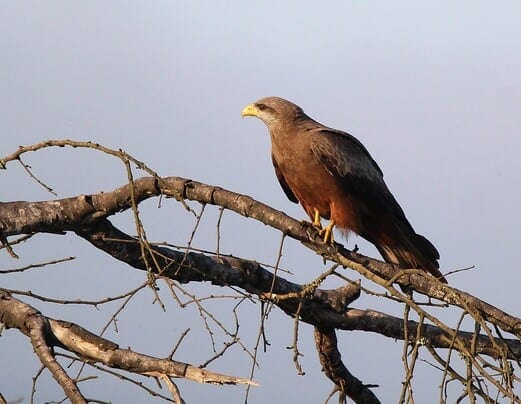
Gracing South Africa’s skies every summer, the yellow-billed kite (YBK) as we know it is no more. According to the Zululand Observer, the birding fraternity has been aflutter in recent months owing to an ongoing debate over doing away with the YBK name as the species is lumped with the black kite.
And, while the name change appears to have been officially adopted internationally, there is much discontent among local expert birders, for various reasons.
Differing views on the name change
To the layman and the novice birder, there is no obvious physical difference between the YBK and black kite. Hybridisation and intergradation of the two species is largely believed to be what led to lumping them together.
However, Mtunzini bird expert and author of several birding books, Hugh Chittenden, is of the view that the YBK and black kite should not be lumped together.
“I’m frustrated and angry about the change. The two kites have completely different migratory patterns and biology. The DNA may be very similar but, in my view, other factors should come into consideration,” says Chittenden.
Among these other factors are that the black kite is essentially a northern hemisphere breeding species, while the YBK breeds in the southern hemisphere.
The global and local picture
According to the Birds of the World (BoW) website, the black kite is widespread throughout Europe, Asia, Africa and Australia, and is one of the most common raptors in the areas in which it occurs. “The species exhibits extensive geographic variation and may actually represent multiple species, as it appears that the red kite (Milvus milvus) may be more closely related to some groups of black kite (Milvus migrans) than other groups of black kite,” noted BoW. “Some populations of black kite are highly migratory, with incredible numbers recorded migrating past Gibraltar between Europe and Africa.”
The kites that spend southern hemisphere summers in South Africa are usually the first summer migrants to arrive, in early August, and leave in late March, spending winters in central east Africa.
Migration patterns studied
According to an African Journal of Ecology article published in July, the YBK was counted annually in autumn between 2016 and 2024 at a roosting site near Pietermaritzburg. “Kite numbers peaked during a short window between the last days of February and the first few days of March, with a maximum count of 3 369 in 2017,” noted the article. “There was high inter-annual synchrony in the departure of kites from the roost, with kites departing just prior to March 20–26 in all nine study years. The consistency of departure timing suggests endogenous cues for migration, not environmental cues, given that abundant food was available at a nearby crocodile farm.”
According to BoW, the black kite faces no immediate conservation concerns owing to its adaptability to human-modified landscapes.
While the name change does appear to have been made official internationally, some South African and Czech Republic scientists may challenge this decision later in the year.
Breaking news at your fingertips… Follow Caxton Network News on Facebook and join our WhatsApp channel.
Nuus wat saakmaak. Volg Caxton Netwerk-nuus op Facebook en sluit aan by ons WhatsApp-kanaal.
Read original story on www.citizen.co.za

