Fuel prices: What you must know about relief vs reality
Lower under-recoveries and a temporary levy cut offer brief relief, but motorists could face steep fuel price hikes in May.
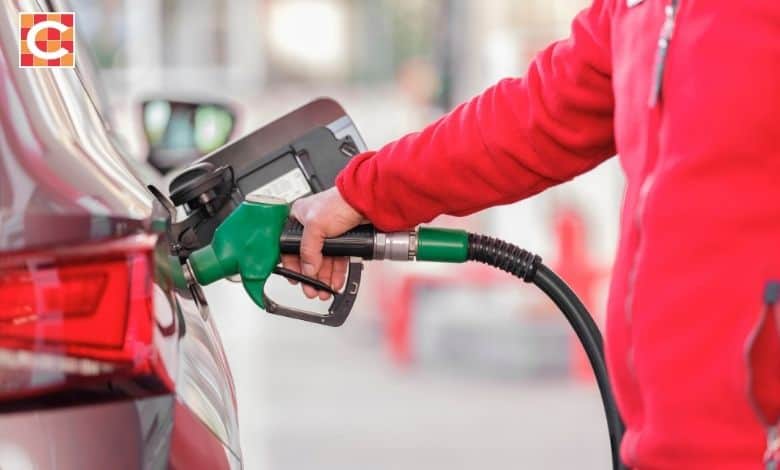
Motorists can breathe a slight sigh of relief with the latest fuel prices dipping a little lower, but not enough to avoid another hike in May.
According to The Citizen, data from the Central Energy Fund (CEF) for the end of the second full week of April shows a positive trend for fuel price recoveries.
The early CEF data shows an under-recovery of R7.88 per litre for octane 95 petrol and R17.57 for diesel (0.005% sulphur).
However, these prices have more than halved since, according to the latest data from the CEF.
The CEF’s under-recoveries show an under-recovery of 93 octane petrol of R2.29 and 95 octane petrol at R2.63 per litre, down 67% from the start of the month.
Diesel has also dropped, with the CEF’s data showing an under-recovery of around R8.05 per litre for 0.05% (500 ppm) diesel and R8.07 per litre for 0.005% (50 ppm) diesel.
Under-recoveries on illuminating paraffin are now R6.52 per litre.
Levy relief to expire
Earlier this month, the Department of Mineral Resources and Energy announced a temporary R3 price relief on the fuel levy for April.
Unless the department absorbs the May reduction, the R3 will also kick in, adding more pain to fuel prices.
Expected fuel price increases in May
If these forecasts remain unchanged, motorists will see the following fuel price increases in May:
- Octane 93 petrol: Increase of R2.29 per litre
- Octane 95 petrol: Increase of R2.63 per litre
- Diesel 0.05%: Increase of R8.05 per litre
- Diesel 0.005%: Increase of R8.07 per litre
- Illuminating paraffin: Increase of R6.52 per litre
South Africa vs global fuel prices
Despite the plethora of taxes and levies on fuel, South Africans are paying around 8% less ($1.363 per litre) than the global average price for 95 octane petrol ($1.48 per litre).
However, according to the Global Petrol Prices website, South Africa is paying $1.702 per litre for diesel, roughly 8% more than the global average of $1.58.
Notably, the temporary R3-per-litre reduction in the general fuel levy also had a substantial effect.
Without this, the country’s fuel prices would be 4% pricier than the global average, while diesel would be 19% higher.
There is a massive gap between these two outliers. Besides the ‘standard’ list of taxes in the price, Malawi also had to add a charge per litre to cover supplier debt. Most of Europe’s prices range between R30 per litre (Spain) and R45 per litre (the Netherlands).
Breaking news at your fingertips… Follow Caxton Network News on Facebook and join our WhatsApp channel.
Nuus wat saakmaak. Volg Caxton Netwerk-nuus op Facebook en sluit aan by ons WhatsApp-kanaal.