
Online support for the FF+ reflects frustration with governance rather than ideological loyalty.
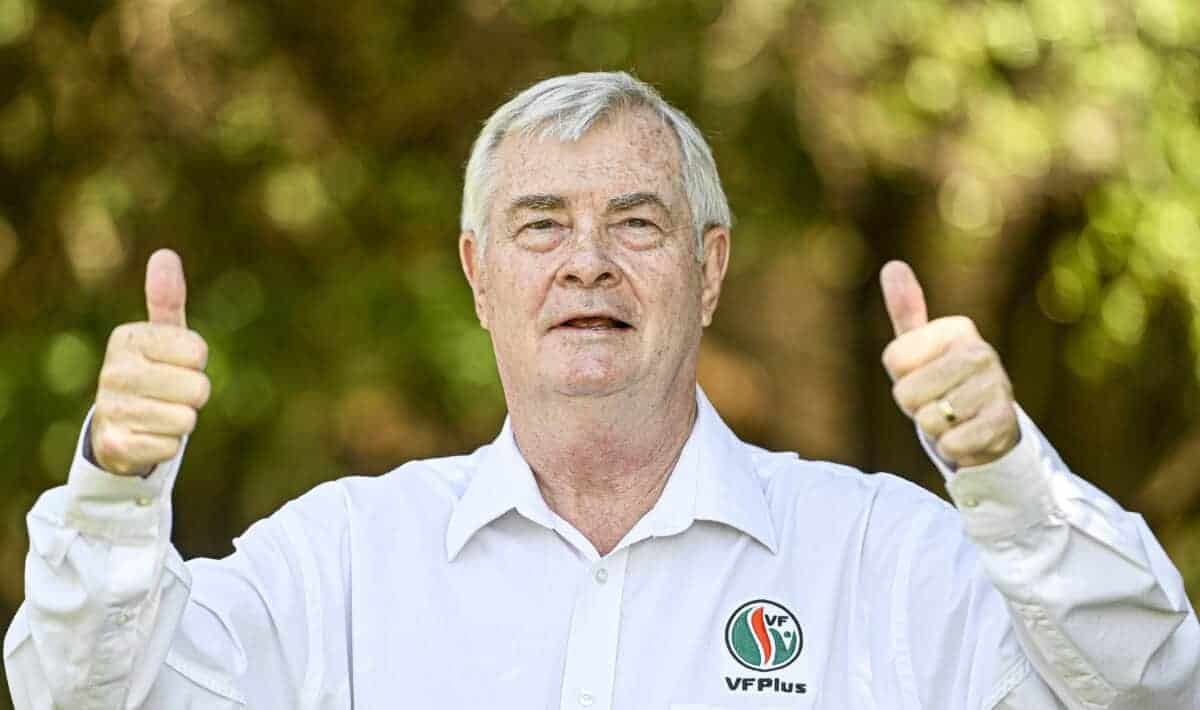
Freedom Front Plus’ Pieter Groenewald. Picture: Gallo Images/Volksblad/Mlungisi Louw


The growing advocacy and political support for Pieter Groenewald and the Freedom Front Plus (FF+) among black users on social media platforms has been characterised by some as a financially orchestrated initiative.
They allege it involves the deployment of artificial intelligence by those opposed to the ANC and black political parties more broadly.
A younger generation of black people have aligned themselves with Groenewald and express strong confidence in him, despite accusations of complicity with a white-focused political agenda.
Notably, the campaign also includes older black people who were born into – and lived through – the apartheid era, and who are now of retirement age.
The FF+ has noted the brewing campaign. While segments of the public appear to be captivated by it, it is important to note that Groenewald is not the incumbent leader of the FF+; the position is currently held by Dr Corné Mulder.
Groenewald serves as a member of parliament representing the party and holds the portfolio of minister of correctional services within the government of national unity (GNU).
How did the South African political landscape and its historical trajectory evolve to produce these developments?
To address this question, it is essential to consider the recent sequence of events, with particular emphasis on the general elections held in May 2024.
That election is widely recognised as a crucial juncture in South Africa’s political history, precipitating profound realignments within the party system.
ALSO READ: Calls grow for Groenewald to lead South Africa
It not only brought an end to the ANC’s era of single-party dominance, but also introduced the GNU coalition as the new arrangement of executive authority.
With the distribution of ministerial portfolios among the 10 parties participating in the grand coalition, the executive arena was transformed into a site of political performance in which parties could enhance their visibility, strategically promote their agendas, and demonstrate their governing capacity to the electorate.
Based on sentiment expressed on social media, which currently constitutes the only accessible source of anecdotal data, there appear to be clearly identifiable electoral beneficiaries as well as parties that have been comparatively disadvantaged.
Parties such as the FF+ seem to have secured increased levels of public approval and support.
By contrast, other parties, namely the DA, Inkatha Freedom Party, the Pan African Congress, the Patriotic Alliance, Al Jama-ah, United Democratic Movement, Good Party and Rise Mzansi – have not attained the same level of public support.
The party experiencing the greatest net loss remains the ANC, irrespective of its public posturing and rhetoric as the leader of the GNU.
Within his portfolio of correctional services, Groenewald discharged his responsibilities with notable diligence and immediacy, instituting prison raids and actively engaging with the structural problem of overcrowding, with particular attention to the presence of foreign nationals within South Africa’s correctional facilities.
Data about foreign nationals currently behind bars highlighted not only the problem of overcrowding, but also the ramifications of immigration and criminal activity for South African infrastructure and public services that are intended to benefit citizens.
Groenewald pledged to address these issues, including the large-scale repatriation of foreign nationals convicted of crimes, so that they serve their custodial sentences, in whole or in part, in jails in their own countries.
ALSO READ: Threat of election boycott over ignored ANC nomination report
This was probably what drew Groenewald to the attention of black communities in particular, as he inadvertently engaged with the issue of immigration – a burning topic for many marginalised constituencies.
Irrespective of efforts by certain segments of society to dismiss or trivialise the issue of immigration in South Africa, it remains an influential factor in politics.
As has happened internationally, immigration has become pivotal in national political dynamics. Illegal cross-border migration and its associated phenomena, including illegal mining and various forms of criminal activity, have emerged as recurrent themes in media coverage.
Ironically, Gayton McKenzie of the Patriotic Alliance, who was previously outspoken on the issue of illegal immigration, appears to have shifted his focus after assuming the GNU portfolio for sport, arts and culture.
However, the recent surge in support for Groenewald and the FF+ extends far beyond concerns related to correctional services and immigration.
To put it more precisely, it is about the relentless search for a politician and a party who will reclaim the South African state and restore governance, national sovereignty, rule of law, order and stability.
Groenewald seems to be perceived by these media followers and potential voters as a politically strong and influential figure, despite his association with right-wing politics and white minority interests.
These developments constitute a critical reflection on black political parties and underscore the extent to which they are disconnected from the interests and lived experiences of their purported constituencies.
The voluntary campaign in support of the FF+ can be interpreted as an expression of distress on the part of black communities, who perceive themselves as being marginalised or insufficiently served by their own government.
NOW READ: Mbalula announces mayoral changes in the Free State; analyst believes this is politicking