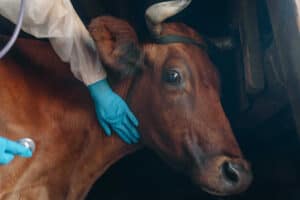
"For Steenhuisen personally, this is the test of whether he is just a photo-opportunistic politician, or can actually run a serious, technically demanding portfolio."
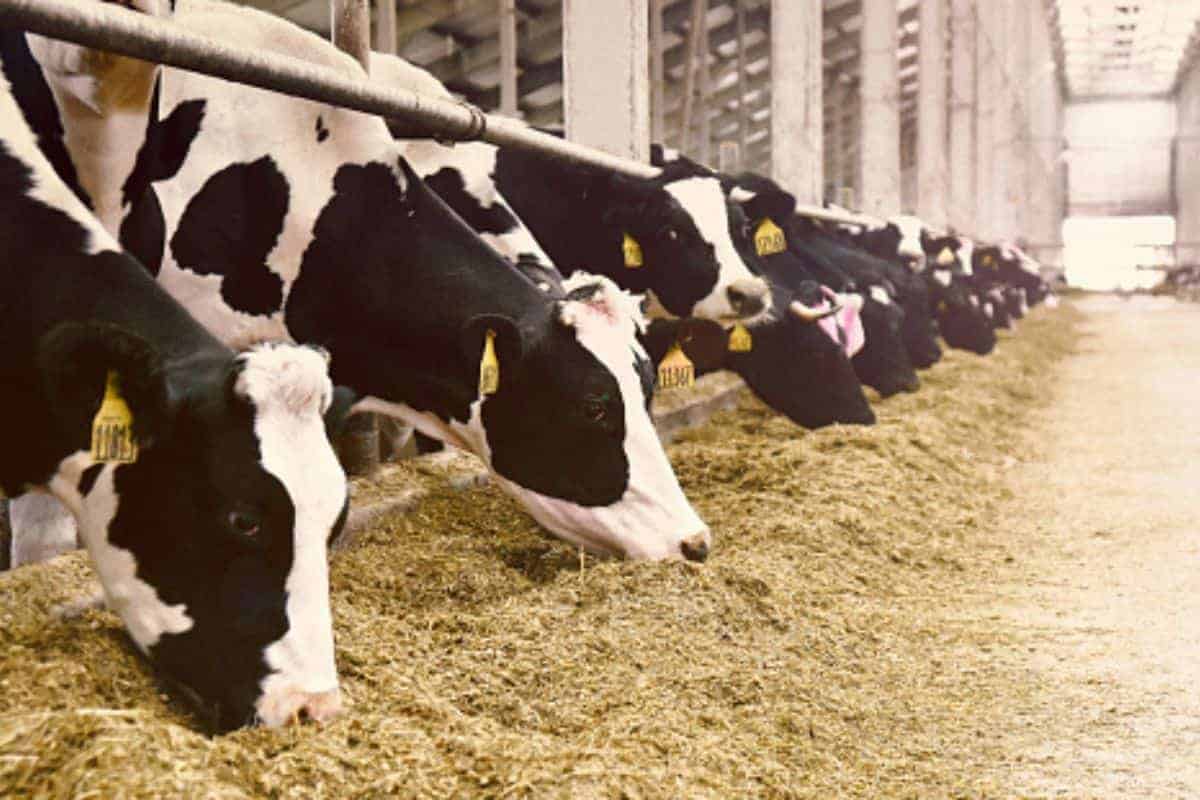
Image for illustrative purposes. Picture: Hans Neleman / Getty images


Poor management by the department of agriculture over the past half dozen years has allowed foot-and-mouth disease (FMD) to rampage through SA’s critically important livestock economy, driving farmers to despair.
The fallout has been brutal. Beef and related products have been banned in key markets such as China, Namibia and Zimbabwe.
It hits the dairy sector particularly hard: secondary effects like mastitis, an udder infection, make milking slow, labour-intensive and excruciatingly painful for the animals.
The crisis is also shaping up to be a stern, nuts-and-bolts test of DA leader John Steenhuisen’s competence in the agriculture portfolio, a job that touches millions of livelihoods.
Until now, his main visible role has been to personify the supposed racial harmony of the government of national unity – President Cyril Ramaphosa cringingly introduced him to Donald Trump at that infamous White House têteà-tête as “my white minister of agriculture”.
Shot at redemption
This veterinary, agricultural and trade emergency comes at an inconvenient moment for Steenhuisen.
His party leadership is already wobbling after the Dion George debacle. The FMD challenge that Steenhuisen now confronts is daunting and failure would be grave for both commercial and communal farmers… and for the economy.
The crisis is not of Steenhuisen’s making, although some farmers and leaders of organised agriculture I spoke to feel he has failed to comprehend its seriousness or address it forcefully.
It is also a political opportunity for Steenhuisen, whose tenure in agriculture has so far produced more rah-rah announcements about “opening new markets” to replace those jeopardised by US tariffs than tangible improvements in animal health systems.
On Wednesday, he finally took up the gauntlet with a major policy shift: abandoning the decades-long containment strategy aimed at preserving FMD-free herds in favour of mass vaccination.
SA, he said, will vaccinate the entire national herd. It’s a move that’s drawn support across the agricultural spectrum, but the applause is laced with hard warnings.
Without providing any detail or costings, Steenhuisen has committed the state to a mammoth logistical exercise with massive, recurring budgetary implications.
To begin with, no-one can say with absolute confidence how big the national herd is. The last Stats SA livestock estimate, in 2016, put the cattle population at about 13.4 million head.
The Red Meat Action Group puts it at 22 million. All the agricultural organisations hammer the same missing pieces to Steenhuisen’s statement: no cost estimates, no clear financing model, no detailed logistics, no timelines, and no defined role for producers in execution.
And then there are the costs. Even if commercial farmers shoulder their share of the bill, the Treasury will still have to find, on conservative calculations, around R1 to R2 billion a year to keep a national FMD vaccination programme going.
The tragedy of the FMD situation is that, with steady, prudent governance, it should have been avoidable.
Although it suits the government to present FMD as one of those unavoidable plagues, that’s simply not true.
A string of countries – from Australia to much of Latin America – have either eradicated FMD or keep it tightly controlled through vaccination, zoning and ruthless restrictions on livestock movement.
For Steenhuisen personally, this is the test of whether he is just a photo-opportunistic politician, or can actually run a serious, technically demanding portfolio.
FMD offers him the one thing South African politics rarely grants: a chance at visible redemption.
NOW READ: A sinking feeling about navy