



Summits from the G20 to SADC show water governance, innovation and groundwater protection are central to economic and climate stability.
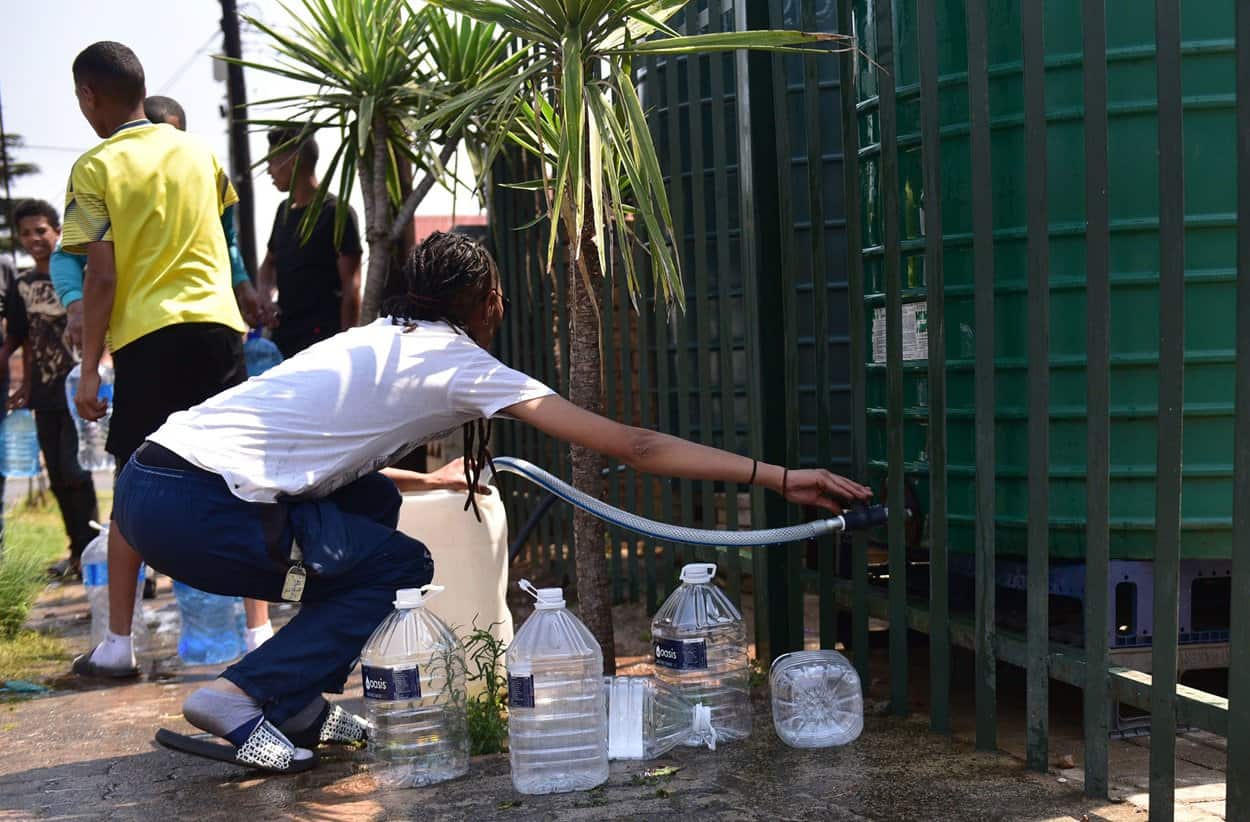
Coronationville residents fetch water as they have not had running taps for more than 10 years. Nearby Westbury, Newclare and Claremont in Joburg have intermittent supply. Picture: Nigel Sibanda


In an era defined by escalating climate shocks, intensifying water scarcity and mounting pressure on natural resources, the global community stands at a decisive moment.
The convergence of themes emerging from the G20 leaders’ summit, held under South Africa’s historic presidency, and the Southern African Development Community (SADC) Groundwater Conference underscore the urgency of bold and collaborative action to secure water resources and fortify climate resilience.
In the months preceding these seminal gatherings, SA convened three pivotal platforms: the National Water and Sanitation Indaba, the African Union-AIP G20 Water Investment Summit and the Association of Water and Sanitation Institutions of South Africa (AWSISA), Africa and Global South Water and Sanitation Dialogue 2025.
A consistent and urgent message emerged: water security is inseparable from climate resilience, economic stability and social dignity.
Climate change is demanding that SA and the continent accelerate the transition toward resilient, diversified and well-governed water systems.
For developing countries in particular, water security is a central determinant of economic stability, social cohesion and climate resilience.
ALSO READ: Municipal failures laid bare as AGSA reports R2.32bn water tanker expenditure
Sustainable water management is an economic, developmental and moral imperative.
The National Water and Sanitation Indaba highlighted that SA’s water crisis is fundamentally a governance and infrastructure challenge exacerbated by climate variability.
It called for structural reforms, including the establishment of the National Water Resource Infrastructure Agency, strengthening of Catchment Management Agencies, professionalisation of municipal water utilities and modernisation of sanitation systems.
Crucially, the indaba stressed that research, innovation and inclusive participation must underpin future water planning.
At continental level, the AU-AIP G20 Water Investment Summit positioned water as a strategic climate-adaptation asset. It highlighted Africa’s vast water investment gap and secured a climate-resilient project pipeline estimated at $10 billion (about R170 billion) to $12 billion annually. Water was reframed as a driver of agriculture, energy security, economic development and diplomacy.
It also unlocked global financing mechanisms to support longterm, climate-proof water infrastructure across Africa.
ALSO READ: Tshwane battles rising water quality fears amid plant failures
The AWSISA Africa and Global South Dialogue focused on equity and community resilience, emphasising that informal settlements, rural communities, women and youth are disproportionately affected by climate-induced water insecurity.
The dialogue championed localised innovation, utility reform, cross-border cooperation and inclusive partnerships to ensure that climate-resilient services reach all households and institutions.
Water security is the single greatest determinant of economic stability, social cohesion and climate resilience in developing nations.
AWSISA emphasises that strategic, coordinated efforts are essential to addressing the complex water challenges confronting SA and the region. Water binds climate action, economic stability, social well-being and peace.
The G20 leaders’ declaration reflects SA’s vision: for climate action, water security and development to be pursued with justice, equity and solidarity.
The declaration underscores climate-smart agriculture, resilient infrastructure, adaptation financing and protection of fresh and groundwater resources.
ALSO READ: Johannesburg municipality threatens service disconnections during festive season
SA’s advocacy that climate change is fundamentally a water crisis has broadened global understanding of water as central to food systems, energy transitions and human security.
The SADC Groundwater Conference highlighted groundwater as Africa’s hidden lifeline: sustaining more than 70% of rural households, supporting agriculture during droughts and buffering communities against surface-water shortages.
The conference stressed the need for stronger legal frameworks, improved monitoring and collaborative management of shared aquifers. Groundwater is one of SA’s most potent climate-resilience tools.
Water boards are increasingly integrating groundwater into bulk water planning, developing new wellfields and exploring aquifer recharge using treated wastewater.
SA’s contributions, through the Water Research Commission, universities, water boards and hydrogeologists, demonstrate the nation’s ability to innovate in groundwater monitoring, recharge and governance.
The SADC conference sent a clear message: Africa cannot achieve prosperity, stability or regional integration without safeguarding and developing its groundwater resources.
ALSO READ: City of Tshwane shuts down Bronkhorstspruit Water Treatment Plant… again
The urgency of this message is reinforced by climate change, which is accelerating the depletion and contamination of water resources.
Climate resilience demands decisive action. Nature-based solutions, reforestation, wetland restoration, enhanced groundwater recharge and strengthened Catchment Management Agencies are essential tools for sustainable development, food security and human survival.
The alignment between the SADC Groundwater Conference, the G20 leaders’ summit, the AUAIP G20 Water Investment Summit, the National Water and Sanitation Indaba and the AWSISA Dialogue signals a growing global consensus on water security and climate action.
Across these platforms, the following themes emerged consistently: Climate change is a threat multiplier, intensifying scarcity and widening inequality; groundwater, managed aquifer recharge, sanitation transformation and water reuse must be central to national water portfolios; strong institutions and municipalities are essential for resilience; blended finance and investment are required to modernise systems; regional cooperation is critical; inclusion and social justice must guide reforms; and research; and technology and innovation are indispensable for climate-adaptive solutions.
Water security is a national priority, a continental development imperative and a global climateresilience agenda. SA’s call is clear: Let us protect water. Let us build climate resilience. Let us create a future where no-one is left behind.
Support Local Journalism
Add The Citizen as a Preferred Source on Google and follow us on Google News to see more of our trusted reporting in Google News and Top Stories.

