


Ordinary consumers fill the power gap with more than 4GW of solar, yet are still paying for government or parastatal failures.
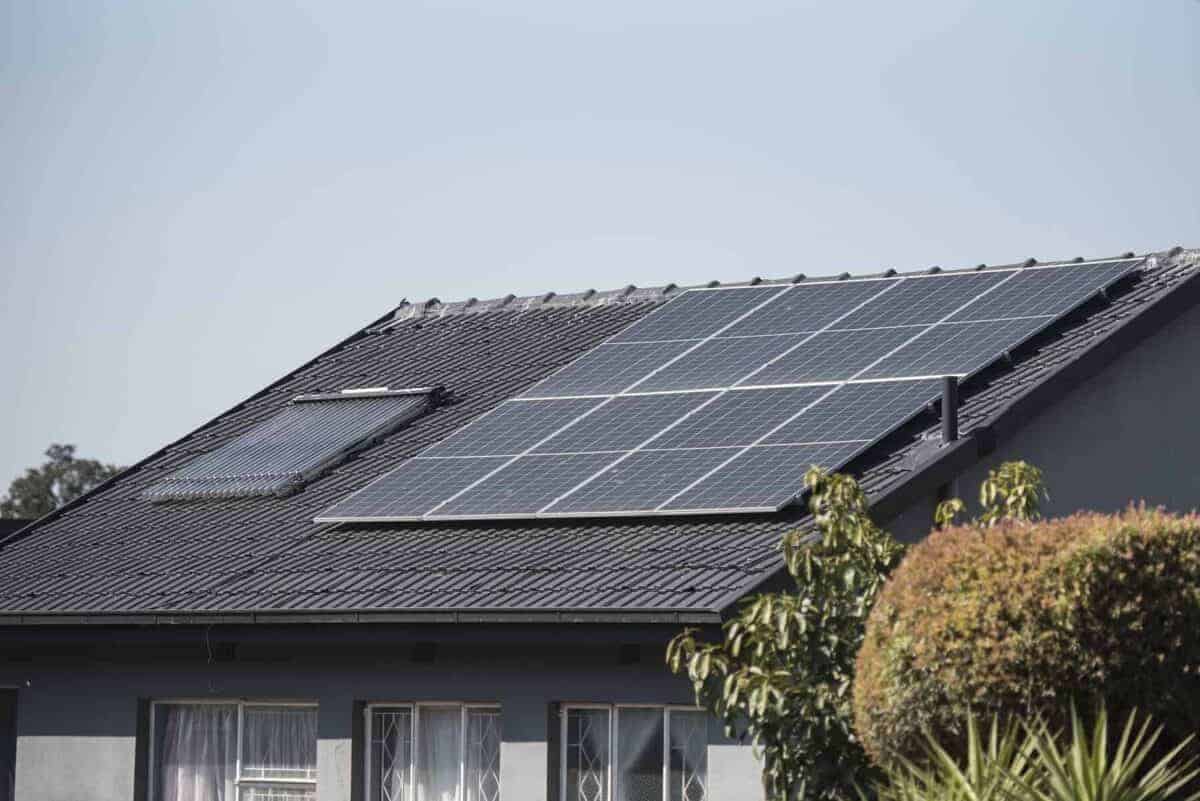
A house with solar panels on its roof in Johannesburg. Picture: Michel Bega/The Citizen


Quietly, without fuss, I have become a green eco-warrior… and I didn’t have to buy an expensive electric vehicle (EV) to do it.
But I have managed to make my own car “net zero” – where its net CO2 emissions do not exist.
Even better, it may have a net positive effect on reducing those global warming-causing gases.
No, I didn’t do anything drastic to my old family workhorse 2004 Subaru Forester (yes you read that right, it’s 22 years old). Not much you can do to a four-cylinder, petrol 2.5-litre.
It’s coupled with a permanent all-wheel-drive system which helps nudge the system CO2 emissions to about 250g per kilometre.
That’s pretty high, I’ll admit – especially when compared with small cars on the market at the moment which generate half that figure.
However, please note the model year. I have not had to buy another car for myself for the past 22 years.
Most Joburgers would be on their fourth or fifth in that same period. So, I’ve already saved the planet the thousands of tons of CO2 which would have been needed to produce those newer cars.
ALSO READ: Nersa state that solar installations meeting these specifications must be registered
However, that is not the main reason I am an eco-warrior. By getting my Forester to net zero, I am fighting the good environmental fight.
Inspired by Australian YouTuber and motoring journalist John Cadogan recently, I did a bit of number crunching of my own related to our household’s energy consumption – but, more importantly, to its energy production.
Cadogan calculated that a consumer buying a hybrid Toyota RAV 4 in Oz, as opposed to one buying an EV Tesla would – after putting the price difference into a rooftop solar system – produce less CO2 annually than the Tesla driver.
This is assuming the Tesla driver recharged the car from mains power.
When we moved to Knysna recently, we found that the house we bought had what would amount to an entry-level solar system.
We had one in Joburg to ensure we could still see, watch TV and have access to the Internet during the regular City Power blackouts.
That system was set to be a pure back-up. Now, our solar system’s more sophisticated monitoring panel shows that the solar generates as much as 10kWh of electricity daily.
This house’s consumption is majority solar, according to the monitor. That nano-power station saves us up to R40 a day in electricity not bought from the council.
ALSO READ: Outa calls on solar users not to register with Eskom or municipalities
But also, according to my calculations, that 10kWh saves about 10kg daily in CO2 production, based on the fact that it takes about 1kg of CO2 to produce 1kWh in this country.
Now, if you do the maths, you will see that 10kg of CO2 is what my Forester puts out over a distance of 40km.
So, anything under 40km a day – and we seldom do that – means my car has zero impact on atmospheric CO2.
Then why are solar users not recognised but instead get penalised by the cadres who run our country?
Eskom likes to crow about how load shedding has effectively become a thing of the past and that energy availability is rising all the time.
That ignores the reality that, over the past five years or so, the private sector has installed more than 4GW of solar – effectively plugging that massive gap between Eskom supply and demand.
But, now, you must register your system and have it checked out – very expensively no doubt – so Eskom can satisfy itself that everything’s safe. Nice excuse.
Like many things in this country, it’s ordinary consumers who end up paying for government or parastatal failures. That makes zero sense.
NOW READ: Cape Town calls on Nersa to scrap potential Eskom tariff hike after calculation error
Support Local Journalism
Add The Citizen as a Preferred Source on Google and follow us on Google News to see more of our trusted reporting in Google News and Top Stories.

