The controversies have exposed systemic failures across the country's public healthcare system.
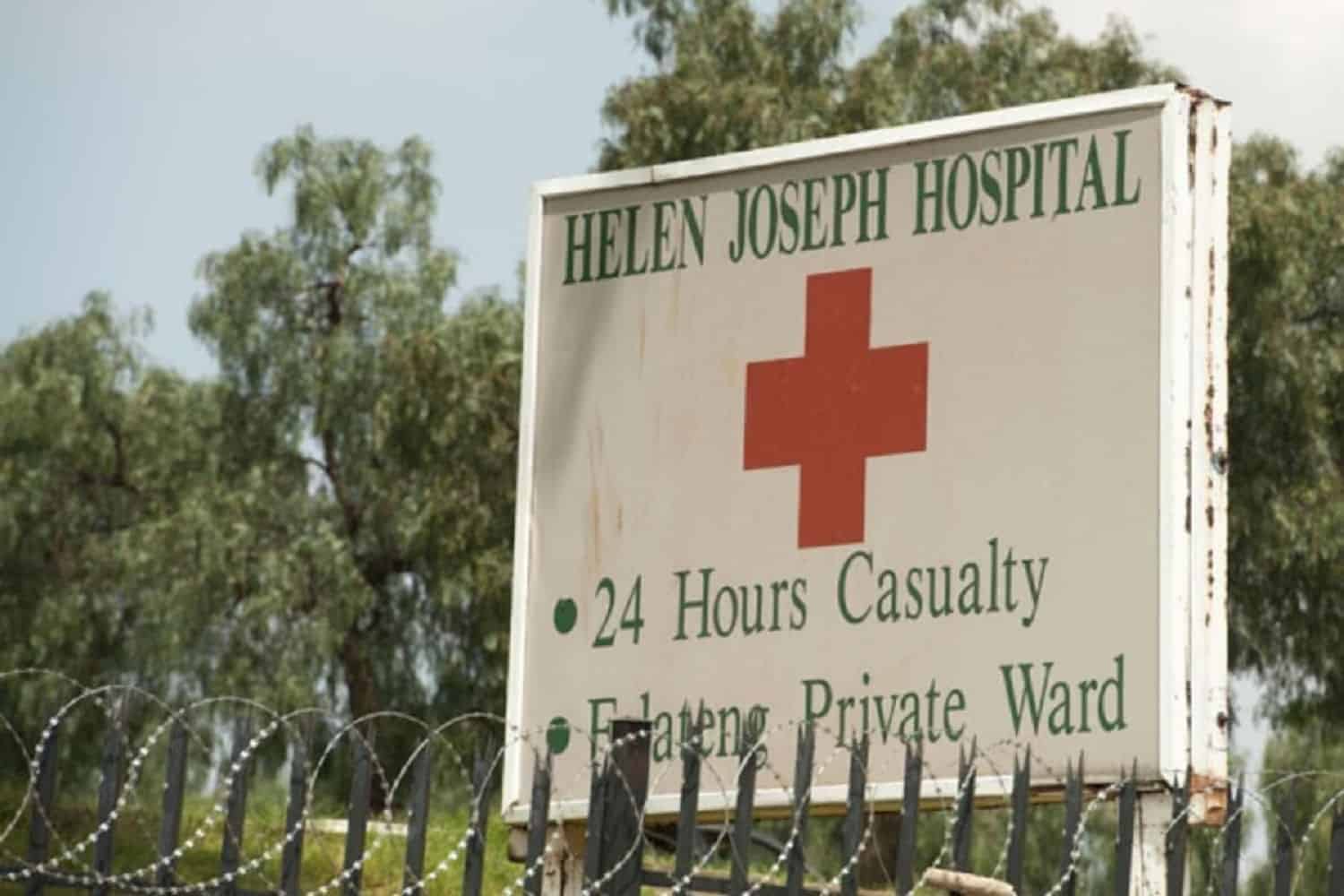
Helen Joseph Hospital in Johannesburg. Picture: Refilwe Modise/The Citizen


South African hospitals have made several headlines this year with a series of damaging scandals, from a staggering R2 billion corruption scheme at Tembisa Hospital to persistent linen shortages leaving patients without basic bedding.
The controversies have exposed systemic failures across the country’s public healthcare system, raising serious questions about management, accountability, and patient dignity.
R2 billion Tembisa Hospital fraud uncovered
The Special Investigating Unit (SIU) released an interim report in September detailing one of the most devastating cases of public sector corruption in recent memory.
The probe revealed three coordinated syndicates responsible for siphoning over R2 billion from Tembisa Hospital, funds intended for healthcare services to vulnerable communities.
The investigation was prompted by whistleblower Babita Deokaran, who flagged irregular tenders at the hospital in 2021. Tragically, Deokaran was assassinated outside her home in Winchester Hills, Johannesburg in August that year.
Tembisa Hospital syndicates uncovered
The SIU analysed 2 207 procurement bundles, revealing serious administrative failures and procurement fraud.
The investigation currently involves 207 service providers who conducted business with the hospital under 4,501 purchase orders, with total irregularities under investigation exceeding R2 billion.
“Key officials from the Gauteng Department of Health (GDOH) and Tembisa Hospital are accused of benefiting from corrupt payments that facilitated the irregular appointment of service providers, involving money laundering and fraud through fronting and the use of false Supply Chain Management documentation,” the investigative unit stated.
It revealed that the largest operation, the Maumela Syndicate linked to Hangwani Morgan Maumela, involves procurement bundles worth more than R816 million.
The SIU traced 41 suppliers connected to Maumela, with his identified assets totaling around R520 million, including multiple Lamborghini vehicles, a Bentley Continental GT, and properties worth R293 million, including a R75 million Bantry Bay property.
Two other major syndicates, the Mazibuko Syndicate and Syndicate X, involved procurement valued at R283 million and R596 million, respectively.
The SIU identified at least 15 current and former officials involved in corruption, money laundering, collusion, and bid rigging, with corrupt payments to officials totalling R122 million.
Lower-level employees were found to be responsible for the largest losses.
Critically, the investigation revealed that none of these transactions resulted in the delivery of actual goods to Tembisa Hospital. Funds moved from the hospital to front companies and conduits, then to beneficiaries who purchased assets.
Health Minister Dr Aaron Motsoaledi indicated that additional luxury asset seizures from implicated individuals are expected. The SIU anticipates completing the investigation by November 2027.
ALSO READ: SIU welcomes arrest of Tembisa Hospital employee in corruption case
Persistent linen shortages plague hospitals
Throughout the year, reports of severe linen shortages emerged from multiple Gauteng hospitals.
Chris Hani Baragwanath Academic Hospital, Bheki Mlangeni Hospital, and Helen Joseph Hospital were the most notable hospitals involved in the crisis.
In August, DA Gauteng Shadow Health MEC Jack Bloom revealed that 860 beds at Chris Hani Baragwanath lacked complete linen sets.
“There should ideally be 14 440 stocks of each linen category for the 2888 beds at the hospital, but whereas there are 14 902 flat sheets and 17 524 blankets, there are zero (0) fitted sheets, and only 10 239 pyjamas, 4517 counterpanes, and 1272 pillowcases,” Bloom said.
The department addressed the concerns, citing outdated laundry machinery, delayed bulk linen purchases, and high patient volumes as contributing factors.
Gauteng Department of Health spokesperson Motalatale Modiba said baseline linen was available but not at ideal capacity.
“There is availability of baseline (minimum) linen; however, this is not at an ideal capacity, hence the focus is on building a linen bank to ensure that we have excess capacity,” Modiba said.
In December, the provincial government allocated R275 million in the Adjustment Budget to purchase new hospital linen, mattresses, and beds.
The Gauteng Department of Health also received R100 million from the National Department of Health for the 2025/26 financial year, with R50 million designated for laundry machinery upgrades.
ALSO READ: Gauteng Health dismisses linen shortage claims at Bheki Mlangeni Hospital
Helen Joseph Hospital mortuary controversy
In June, the Gauteng Department of Health rejected allegations that corpses remained unprocessed at Helen Joseph Hospital’s mortuary due to printer cartridge shortages, dismissing the claims as misleading.
Modiba clarified that the hospital experienced printing difficulties between 17 and 23 June, which affected mortuary processing times. However, emergency measures were implemented, and five pending families were assisted on 24 June.
“Contrary to the sensationalised report, the facility’s mortuary currently has only one body of a patient who was declared dead on arrival on Wednesday, 25 June, which was initially unknown,” Modiba stated.
DA Gauteng Health Spokesperson Madeleine Hicklin had alleged corpses were left unprocessed for nearly two weeks.
“The DA in Gauteng is horrified to learn that people who have died over the past 13 days at the Helen Joseph Hospital in Johannesburg cannot be transferred to government mortuaries because the hospital has no printer cartridges to print the necessary documents,” Hicklin stated.
The department maintained that all outstanding cases had been resolved and that no bodies remained unprocessed due to printing challenges.
Psychiatric patients die in freezing conditions
The Health Ombud released findings in December revealing that inadequate infrastructure, equipment failures, and poor management contributed to psychiatric patient deaths at two Northern Cape hospitals.
The investigation found patients froze to death due to electricity failures and insufficient care.
Professor Taole Mokoena, the Health Ombud, presented the investigation findings at the Ronnie Mamoepa Press Room in Pretoria.
The probe examined two patient deaths and substandard medical care at the Northern Cape Mental Health Hospital in Kimberley and Robert Mangaliso Sobukwe Hospital, following a complaint by Health Minister Dr Aaron Motsoaledi in October 2024.
Nurses suspended over patient video
Three nurses at Hewu Hospital in the Eastern Cape were suspended after allegedly recording a video of a naked patient and circulating it on social media in June. According to GroundUp, the patient died the same day.
Community members reportedly claimed the patient was not assisted promptly because she lacked the R90 fee charged to walk-in patients without referral letters.
Eastern Cape Department of Health spokesperson Siyanda Manana confirmed that patients arriving without a clinic or doctor referral were charged a R40 consultation fee and a R50 bypass fee, depending on circumstances.
GroundUp reported that community leader Ntombozuko Dimaza said children found the naked woman near a dumping site close to the hospital on 7 June. The woman, known locally, was breathing but had bruises covering her body.
“On the video we saw, the woman is unattended, she still has grass on her forehead, no drip, she is lying on a bed naked. Nurses are talking in the background, one saying that the patient is gasping for air, while the other says it was God’s grace that she was found still alive,” Dimaza said.
Manana confirmed the nurses were suspended pending investigation. Residents protested multiple times over the incident and the facility’s patient care standards.
READ NEXT: Vacancy threatens to throw Pretoria hospital into further chaos