

Terrorism experts question police handling of alleged Ballito Junction bomb plot
An Institute for Security Studies expert and a former Hawks counter-terrorism commander have raised concerns over the police handling of the alleged bomb plot.

Two of South Africa’s leading counter-terrorism experts say the alleged Ballito Junction bomb plot displayed characteristics of an act of terrorism and warranted investigation under the country’s anti-terrorism laws.
“I was extremely disturbed when I read the article,” said Institute for Security Studies (ISS) senior training coordinator Willem Els after the Courier revealed details of an alleged attempted mass-casualty attack at Ballito Junction Regional Mall (Failed: Mall bomb attack, July 10) that remained undisclosed for three months.
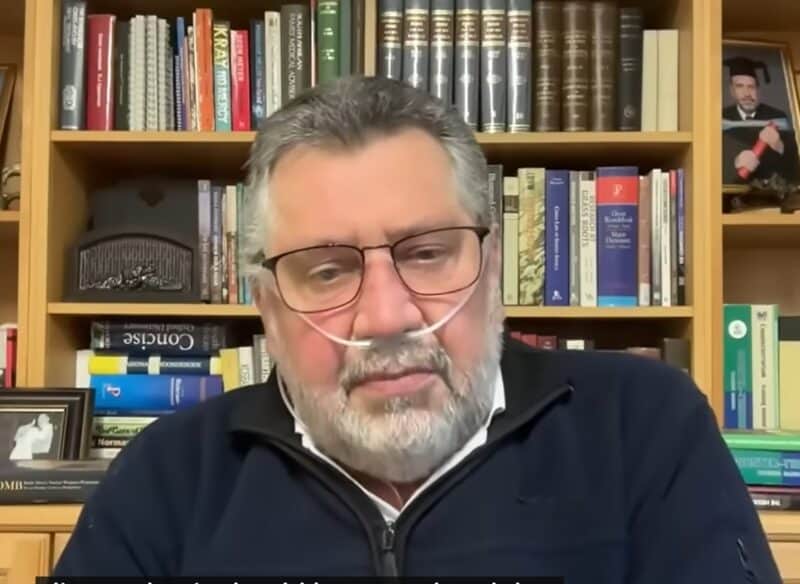
Photo: Screenshot/YouTube
A specialist in terrorism and explosives-related incidents in the ISS’s Transnational Threats and Organised Crime Programme, Els said local police failed to follow Saps Standing Orders governing bomb threats.
“These elements are embedded in the basic police training at the Saps colleges.
“The police cannot be selective in bringing charges.”
Els said the incident appeared to meet the criteria for terrorism under Sections 2 and 5 of the Protection of Constitutional Democracy Against Terrorist and Related Activities Act 33 of 2004 (POCDATARA) and should have been investigated under that legislation in addition to criminal law.
He suggested the emphasis placed on police station crime statistics could explain what he described as selective charging.
“Police stations are assessed on their crime statistics, and there is sometimes a reluctance to open cases that could reflect negatively on a station’s performance.”
Els said incidents at privately owned public spaces such as malls are often kept quiet to protect their reputations, warning that this could undermine South Africa’s standing in future international assessments.
Although South Africa has been removed from the Financial Action Task Force (FATF) grey list, formerly greylisted countries are required to maintain reforms combating money laundering and terrorist financing. Els said the handling of the Ballito incident could count against South Africa during the FATF’s next evaluation, due to conclude in October 2027.
He said South Africa’s greatest terrorism threats stem from terrorist financing and lone-wolf attacks, citing the alleged attempt by a 15-year-old to detonate an explosive device in the Ballito Junction Mall food court.
“It is extremely difficult to gather intelligence on lone wolves. They operate alone and keep their plans to themselves. Sometimes the first indication of their intentions is a manifesto, as was allegedly the case in the Ballito incident. This is a warning that we are not focusing enough on this threat.”
Retired Colonel Tollie Vreugdenrug, the former Hawks national section commander for counter-terrorism investigations who now works as a counter-terrorism consultant, said his analysis of the alleged manifesto led him to conclude that the teenager was not a terrorist in the traditional sense, but a combination spree and mass killer whose alleged actions could constitute an act of terrorism.
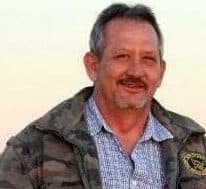
“There are three different types of killers – spree killers, mass killers and serial killers. The actions described in the manifesto lead me to conclude that the boy is a combination of a spree and mass killer,” he said.
Vreugdenrug said the alleged attempted bombing at Ballito Junction displayed characteristics of a mass-killing event, while the earlier alleged attempted school stabbing and pepper-spray incidents were more consistent with spree-killer behaviour.
He stressed that the success or failure of an attack was irrelevant when assessing its seriousness.
“It is the same as with attempted murder,” he said. “What matters is the intent.”
Els said major threats in Africa are often first detected by foreign law enforcement agencies, as happened when the FBI alerted South African authorities to the Ballito case.
He said local authorities sometimes insist on conducting their own assessment and, if they cannot independently verify the threat, the matter may be dropped. Institutional ego can also play a role, he added.
While the investigation may ultimately find no evidence of terrorism, Els cautioned that it would be premature to rule it out.
“We need to allow the authorities to conduct a thorough investigation and build a solid case for the prosecution.”
Stay in the loop with The North Coast Courier on Facebook, X, Instagram & YouTube for the latest news.
Mobile users can join our WhatsApp Broadcast Service here, or if you’re on desktop, scan the QR code below.