

New KwaDukuza budget proposes above-inflation hikes – here’s what it means
Opposition parties argue more needs to be done to soften the blow for residents.

Residents are bracing for a financial squeeze after the tabling of a R3.37-billion draft budget which includes steep tariff increases.
The draft, presented by mayor Siduduzo Gumede at the KwaDukuza Town Hall last Thursday, outlines the KwaDukuza municipality’s plan for the 2026/27 financial year.
While Gumede described the budget as “balanced, funded and credible,” opposition parties and civic organisations argue that the figures tell a more troubling story.
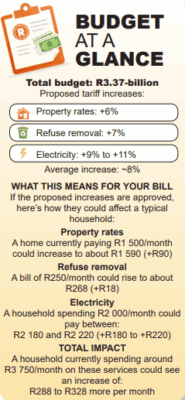
Property rates are set to increase by 6%, refuse removal by 7% and electricity tariffs by between 9% and 11%, pending approval.
Combined, these adjustments amount to an average increase of around 8% – a figure critics say is far above inflation and out of step with residents’ economic realities.
Gumede pointed to improved financial performance, including a stronger revenue collection rate and provincial recognition for revenue enhancement and fire and rescue services. He said the municipality had aligned spending with key priorities such as service delivery, infrastructure renewal and economic growth.
“We have placed people at the centre of development and this budget reflects that commitment,” said Gumede.
Democratic Alliance caucus leader Privi Makhan accused the municipality of ignoring residents’ struggles.
“This budget shows how out of touch council is. Instead of fixing inefficiencies like energy losses and billing problems, costs are being passed directly onto ratepayers,” she said.
Makhan also warned of risks to electricity supply, citing the absence of confirmed grant funding for the Dukuza Substation.
ActionSA caucus leader Nel Sewraj labelled it a “paper budget” built on fragile assumptions.
“The municipality is gambling on savings that may not materialise. If these plans fail, the financial consequences could be severe,” he said.
He highlighted a planned R122-million reduction in bulk electricity purchases, warning it relies on unproven energy loss reduction strategies.
The Dolphin Coast Residents and Ratepayers Association’s chief operating officer, Mary Kassam, said the budget’s credibility depends on delivery.
“Without clear progress on energy losses, billing accuracy and revenue growth, public trust will remain a challenge,” she said.
The municipality maintains the budget includes support for vulnerable groups, including pensioner rebates and indigent relief.
The draft budget is now open for public comment, with community roadshows set to begin on April 8.
Stay in the loop with The North Coast Courier on Facebook, X, Instagram & YouTube for the latest news.
Mobile users can join our WhatsApp Broadcast Service here, or if you’re on desktop, scan the QR code below.