
Dube TradePort uses rain and airport waste water
Water saving methods implemented at Dube TradePort.
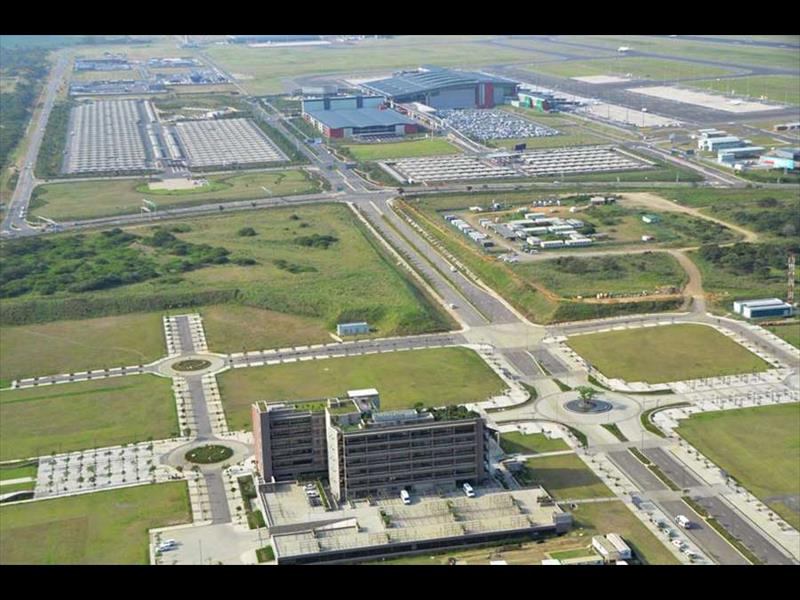
Although Hazelmere Dam has risen to 47.55 percent, water supply and usage remains a concern and questions have been asked as to where a thirsty development such as Dube TradePort gets its water from.
Dube TradePort Corporation (DTP) is said to be environmentally conscious and has put in place a number of strategies to save water.
DTP CEO, Saxen van Coller told the Courier that rainwater harvesting, storm water management and wetland rehabilitation were some of the components included in their water conservation strategy.
She said rainwater is harvested at each greenhouse in the AgriZone and stored in close surface storage ponds next to each greenhouse.
“To ensure that DTP’s water usage does not impact on wetland functionality, a storm water management and a wetland rehabilitation plan ensure that enough rainwater is released into the surrounding environment,” she said.
DTP’s water supply is further supplemented by boreholes within AgriZone and recycled waste water from the King Shaka International Airport (KSIA) waste water treatment works.
The waste water is pumped to AgriZone where it is purified through reverse osmosis, before being stored in a closed surface storage pond.
“Where appropriate, closed system irrigation and drip irrigation systems are used and all excess run-off and irrigation water will be 100 percent collected an re-circulated,” van Coller said.
She added that back-wash water and brine from the system is collected from each greenhouse and discharged at an off-site approved and licensed disposal site. Van Coller said on approval from the department of water affairs, some of this water is used for landscaping around the DTP.
Rainwater harvested from the AgriZone nursery buildings is used on a smaller scale to supplement potable water used to irrigate indigenous plant species that are grown in the nursery.
Meanwhile, DTP’s head office, 29 South is also partly served by harvested rainwater.
“Rainwater is used for toilets and and for irrigation purposes. Waterless urinals have also been installed and since 29 South is an office building, there is no need for hot water and therefore we have eliminated the use of geysers, except in the cyclist facilities,” said van Coller.
She said other buildings in the precinct have also been reviewed and soon rainwater tanks will be installed and plumbing will be altered where possible to make use of harvested rainwater.
“All future buildings are planned with water conservation in mind our future water requirements are regularly communicated to Ethekwini municipality as they are developed in the master planning process.”
Van Coller said they also use the environmental impact assessment that has been done as a tool to test project sustainability, especially on issues like water.
Efforts to offset the environmental impacts of both DTP and KSIA has resulted in a rehabilitation and restoration project which includes the removal of alien invasive plant species and rehabilitation of indigenous species. She said DTP and its development partner, Airports Company South Africa (ACSA) have so far cleared 599.9 hectares and DTP has also planted indigenous trees and plants on a further 18.55 hectares of its land.
“The plan is to rehabilitate more than 700 hectares of land over the years, returning the area to its natural state with vibrant ecosystems and vegetation that is less taxing on our water resource,” van Coller concluded.
Stay in the loop with The North Coast Courier on Facebook, X, Instagram & YouTube for the latest news.
Mobile users can join our WhatsApp Broadcast Service here, or if you’re on desktop, scan the QR code below.