

Ballito duiker – Ezemvelo hits back
Ezemvelo aims to relocate remaining buck from construction area.
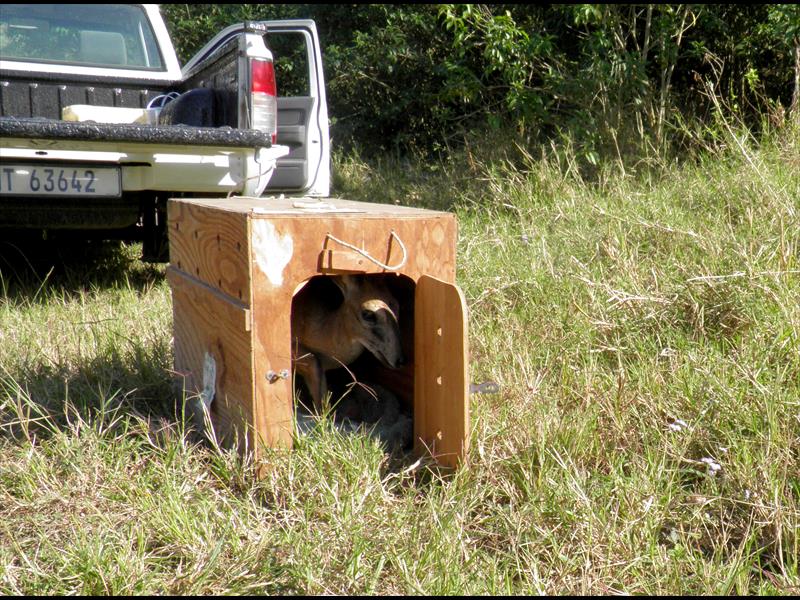
The grey duiker that was kicked and stoned by Ballito Junction construction workers on Monday, July 13 has been released back into the wild after spending a week recovering from its wounds.
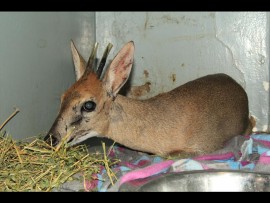
The young ram was treated at the Ballito Veterinary Hospital for swelling and bruises to the head and a badly torn lip that left his jawbone exposed.
Although sedated and on painkillers, the animal was unable to eat for the first few days after the attack because he was in too much pain. Under the care of the good vets the duiker steadily recovered until he was strong enough to be released at Rain Farm Game Lodge on Monday morning.
“We released the duiker and he was off very quickly. He climbed an embankment and was well on his way,” said Rain Farm general manager, Cara McDaniel.
She said he looked extremely happy to be back in the bush and even let off a cry when they removed the protective tubing covering his horns.
“We released him in dense vegetation near the Umhlali River where there is suitable grazing and water,” she said.
Rain Farm is a fenced and registered conservation area and a number of species of rehabilitated animals have successfully been released back into the wild there.
“We welcome these animals with open arms and are happy to be able to offer them a safe and protected environment to live in,” said McDaniel.
Meanwhile Ezemvelo also reacted to the incident. Ezemvelo Officer, Lionel van Schoor visited the construction site on Friday and spoke to site engineer Heinrich Pienaar to ensure this did not happen again. Pienaar agreed to have a “toolbox meeting” with all his workers on Wednesday where Van Schoor and other Ezemvelo officers will explain the penalties of poaching.
“We had an honorary officers’ meeting on Thursday night and decided we would go back to the bush around the construction area to assess how many buck are still around,” said Van Schoor.
He said their aim, with land owner ABSA Bank’s permission, was to capture and relocate the remaining buck.
“All that land is going to be developed so it would be better if the remaining animals be relocated now,” he said.
Van Schoor said there was a lot of poaching in that area by hunters with dogs.
Stay in the loop with The North Coast Courier on Facebook, X, Instagram & YouTube for the latest news.
Mobile users can join our WhatsApp Broadcast Service here, or if you’re on desktop, scan the QR code below.