

Living in Jurassic Park
A marine biologist from Ballito shares her adventure experience on Gough Island.
Spending a year on an island in the middle of the South Atlantic ocean with seven strangers is not everyone’s cup of tea.
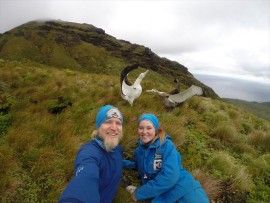
Ballito-based marine biologist, Michelle Risi and her boyfriend, Christopher Jones, are not everyone and they found it a great adventure.
Chris, also a biologist, is a keen birder and was appointed to work with the vast bird-life on Gough Island, the 64 kilometre squared Unesco world heritage site.
“Having completed a masters degree specializing in genetics of zoanthids (rocky shore invertebrates), my passion for biology and conservation and eye for detail is what got me the job,” said the bubbly redhead.
Full of excitement, the young lovebirds left Cape Town last year and sailed for five days to Tristan da Cunha, followed by another 20 hours to Gough Island, which is in the trade wind belt known as the Roaring Forties.
“When we first saw the vast amount of birds circling the misty rock, it looked just like Jurassic Park,” she said.
“When the relief period was over, watching the ship leave and hearing the horn blow three times before disappearing into the distance was quite daunting.”
Risi’s job was to help eradicate the small, cryptic invasive plant called Pearlwort (Sagina procumbens).
“They have been trying to eradicate this plant since 1998. It releases a lot of seeds, so Chris and I had to spray herbicide on plants and record their location.”
When she was not looking for the nasty little alien, Risi helped her boyfriend weigh seal pups, count penguins or put trackers on birds.
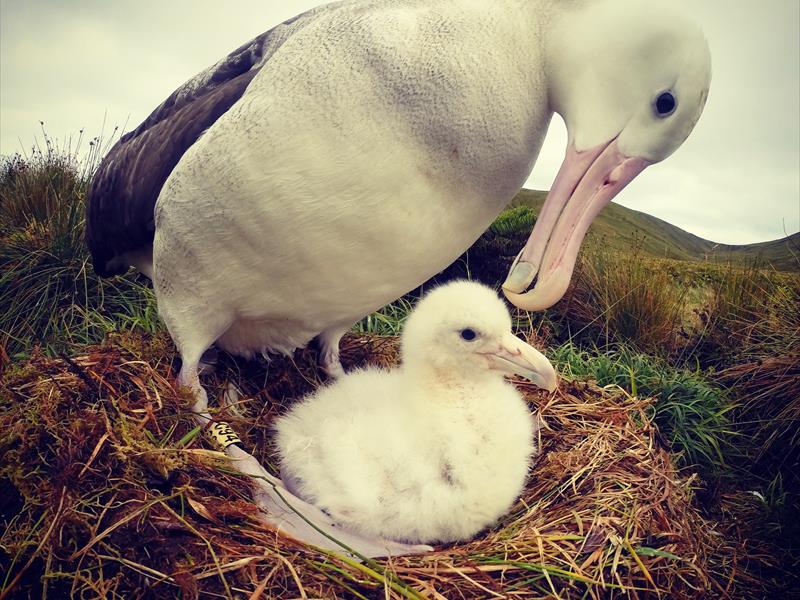
“I absolutely fell in love with albatrosses. The Tristan Albatross is mostly endemic to Gough Island. They are so beautiful and human-like. You can sit next to them and just watch them do their love dance or make a nest. They are fascinating,” said Risi with excited blue eyes.
Sadly, the large birds with a wing span of about three and a half metres have a terrible, tiny killer – the house mouse.
“The parents have to leave their chicks when they go find food and then the mice start nibbling on the chicks (who have no natural defense towards them) and often kill them. The breeding success of Tristan Albatross on the island should be up to 80%, but because of the mice, it dropped to under 10% in 2014.” They are gearing up for an eradication of mice on Gough Island in 2019.
Large portions of their stay was spent indoors, as it rains nearly everyday on the volcanic island.
“When data entry was up to date, we burnt through series, played a lot of games and baked often,” said Risi.
Back in Ballito, Risi and Jones are preparing for their next trip to the Seychelles, where they will work with birds and turtles.
“Both of us love travelling and working with birds. Being able to do it together is us living the dream.”
Stay in the loop with The North Coast Courier on Facebook, X, Instagram & YouTube for the latest news.
Mobile users can join our WhatsApp Broadcast Service here, or if you’re on desktop, scan the QR code below.