

Famine weed poses health risk
Invasive famine weed found between Stanger and Etete along the R102 poses health risks to animals and humans.
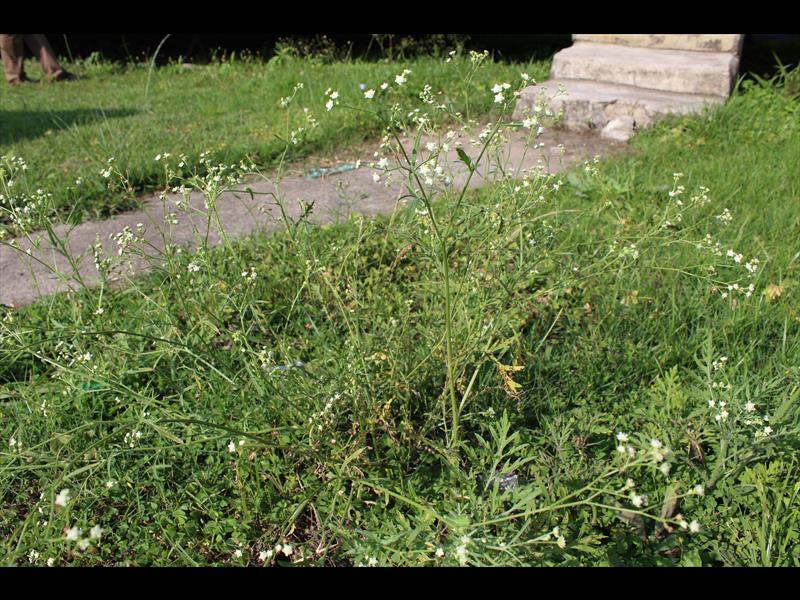
Lining the sides of the R102 carriageway, from Stanger through to Etete, are tall rows of a destructive invasive plant species flourishing among the sugarcane and between houses.
Formally known as parthenium hysterophorus, ‘famine weed‘ is a toxic and greatly destructive plant native to Central America but spreading through northern KZN rapidly.
The plant can also be seen flourishing between Stanger and Etete along the R102.
The National Environmental Management and Biodiversity Act (NEMBA) Category 1b states that the plant poses many risks to both human and animal health while many people remain unaware of just how at-risk they are.
The plant poses a number of health risks to humans, with almost 73% of people being sensitive to it. Women are on average twice as likely to be sensitive to famine weed as men and reactions to the plant include skin rashes, especially on the face and hands, swelling and itching of the membranes in the mouth and nose and constant coughing, particularly at night.
Those with HIV and AIDS more at risk as their immune systems cannot fight the onset of symptoms brought on by the plant’s allergens.
As the plant has been listed as a category 1b alien invasive species, the law dictates that once discovered, the weed must be removed and destroyed.
The Green Scorpions, who operate within the department of environmental affairs (DEA) are the environmental officers commissioned with the control of all alien invasive plant and animal species.
The DEA’s Zolile Nqayi said the plant poses many risks to the environmental health and economic stability of the areas it grows in.
“Parthenium is a problem plant, and if members of the public come across it, they must contact us so that we can inspect the site, remove the plant and destroy it,” said Nqayi.
Nqayi promised to send an inspector to the sites along to R102 and N2 pointed out by the Courier.
Famine weed does not only affect human health, however, as it threatens the health of animals too. This can be destructive for livestock farmers, as once ingested, famine weed causes a number of degenerative disorders. These include the development of toxic milk syndrome in cattle, which poisons the milk they produce, leaving it unfit for their offspring to drink and unfit for human consumption.
When grazing animals eat the plant, symptoms such as the loss of hair, the loss of skin pigmentation, skin rashes and diarrhoea can be triggered, which affects the income of subsistence and commercial cattle farmers.
Famine weed takes only four weeks to flower when it is a seedling and its seeds are widely dispersed by people and animals who accidentally come into contact with it, so it spreads at a rate too fast for environment agencies to control.
According to the South African National Biodiversity Institute (SANBI), famine weed has been recorded causing total habitat change in native grassslands and once it invades a new area, famine weed often replaces many of the indigenous plant species, threatening biodiversity as a result.
If you notice this plant growing anywhere in your area, contact NEMBA on 0800 205 005.
Do you want to receive news alerts via WhatsApp? Send us a WhatsApp message with your name and surname to 061 718 4438.
Please read our WhatsApp broadcast list disclaimer.
Join us on BBM at 59015786
Join the conversation on Facebook, Twitter and Instagram.
Stay in the loop with The North Coast Courier on Facebook, X, Instagram & YouTube for the latest news.
Mobile users can join our WhatsApp Broadcast Service here, or if you’re on desktop, scan the QR code below.