

Salt legislation is around the corner
"We encourage food manufacturers and restaurant industry to continue adapting their recipes to provide South Africans with healthier foods,” - Dr Vash Mungal-Singh, CEO of HSFSA.
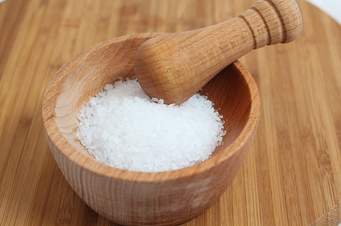
All eyes will be on South Africa as the first country to legislate to reduce salt content in foods such a wide range of foods.
Early indications suggest that industry is making excellent progress towards it.
In 2013 Health Minister Aaron Motsoaledi signed progressive legislation to reduce the salt content of a range of highly salted foods in South Africa.
June 2016 is the first deadline for this stepwise reduction programme.
On its own, legislation will reduce per capita salt intake by 0.85g per day. While this is enough to start a shift in cardiovascular mortality, more is needed. The next step is to empower consumers to buy lower salt options and use less salt at home.
The Heart and Stroke Foundation South Africa (HSFSA) congratulates manufacturers that are on course to reduce the salt content of products to comply with legislation. “Salt legislation is the beginning and not the end. We encourage food manufacturers as well as the restaurant industry to continue adapting their recipes to provide South Africans with healthier foods,” Dr Vash Mungal-Singh, CEO of the HSFSA said.
HSFSA joined forces with World Action on Salt and Health (WASH) to increase awareness on salt and health.
In 2016 the emphasis is on hidden salt.
This is the salt in our foods that we don’t see or even taste, but that still contributes to our total salt intake.
To help people evaluate their salt intake, HSFSA and Unilever South Africa will also introduce a first in SA – a digital salt calculator.
The HSFSA in partnership with Unilever South Africa has introduced a new salt calculator to help South Africans evaluate their salt intake to start making better food choices.
The salt calculator estimates salt intake based on the frequency by which common foods are consumed, and then provides feedback on current intake and tips on making better food choices.
“Only when you know which particular foods in your diet contributes the most to your total intake, can you effectively cut down on hidden salt. You can start to choose lower salt options by comparing products,”dietitian at Unilever, Hlanzeka Mpanza said.
HSFSA encourages people to use the new salt calculator to measure their salt intake, and to start making changes. The equation is simple: check your salt – change your salt. Visit www.saltcalculator.co.za to find out more.

Salt and health
The World Health Organization (WHO) recommends a daily salt limit of 5 grams per day (about one teaspoon). In a 2011 South African study more than half of adults exceeded 10 grams salt a day, at least doubling this recommendation. The main consequence of excessive salt intake is raised blood pressure, which in turn leads to heart diseases and strokes.
In fact the WHO regards raised blood pressure as the single biggest contributor to heart diseases worldwide.
Given that a devastating one in every three adults in South Africa suffer from high blood pressure, a reduction in salt intake is an easy win to prevent high blood pressure, improve existing high blood pressure, and thereby reduce the 220 fatalities from heart disease and strokes every day.

Salt and our food
The food we buy already contains salt.
In fact 55 percent of the salt we consume is from salt added during the manufacturing process.
In higher-income communities the contribution of hidden salt can be as high as 75 percent of total salt intake. Hidden salt includes much more than potato chips, take-outs and boerewors. Foods such as breakfast cereals, breads, ready-made meals, sauces, spreads, cheeses and processed meats all contain hidden salts and can increase salt intake considerably.
Reducing salt intake requires two broad approaches: reduce salt added to food during manufacturing, and reduce the excessive use of salt and salty products at home.
For more information, contact the Heart and Stroke Health Line on 0860 1 HEART (43278) or visit www.heartfoundation.co.za.
Do you want to receive news alerts via WhatsApp? Send us a WhatsApp message with your name and surname to 061 718 4438.
Please read our WhatsApp broadcast list disclaimer.
Join us on BBM at 59015786
Join the conversation on Facebook, Twitter and Instagram.
Stay in the loop with The North Coast Courier on Facebook, X, Instagram & YouTube for the latest news.
Mobile users can join our WhatsApp Broadcast Service here, or if you’re on desktop, scan the QR code below.