

Climate extremes demand change
The latest climatic research data showed evidence of climate change that would affect the way KZN manages its water resources.

KZN’s rainfall patterns are predicted to become increasingly erratic and unreliable, forcing people to turn to new ways of gathering water.
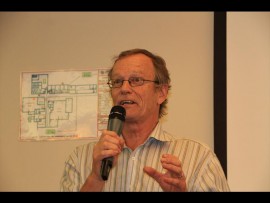
Environmental consultant, Simon Bundy, speaking at a well attended water information evening held at the Umhlali Country Club last week, said the latest climatic research data showed evidence of climate change that would affect the way KZN manages its water resources.
He said massive weather extremes were coming, switching between droughts and floods, forcing people to turn more and more to unconventional water resources like desalination plants, water recycling and rainwater harvesting.
“Our winters will be very dry and our summers more humid. High pressure systems will be more intense, creating stronger wind and more dune shift,” said Bundy. He also said that storms would become more severe.
About 100 people from the Ballito community attended the information session where a panel of experts addressed people’s concerns.
The panel consisted of Sembcrop Siza Water‘s Shyam Misra, the department of water and sanitation’s Neil van Wyk and Angela Masefield, Umgeni Water‘s Steve Gillham, Dolphin Coast Waste Management‘s Chris Oosthuizen and Bundy.
People were concerned about what lessons water authorities had learned from the current water crisis caused by the drought, whether water restrictions will be lifted when the Lower Tugela Bulk Water Supply Scheme (LTBWSS) comes online, the cost of desalination, dredging sand out of Hazelmere Dam and how the LTBWSS will affect water supply to the Sappi plant that is downstream from the scheme.
Masefield said the department of public works had ordered all their constructions sites to use recycled water only, to improve water efficiency. Van Wyk said the drought had taught the department of water and sanitation the importance of fixing water leaks, applying restrictions in time and to have efficient long-term planning.
“How an area copes with water supply in a drought is a reflection of how good or bad their long term drought planning is,” he said.
Do you want to receive news alerts via WhatsApp? Send us a WhatsApp message with your name and surname to 061 718 4438.
Please read our WhatsApp broadcast list disclaimer.
Join us on BBM at 59015786
Join the conversation on Facebook, Twitter and Instagram.
Stay in the loop with The North Coast Courier on Facebook, X, Instagram & YouTube for the latest news.
Mobile users can join our WhatsApp Broadcast Service here, or if you’re on desktop, scan the QR code below.