

Hopping to their new home at Mount Moreland
Since this critically endangered little frog was first discovered in 1978, it has only been found at 20 different sites, including Simbithi Eco-Estate and Zimbali.
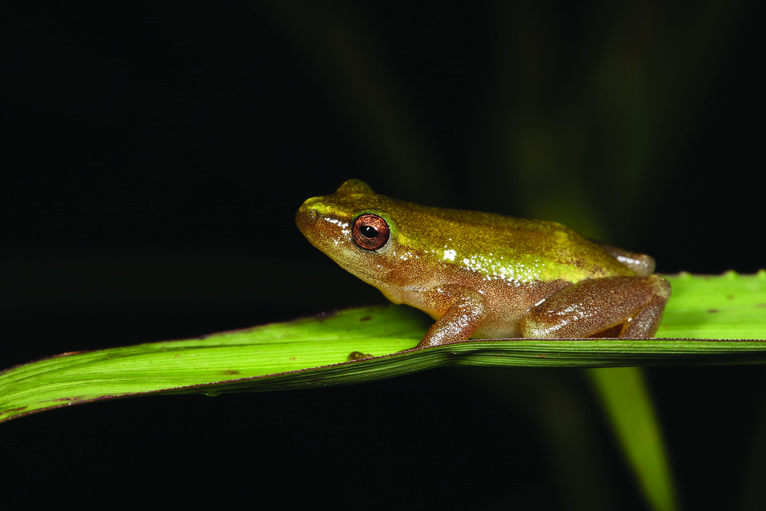
Mount Morelanders are the new excited guardians of a whole colony of special, captive-bred endangered frogs recently released in their new home.
The department of environmental affairs, Ezemvelo KZN Wildlife and the Johannesburg Zoo released 200 Pickersgill’s Reed Frogs in Durban, Prospecton and Mount Moreland – areas where their parents originated.
Since this critically endangered little frog was first discovered in 1978, it has only been found at 20 different sites, including Simbithi Eco-Estate and Zimbali.
The release came one year after the publication of the biodiversity management plan for the small amphibian. The aim is to improve the conservation status of Hyperolius pickersgilli and secure its future survival in the wild.
Also read: Fort Pearson and The Ultimatum Tree mark the beginning of the Anglo-Zulu wars
Environmental affairs spokesperson Albi Modise said the major benefit of the plan will be to get the support of owners, managers and residents of the land on which the frogs occur for implementation of conservation actions.
“Among the management actions being taken is a breeding programme by Johannesburg Zoo to create sustainable insurance populations of endangered amphibians that can be introduced or re-introduced back into their natural environment whenever a need arises,” said Modise.
Modise said KZN has been recognised as an area with the highest species richness for frogs particularly in the coastal regions which is also where high levels of human activity is found.
“Without concerted proactive conservation intervention, it is highly likely that the species will become extinct.”
The Pickersgill’s Reed Frog is listed as endangered on the International Union for Conservation of Nature (IUCN) red data list and by South Africa’s Threatened or Protected Species (TOPS) Regulations of the National Environmental Management: Biodiversity Act. This is KwaZulu-Natal’s only amphibian species with this status.
Threats include habitat loss as a result of wetland drainage or destruction for agricultural, urban and industrial development; severe habitat fragmentation, alien vegetation, afforestation resulting in drying out of breeding sites and pollution from pesticides and other contaminants.

Do you want to receive news alerts via WhatsApp? Send us a WhatsApp message (not an sms) with your name and surname to 061 718 4438.
Please read our WhatsApp broadcast list disclaimer.
Join the conversation on Facebook, Twitter and Instagram
Stay in the loop with The North Coast Courier on Facebook, X, Instagram & YouTube for the latest news.
Mobile users can join our WhatsApp Broadcast Service here, or if you’re on desktop, scan the QR code below.