

Love them or hate them, waste pickers need you to survive
Mchunu said recycling was an activity that saved many unemployed people from starvation. The going rate paid for recyclable plastic is R2/kg.
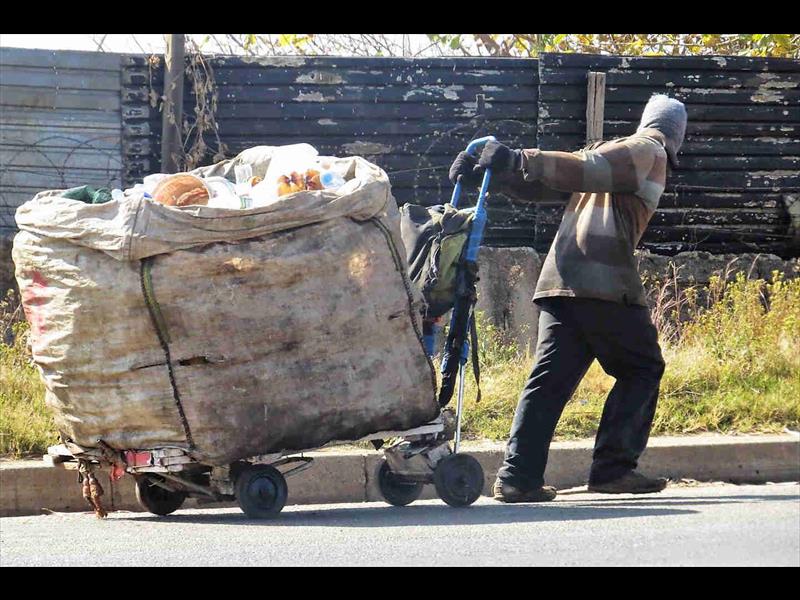
Waste pickers are a group broader society would rather pretend do not exist, nevertheless, these people have found a way of supporting themselves in the least appealing way by making an honest living from the stuff that no one wants.
The waste pickers who come to our streets early on rubbish collection day will sift through our household waste and pick out those things that can be recycled, and then take them to a collection plant to earn a small amount of cash.
Despite many neighbourhood watch groups demonising waste pickers, and encouraging residents to keep their bins behind high walls until the trucks arrive, it is this informal sector who depend on waste to earn a living.
For many, waste is their only opportunity as a means of survival – waste pickers either collect items which they can recycle, or re sell.
These waste pickers are in fact a vital element of the recycling industry in South Africa, and in particular, the paper manufacturing value chain. They are en route to recycling buy-back centres where they exchange the contents of their trolleys for payment.
The owners of these buy-back centres are typically small entrepreneurs who make a living by selling the recovered waste paper and increasingly, plastic, on to companies such as Mpact Recycling which use the paper in the manufacture of paper and corrugated packaging.
Local entrepreneur, Peacemaker Mchunu who runs Sandanezwe Recycling at Shaka’s Head, said about 25 local waste pickers drop off recycling waste on a daily basis.
ALSO READ: Is KwaDukuza the dirtiest town in KZN?
Mchunu said recycling was an activity that saved many unemployed people from starvation. The going rate paid for recyclable plastic is R2/kg.
“Many unemployed people are surviving and ensuring their own livelihoods and at the same time contributing to a cleaner environment,” Mchunu said.
The South African Waste Pickers Association (SAWPA) said that informal waste pickers, whose numbers have increased substantially in the past few years, recycle 90 percent of the waste collected from households in South Africa, this results in R750 million savings for municipalities in landfill space.
Launched in 2009, SAWPA is an organisation of more than 1100 registered waste pickers in all nine provinces in South Africa.
According to the Council of Scientific and Industrial Research there are up to 90 000 people that earn a livelihood through the informal waste sector.
ALSO READ: KwaDukuza town held ransom
“SAWPA is based on waste dump sites and on streets in cities across the country, with all our members involved in collecting and selling waste as a livelihood strategy. We divert and recycle materials such as organics, plastic, cardboard, paper, metals away from waste dumps, where good material becomes waste and result in increased greenhouse gas emissions and worsening impacts of climate change,” said SAWPA coordinator Simon Mbata.
“As waste pickers we provide the only form of solid waste collection in areas that are not serviced by government, and our work enhances government services in serviced areas, providing high recycling rates. We also contribute to local economies, public health and safety, and environmental sustainability,” added Mbata.
While recognition for the contribution of waste pickers is growing in some regions, many are still marginalised and face deplorable living and working conditions with little support from local government.
A Ballito resident who did not wish to be named said while the system was far from perfect a possible solution to address residents’ complaints was to formalise the work waste pickers did and encourage communities to separate their rubbish so there would be no need for them to go through rotting waste in search of recyclable items, solving a lot of the problems both on the streets and at the landfills.
Speaking to the Courier a number of the local waste pickers said employment opportunities for people above 40 years of age were very scarce if they had no work experience in the formal sector.
A few cited their low levels of schooling as their inability to secure full-time employment.
Download The North Coast Courier mobile app, now available free from the Apple iStore and on Google Play, for IOS and Android phones.

Stay in the loop with The North Coast Courier on Facebook, X, Instagram & YouTube for the latest news.
Mobile users can join our WhatsApp Broadcast Service here, or if you’re on desktop, scan the QR code below.