
Dube AgriLab offers sustainable farming options
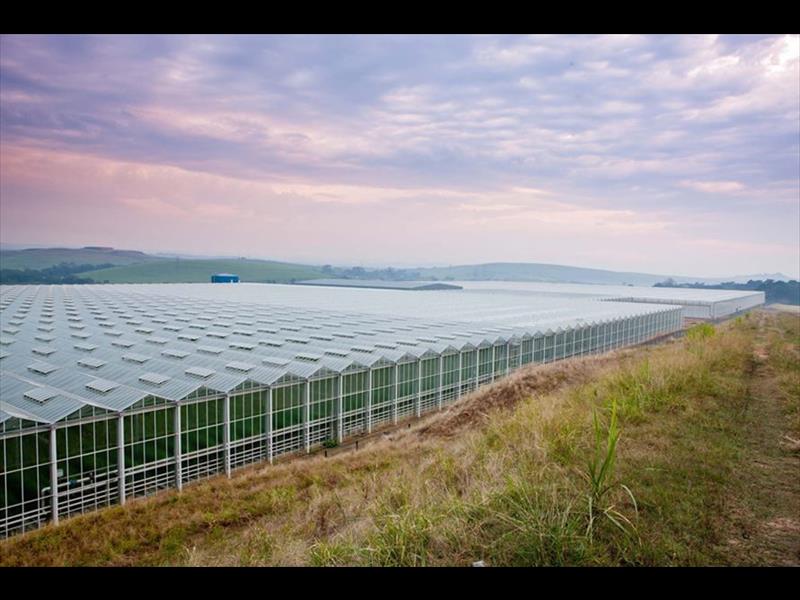
Dube AgriZone is a high-tech agricultural development located at the Dube TradePort Special Economic Zone and is one of the most technologically-advanced, future farming platforms on the continent.
As increasing temperatures and shifting rain patterns reduce access to food across the continent, experts claim climate change will have a profound and unavoidable effect on food security.
As a means of counteracting issues facing farmers and growers – and exploring alternative technologies to sustainable farming – Dube AgriLab recently launched a new micro-propagation laboratory within the Dube AgriZone.
The ultra-modern 5 300 sq m plant tissue laboratory has the capacity to produce up to five million plants a year and is poised to meet the ever-demanding needs of farmers and growers nationally and internationally.
Dube AgriZone is a high-tech agricultural development located at the Dube TradePort Special Economic Zone and is one of the most technologically-advanced, future farming platforms on the continent.
With three glass greenhouses covering 160,000 sq m, it provides the largest climate-controlled growing area under glass and there is room to expand it by another 90 hectares.
ALSO READ: KZN eyes billions in investment with 750K possible new jobs
The facility also includes three greenhouse-dedicated pack-houses, a distribution centre and a nursery.
Speaking at the Undercover Farming Conference in the Western Cape earlier this month, tissue culture technologist at Dube AgriLab, Melissa Timothy, said these innovations would save numerous plant variations.
“There is growing consensus that farmers and growers need to consider alternate growing techniques and innovative technologies to develop and grow more resilient crops,” said Timothy.
“Without such methods, current long-standing plant varieties are not likely to withstand the new environments.”
A rapidly increasing global population, along with the negative effects of climate change and a decrease in water supply has resulted in a legitimate threat to food security, added Timothy, who expressed her concerns on whether traditional farming methods can keep up with rapid technological advances.
“Other industries, including pharmaceuticals, construction, cosmetics, energy generation and manufacturing, which depend on plant material, will also be negatively affected unless plant growers adapt to the changing environment and embrace alternative methods such as plant breeding and genetic manipulation.”
Download The North Coast Courier mobile app, now available free from the Apple iStore and on Google Play, for IOS and Android phones.

Stay in the loop with The North Coast Courier on Facebook, X, Instagram & YouTube for the latest news.
Mobile users can join our WhatsApp Broadcast Service here, or if you’re on desktop, scan the QR code below.