
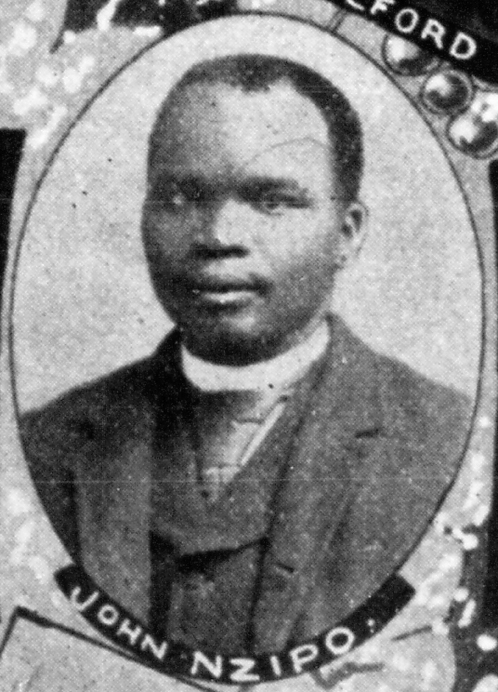
In 1890 John Nzipo was the only Zulu man to be educated in Canada, now the hunt is on to solve the mystery of his life
Sadowski believes that John was well liked, and it was because of his charm that he was sent to Canada by the charity.
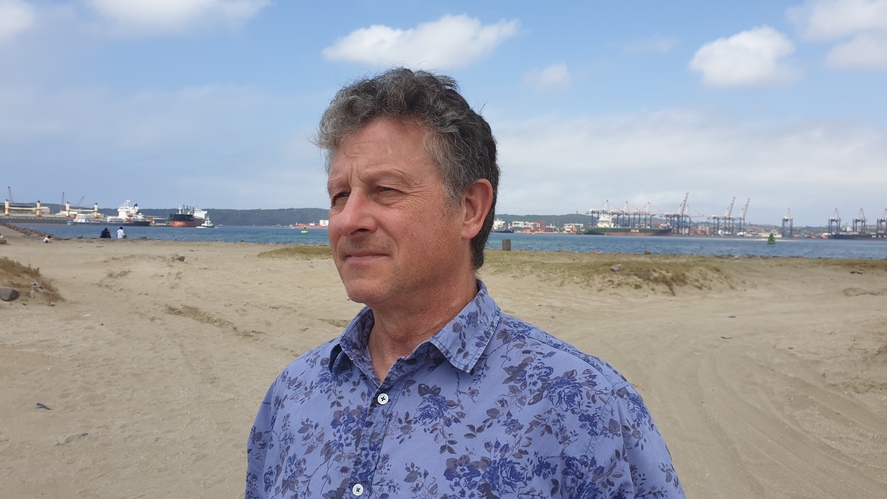
A Zulu man found himself enrolled in one of Canada’s notorious residential schools in the 1890s, far from his homeland of Matikula Kraal (Amatikulu) in Zululand, at a time when the story of John Nzipo is anything but straightforward, but it sheds some light on one of the darkest chapters in Canadian history.
More than 100 years later one man is on a hunt for the full story behind this Zulu nomad who travelled so far from home and was very likely the only non-North American Indigenous person ever enrolled at a residential school in Canada.
The Courier met up with Canadian researcher professor Edward Sadowski at the Salt Rock library last week to hear about his fascinating quest.
Sadowski is currently visiting South Africa in an attempt to find the missing pieces of the puzzle about John Nzipo, and to try and locate any of his descendants, if there are any.
The Children of Shingwauk Alumni Association are celebrating the 50th anniversary of the closing of Shingwauk Residential School next year, and what they would really like is for a descendant of Nzipo or a representative from his community to be there.
“Two people who I have spoken to have made a similar comment – because of John’s travels and what happened to him, they have sort of compared him to a South African Forrest Gump. I am not sure if that is an appropriate comparison but it may be a good indication of what John went through,” said Sadowski.
“Everyone seemed to like him, so much so that the Bishop of Sault Ste. Marie took him and enrolled him into the Shinwauk school.”
A retired political science professor at Algoma University in Ontario, Canada, Sadowski was also the research coordinator for the Shingwauk Residential School Centre, an archive that the former students established in order to collect information about their residential school.
In a practice that extended from the 1830s right up until 1996, Indian children were taken from their parents and placed in residential schools, not to educate them, but primarily to break their link to their culture and identity, according to the Canadian Truth and Reconciliation (TRC)’s findings.
When Sadowski came across Nzipo’s name while looking through the school’s register, he was struck by the strangeness of it.
“He was a Zulu person for one thing, and he was treated as though he was an Indian. The government of Canada accepted John into the system, they actually paid the $60 a year as if he was an Indian. He was there for three years, it was a very bizarre situation,” he said.
Sadowski has been able to uncover detailed records of Nzipo’s journey from South Africa to London, and then to northern Ontario.
“The reason why John’s name seems to have appeared in the period of 1887 to about 1900 is because there is a money trail – we sort of followed the money,” said Sadowski.
“He had a very colourful history, from what we know.”
The story goes like this: a young Zulu man, roughly 17 years old, left Durban for Cape Town by ship.
“He worked for some time and then he took a ship from Cape Town to London where he was in 1887,” said Sadowski.
In London he was destitute, said Sadowski, and was taken in by a London-based charity, Barnardo Homes. Thomas Barnardo, the founder of the charity, published a detailed profile of Nzipo in 1898 in the charity’s Up and Down magazine.
Sadowski believes that John was well liked, and it was because of his charm that he was sent to Canada by the charity.
“As part of the British Home Children Programme, they would take orphan children from England and bring them to Canada as cheap labour. They were paid $2 per child,” said Sadowski.
“They selected John to go with the other British children, so there was this Zulu guy who was maybe 18 at the time going with all these kids over to Canada!”
Nzipo was sent to Ontario where he most likely worked as a servant to a wealthy family. According to the profile in Up and Down magazine, “he became well known to the Clergyman of Gravenhurst and through him to the Bishop of Algoma.”
The Bishop then arranged for Nzipo to attend Shingwauk residential school, where he stayed for three years.
While these parts of his life are fairly well documented, little is known about the periods of Nzipo’s life before he left for London and after he returned to South Africa as an Anglican missionary, working in Isandlwana.
“We don’t know what happened to him, if he got married, where he died, if he had any children,” said Sadowski.
If you have any information that pertains to the story of John Nzipo, please contact Sadowski at ed.sadowski@live.ca.
Download The North Coast Courier mobile app, now available free from the Apple iStore and on Google Play, for IOS and Android phones.

Stay in the loop with The North Coast Courier on Facebook, X, Instagram & YouTube for the latest news.
Mobile users can join our WhatsApp Broadcast Service here, or if you’re on desktop, scan the QR code below.