

High mileage cars can be lifesavers if properly cared for
Driving about the North Coast, there seem to be more big cars than in Sandton and I would expect that people are trying to make them last a little longer so as to avoid the ghastly depreciation of the new and much cooler model.
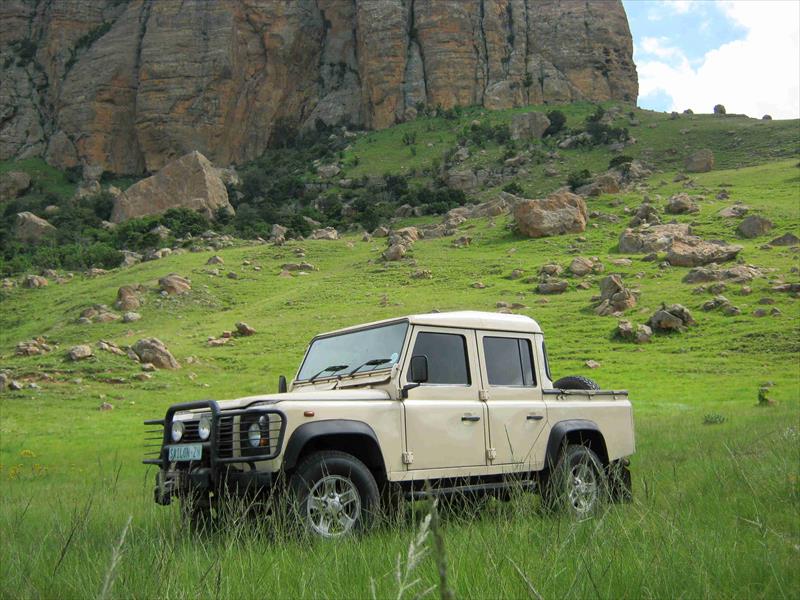
Families who have larger vehicles are generally used to higher mileage.
It’s a combination of the extreme and often customised use, obsessive passion for the vehicles and the horrific cost of replacement which generally leads to off-road and touring vehicles having seen their fair share of the world.
It is worth bearing in mind that if you were to drive around the world on the equator you would travel around 40 000 km, so most could have circumnavigated a few times.
Most families run sedans and generally 150 000 kilometres is viewed as the ‘point of no return’.
For a solid bakkie or off-roader in South Africa, it is common for them to reach a staggering 500 000 kilometres before the owner relents and buys another newer model. The relenting is usually due to family or peer pressure and can often result in some private adult weeping.
No one likes Dad’s old Land Cruiser, do they?
The Ford Ranger I drive daily is nearly at the big 200 000 mark and is now eight years old.
I have a theory that when your service plan is finished, you should on average spend twice the cost of the monthly insurance on maintenance over an annual basis.
I have changed the shocks and radiator hoses simply due to age and not through necessity or manufacturer recommendation.
This disrespectful way of treating your money seems to make these trucks last a little longer and certainly gives me piece of mind. Of course I could do the bare minimum as suggested in the measly service manual, which may end up in roadside occupation.
My family has had a number of high mileage vehicles and when they have let us down it has almost always been a maintenance issue.
My father’s Hilux did almost 500 000 km before the cylinder head cracked. He had not replaced the radiator hoses EVER and didn’t notice the temperature gauge sky-rocketing and the resultant catastrophic failure followed.
ALSO READ: Volkswagen to unveil new Golf as end of era nears
My Land Rover had done 455 000 km when I sold it, and yes, someone bought it. However it had to have the head replaced after it basically ran out of oil and the valves tried to return to nature.
The resulting family pressure of “it’s unreliable” and usually “it’s absolutely hideous” ended in financial institutions grinning like the Cheshire cat from Alice in Wonderland . . .
Driving about the North Coast, there seem to be more big cars than in Sandton and I would expect that people are trying to make them last a little longer so as to avoid the ghastly depreciation of the new and much cooler model. If you bend to street cred it comes at a price.
Spending money on parts before you need them is risky business.
However it is cheaper to replace your water-pump before you actually need it and avoid an entire engine replacement.
Having owned four high mileage vehicles (over 300 000 km) I have come to the following standard approach; If I don’t know the full history, a new water pump, radiator and hoses is a must.
Shortening the manufacturer’s recommended service intervals is also a habit, and this is combined with using the best oil available for the job.
The regular servicing with great oil definitely makes things last longer, especially with all of these turbo-charged engines, good oil is essential to get you further without failure.
I am not a mechanic, so please get some advice before you consider any of the above, however I think it is time for those driving the older vehicle to receive some street cred, after all we are saving all of the emissions of creating a new car!
We should be proud of our older, trusty steeds. Next time you see a long-boarder at the beach with his or her 1970’s Land Cruiser, give them a high five!
Download The North Coast Courier mobile app, now available free from the Apple iStore and on Google Play, for IOS and Android phones.

Stay in the loop with The North Coast Courier on Facebook, X, Instagram & YouTube for the latest news.
Mobile users can join our WhatsApp Broadcast Service here, or if you’re on desktop, scan the QR code below.